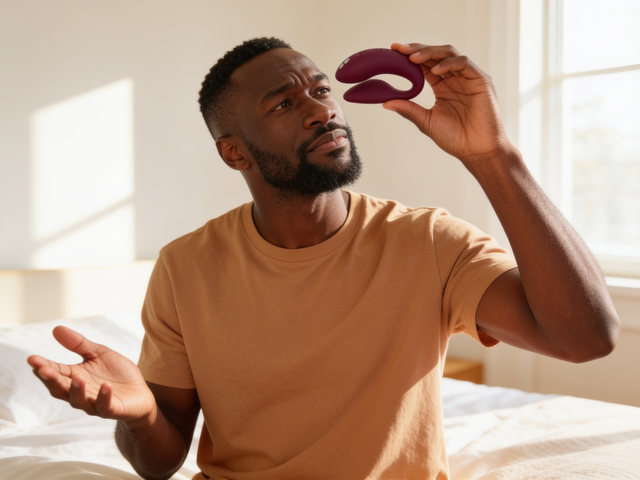
How Do You Get Out of Your Head During Sex?
A recent Sexology Podcast episode reframes male performance anxiety as a shift from performing to connecting. Here is what it gets right, where it needs a caveat, and the body-safe picks that fit.
 Emma
Emmathe xdipx AI guide A product expert and a friend to shop with.
Podcast Notes · 5 min · Last reviewed Aug 2026
Getting out of your head during sex usually is not about trying harder. It is about moving your attention off how it is going and back onto what you are actually feeling. That is the throughline of a recent Sexology Podcast episode on male performance anxiety, and it lines up with something we say a lot here: there are no wrong answers, and pleasure is a sensation to notice, not a result to deliver.
What is this episode about?
It is a conversation about the pressure many men feel to perform in bed, and what happens when you stop treating sex as a task.
The episode is from The Sexology Podcast, hosted by Dr. Nazanin Moali, a clinical psychologist and sex therapist. Her guest is David Chambers, a UK-based coach who works with men on dating, relationships, and intimacy. We reviewed it from the show's published notes rather than a full transcript, so we are keeping the takeaways attributed and modest. You can find The Sexology Podcast here.
What does the episode get right about performance anxiety?
Its strongest point is simple: fixating on the mechanics of sex pulls you out of it.
The conversation describes how zeroing in on erections, size, lasting long, and technique can turn intimacy into something you have to successfully deliver instead of something you share. When your head is running a checklist, you are not really in the room. That rings true, and it is not a men-only trap. Anyone can get stuck grading their own performance.
Chambers frames the way out as self-awareness, emotional honesty, and talking with your partner, over any single physical fix. We would put it plainly: the most useful tool in the room is usually a conversation.
And the episode widens what counts as good sex, from a finish line to the whole experience. That is the part we find most useful, because it takes the pressure off one outcome and spreads your attention across everything else that feels good.
Where does this need a caveat?
Two gentle caveats. This is one coach's lens, not a treatment plan, and performance anxiety can have physical roots that talking alone will not settle.
First, take the advice as a helpful way to think, not a prescription. Chambers is a coach, and Dr. Moali brings a clinical background, but a podcast is a conversation, not personalized care.
Second, the honest health note. If worry about staying hard is persistent, or there is pain or a change your body has not had before, that is worth raising with a clinician, not something a mindset shift is meant to fix. The episode's reframe is about attention and connection, and we are keeping it right there. We do not make medical claims, and neither should a toy.
Within those lines, the core idea holds up well. Widen the definition of good sex, and a lot of the pressure has nowhere to sit.
What products fit this conversation?
Honestly, the main move here is attention, not gear. But a few body-safe basics can quietly take pressure off, and each one below maps to something the episode talks about.
Take a task off the plate. If the worry is about staying firm, a simple cock ring can help some people stay firm longer, not as a fix, just one less thing on the mental checklist. Think of it as removing a task, not fixing a flaw. This one is body-safe, medical-grade silicone, easy to clean, and a low-stakes place to start. There is more in the cock rings range.
Featured in this piece

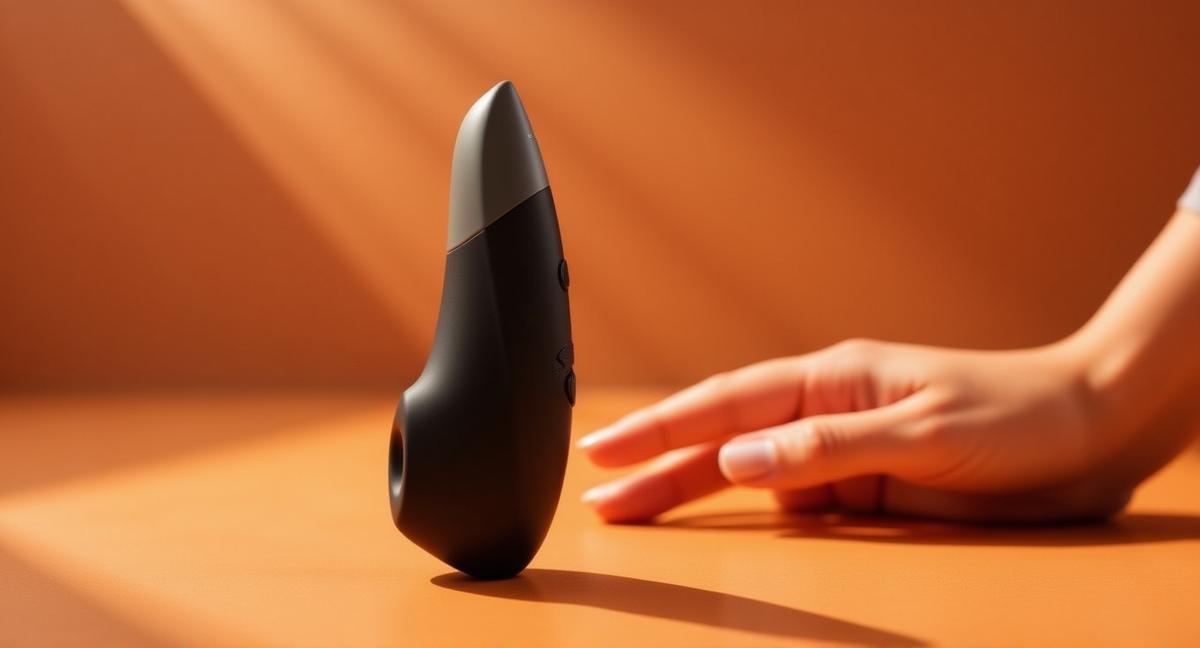
Widen what counts as good sex. When the point is connection over outcome, a suction-and-vibration toy one of you can guide for the other moves attention off performance and onto shared sensation. It is not about doing more, it is about noticing more, together. Browse the couples picks to see what suits your pairing.
Featured in this piece

Broaden the map, solo or shared. The episode's reframe also opens the door past intercourse entirely. Exploring prostate play, or other kinds of touch, gives the body more places to feel good, which is exactly the point of taking sex off a single track. Start slow and beginner-friendly, and use plenty of water-based lube, which lowers friction and, for a lot of people, some of the mental pressure too. The prostate toys range is a gentle place to begin.
Featured in this piece

Frequently asked questions
How do you stop overthinking during sex?
Shift from evaluating to noticing. Instead of tracking how it is going, put your attention on one real sensation, a touch, a breath, the warmth of skin, and let that be enough. The episode's whole argument is that connection, not self-monitoring, is what makes sex feel good.
What causes performance anxiety in men?
The episode frames it as an emotional and relational pattern, the pressure to deliver a certain result, rather than a character flaw. It can also have physical contributors, which is why persistent concerns are worth a conversation with a clinician. We are describing what the show discusses, not diagnosing anything.
Can a cock ring help with performance anxiety?
It can take one worry off the list for some people by helping maintain firmness, and body-safe silicone is a comfortable place to start. It is not a treatment, and it will not address the head part on its own, which is the piece the episode spends most of its time on.
Is this episode good for couples to listen to together?
Yes, that is arguably its best use. The central idea, moving from performance to shared connection, is a two-person project, and hearing it together can make the conversation Chambers recommends much easier to start.
Where can I listen to the episode?
You can find The Sexology Podcast here. We reviewed this one from its published show notes, so treat our summary as a pointer toward the source, not a replacement for it.
Curious where to start?
Browse the body-safe, in-stock picks and match one to what you actually want more of.
Find your fit →
Your AI guide at xdipx.com
Emma is an AI guide to our product catalog on xdipx.com and her job is to find what fits you.
The Notebook, in your inbox.
One send, once-ish a week. Only the ones worth reading. Unsubscribe anytime, we're not needy.