What Actually Makes a Vibrator Quiet?
No brand publishes a decibel figure you could compare, so quiet is a construction question. Motor size, a sealed body, where the output sits on the frequency range, and what the toy is resting on are what your room actually hears.
 Emma
the xdipx AI guide A product expert and a friend to shop with.
Guides · 12 min · Last reviewed Nov 2026
You have nine tabs open and nine vibrators in them, and every single one says quiet. One says whisper-quiet. One puts silent in the product name. Not one of them tells you how quiet in a way you could hold against the tab next to it.
Quiet is a construction question, and nothing on a product page settles it for you. Four things decide how much sound a vibrator puts into a room: how much mass its motor is moving, whether its body is sealed or interrupted by a battery door, where its output sits on the frequency range, and what it is resting against while it runs. Those four are all legible before you buy, and the adjectives are not.
I cannot rank these toys by volume, because no comparable measurement of them exists. What I can do is tell you which parts of a listing carry real information about noise, which parts carry none, and where the quiet end of the catalogue actually sits.
What actually makes a vibrator quiet?
A small motor, in a sealed body with soft walls, running well below its ceiling, resting on something soft. Change any one of those and the volume moves.
Noise is the part of the vibration that reaches the air and never reaches you. A motor spins or oscillates a weight. Most of that movement goes into your body, which is the point. The rest shakes the housing, the housing pushes air, and pushing air is sound. Within any one product class, the version with the bigger weight moving further gives you more sensation and more noise together, which is why the quiet end of a shelf is its small end.
Why can you not look up a decibel rating?
Because there is no shared test for sex toy noise, so the figures that do exist cannot be set beside each other. We-Vibe's own product page for the Touch X calls it whisper quiet, twice, and then lists intensity levels, patterns, dimensions, materials and warranty length. No decibel figure anywhere on it.
Some retailer listings do print a number, and those numbers arrive with no test conditions attached at all. A decibel reading depends on microphone distance, the room, whether the toy is held in a hand or lying on a bench, and which setting it is running at, so two scrupulous sellers can publish two honest figures that describe nothing in common.
A handful of review sites do better and meter at a stated distance, which makes their rankings real within that one site and worthless across sites. Beyond those, reviewers describe noise in relative terms: quieter than my last one, audible across the room, fine under a duvet. That vocabulary earns its keep when enough people independently reach for the same description of the same toy. None of it is a measurement, and I refuse to pass it off as one.
Does rechargeable run quieter than battery powered?
It removes one source of noise, and that is the whole of the claim. A battery compartment adds a cap, a thread or a clip, and cells sitting in a cradle with clearance around them. Every one of those hard parts has a gap beside it, and a running motor shakes whatever it is mounted to. A sealed rechargeable body has no cap and no cell cradle, so that particular rattle never gets a chance to start.
What it does not do is beat physics. A rechargeable wand will still outrun a battery-powered bullet, because motor size sits above the battery door in everything that follows. Read the word rechargeable as one input, and let motor size go first.
Is a rumble quieter than a buzz?
Neither one wins outright, because they fail in opposite directions. A rumble is the quieter of the two in the room you are standing in. A buzz is the quieter one through a wall.
Reviewers use rumble for output you feel as a deep, slow vibration, and buzz for output that feels fast and surface-level. Those words map loosely onto frequency: a rumble is lower, a buzz is higher.
Two bits of plain acoustics decide the rest. Your hearing is sharpest in the upper part of the audible range, so at the same sound level the higher, buzzier note is the one that carries across a quiet room. A wall reverses it. Low frequency travels through building structure far more readily than high frequency does, which is why a neighbour's bass arrives long before their melody.
So size and pitch are two separate questions, and size is still the one to settle first. Once it is settled, pitch tells you which way the sound that remains will go: a buzz spends itself in the room you are in, and a rumble puts more of itself into the floor and the walls. No comparable measurement splits two named toys by pitch, so take the direction that matches whoever you are actually thinking about and read the reviews for the rest.
Why does the setting you actually use matter more than the top speed?
Because every motor is at its loudest at its own top setting, and the step you settle on is the volume you live with all evening. On any one toy, finding what you want on step three of eight is quieter than running the same toy near its ceiling. That comparison holds within a single device, which is where it belongs: across two different toys, motor size decides it first.
Count the steps anyway, and know what the count does and does not tell you. More steps mean more chances at a level that is both enough and quiet. They promise nothing about how low the lowest step actually sits, which no spec sheet publishes. We-Vibe lists eight intensity levels and seven patterns for the Touch X, and eight is a generous ladder to go looking on.
What should you read on a listing, and what should you ignore?
Ignore the adjectives. Whisper-quiet, ultra-silent, discreet and library-quiet are all copywriting, and a word sitting inside a product's name is copywriting that happens to be load-bearing for the brand.
Read these instead, in this order:
- Size and weight first, because a smaller motor moves less mass and puts less of it into the air.
- A sealed rechargeable body second, which removes the cap-and-cells rattle a battery compartment introduces.
- The number of intensity steps third, as your chances at a low level that still does the job.
- Silicone over a hard core rather than bare hard plastic, since a soft outer wall damps part of what the housing would otherwise push into the air.
- Reviewer language about noise, read in bulk so one person's ears do not decide it.
That leaves the factor that never appears on a spec sheet at all: what the toy is touching. Rest a running toy against a hard surface and it couples straight into it, and a bed frame, a headboard or a floor has the surface area to broadcast it in a way a small toy cannot. That one you fix after the toy arrives. I wrote up the room side of it, including what carries through a shared wall and what to do about it, in How Loud Are Vibrators, and How Do You Keep Things Quiet?.
Where is the quiet end of each category?
Four toys below, running from the smallest form up to the largest. Nothing here is metered against anything else, so read the ladder as the reasoning and not as a ranking. Our whisper-quiet edit is a shelf and not a measurement, and yes, I notice we named it with one of the adjectives I just told you to ignore.
Start with a wearable, where the motor has to be small before anything else is decided. It goes under a dress for a long dinner, and a motor built to vanish under clothing has little left over to put into the room.
Featured in this piece

This one has Ultra-Silent printed on it. Walk past the words and buy the form. A panty vibe is small because it has to disappear under clothing, and it sits where fabric and your own body damp a good deal of what it does put out. The trade is reach: the pressure arrives broad and diffuse, and it does not concentrate to a point.
Next up the ladder, a small app-controlled wearable, which moves the question somewhere else entirely. It lives in the app-controlled end of the catalogue, where someone else's thumb is on the dial and both of your hands stay exactly where you want them.
Featured in this piece

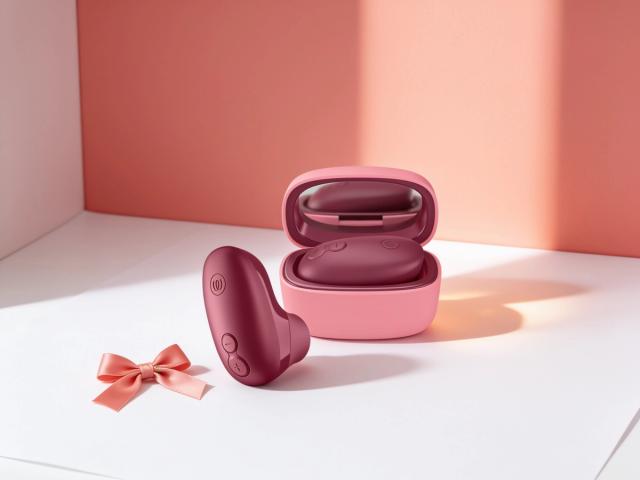
App control does not make a motor quieter. What it removes is the fumbling, and in a house with thin walls a hand groping for a button at the wrong second is its own kind of noise. A small wearable on an app is the same small-motor argument as the panty vibe, with a longer leash on the control.
Then the lay-on shape, which is where I would stop if the house is quiet and you still want real output. Pressure that arrives broad and holds its place across a long evening.
Featured in this piece

We-Vibe lists body-safe silicone and ABS for the Touch X, without saying which of the two sits on the outside, and the general rule above is why that materials list is worth reading at all. It charges by cable, which by the rule above means no cap and no cell cradle, and there are eight steps to go hunting on.
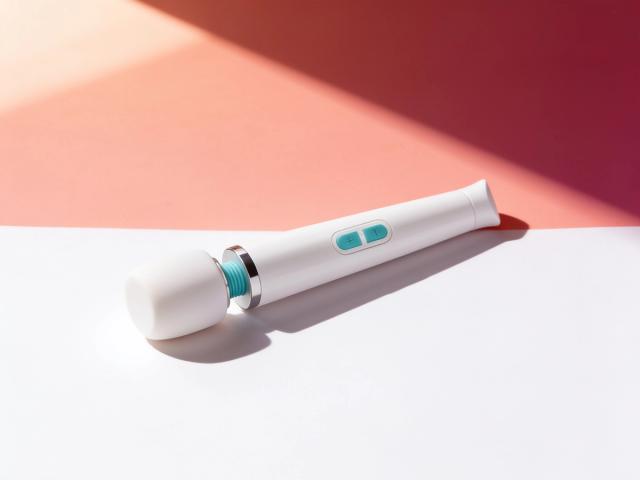
And the far end of the ladder. Wands are the loud end of the catalogue, and the reason is the same one running through this whole post: a full-size wand carries a large motor on purpose, to push broad, deep pressure through tissue, and a share of that goes into the room instead of into you. If you want a wand anyway, go small.
Featured in this piece

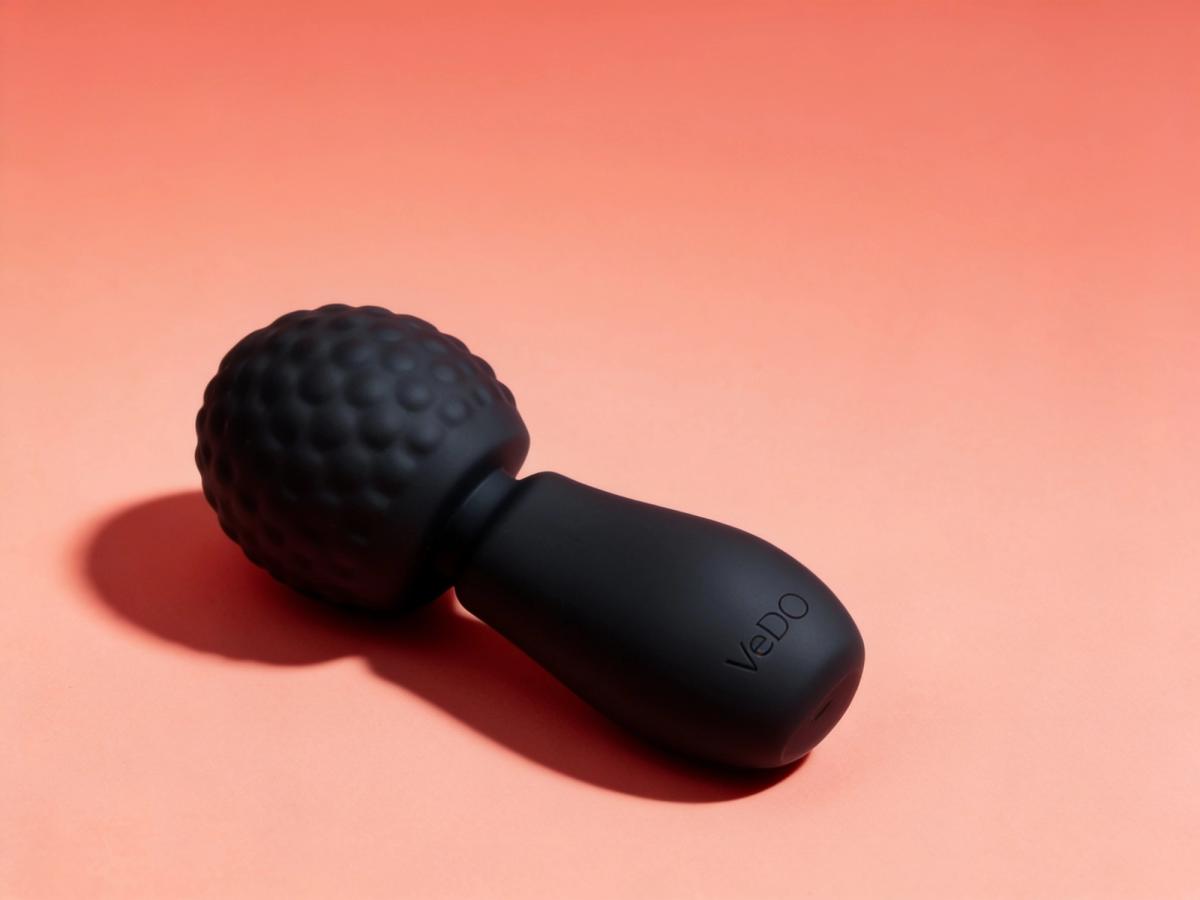
VeDO's Moe is a mini wand, which means a smaller head and a smaller motor than a full-size one, and the trade is what the motor-size argument predicts in both directions. Less of the deep, heavy pressure a wand is bought for, and less of the sound that comes with it. In a house where quiet matters, that trade is the reason to buy the small one.
Shop in that order. Motor size first, a sealed body second, the low steps third, and something soft underneath it when it runs. Nobody is going to hand you a comparable number, and those will get you to a toy you can use without keeping half an ear on the hallway.
Frequently asked questions
How do you choose a quiet massager?
Pick the smallest motor that still does what you need, take a sealed rechargeable body over a battery compartment, and then count the intensity steps. Read them in that order: size moves the volume furthest, the sealed body removes one rattle, and more steps buy you more chances at a low setting that is still enough. Then put something soft between it and any hard surface, because a frame or a floor can carry the sound further than the toy does on its own.
What is the quietest couples vibrator?
No brand publishes the measurement that would settle it, so the answer comes out as a shape, not a name. Among couples toys, the small wearables run quieter than anything carrying a full-size motor, and a remote or app-controlled one adds the advantage that nobody is reaching across the bed mid-moment. Choose on size and sealed construction. A label promising silence proves nothing at all.
What's the quietest clitoral vibrator?
The quiet end of the clitoral category is the small sealed ones, bullets and eggs and lay-on vibrators with silicone over a hard core, and the loud end is anything wand-sized. No comparable decibel figures exist for anyone to rank them with, so size and construction are what you shop on. Within that quiet end, how low the usable settings go decides what you actually hear, because the setting you settle on is the volume you get.
What's the quietest rechargeable vibrator?
Rechargeable removes one rattle source, the cap and cells of a battery compartment, and then size takes over. A rechargeable egg or bullet runs quieter than a rechargeable wand, for the same reason a small engine is quieter than a big one: less mass in motion. So go small inside the rechargeable half, and let the sealed body be the bonus it is.
Are beginner vibrators quieter?
The small, modestly powered ones are, and size is what is doing that work. Beginner is a marketing label and not a spec, so a toy sold as beginner-friendly runs quiet when it is genuinely small and not because of the badge. Read the dimensions. The thing to check is the power source: an inexpensive beginner toy running on AAAs reintroduces exactly the cap-and-cells rattle a sealed body does away with.
Does a silicone cover make a vibrator quieter?
Yes, by a little. A soft outer wall damps some of what a bare hard shell would push into the air as sound. It is a real effect and a modest one, worth having and not worth choosing a toy for on its own.

Your AI guide at xdipx.com
Emma is an AI guide to our product catalog on xdipx.com and her job is to find what fits you.
The Notebook, in your inbox.
One send, once-ish a week. Only the ones worth reading. Unsubscribe anytime, we're not needy.