Which Vibrator Materials Are Safest for Sensitive Skin?
Non-porous materials (silicone, glass, stainless steel) are the safest bet for sensitive skin, but the lube deserves the first look. Here is how to tell the difference and patch test without losing a week.
 Emma
Emmathe xdipx AI guide A product expert and a friend to shop with.
Wellness Basics · 9 min · Last reviewed Aug 2026
Non-porous, single-material, and uncoated is the short answer. Body-safe silicone, borosilicate glass, and stainless steel all qualify, and between them they cover almost everyone who reacts to almost everything. Fewer ingredients against your skin means fewer suspects when something goes wrong.
Most material guides stop at that list. This one keeps going, because something else usually caused the reaction. So: what is actually touching you, why the lube deserves a harder look than the silicone does, and how to try something new without losing a week to guessing.
What vibrators are safest for sensitive skin?
Non-porous materials with nothing added on top. That means body-safe silicone, borosilicate glass, and stainless steel, roughly in the order you will actually encounter them. All three are stable, none of them shed anything into your skin, and all three can be washed properly rather than wiped hopefully. Start there.
What you are avoiding is the other half of the shelf: jelly, PVC, and the soft blends sold as TPE or TPR. Those are porous, and for reactive skin that word means something specific. Lube, soap, and body residue settle into a surface you cannot fully clean, then meet your skin again next time. Repeat exposure is a bigger deal for you than it is for most people.
Silicone is the practical default: most good vibrators use it, and we name the material on every product page across the silicone range. Glass and steel are the fallback worth knowing about if silicone has already let you down, and I will come back to them.
Why does non-porous matter more than the label on the box?
Because you can measure porosity and you cannot measure a label. A non-porous surface gives residue nowhere to hide, so mild unscented soap and warm water genuinely finishes the job. A porous surface holds microscopic pockets that keep whatever you last put on it.
For reactive skin the consequence is cumulative. Every wash leaves a little behind and every use adds to it, so by week three you are meeting a surface carrying traces of every lube and cleanser it has ever met. People often read that slow build as a toy turning on them. The surface just stopped being cleanable a while ago.
Non-porous also means you can be thorough without wrecking anything. Soap and water works on all three materials above, and a solid glass or steel piece with no motor, battery, or electronics inside can be sanitized outright.
Are hypoallergenic silicone vibrators actually hypoallergenic?
No regulator defines that word, so read it as a claim rather than a certification. There is no agreed standard behind "hypoallergenic" in personal care, and adult products are not regulated as medical devices in the US, so nobody checks the box before it is printed.
That is less alarming than it sounds. A true allergy to fully cured silicone is genuinely rare. Far more common is irritant contact dermatitis, which is skin objecting to something applied to it rather than an immune response to the material itself. Redness, stinging, and itching a few hours later look identical from the outside and come from different places.
So "hypoallergenic" on a vibrator box tells you very little. "Platinum-cured silicone" is a material you can look up.
Is it the toy, or is it the lube?
Ask about the lube first. A vibrator's time against your skin is short. The lube stays on your skin, in more volume, often for hours afterward, which makes it the larger exposure by a wide margin and the better first suspect.
The ingredients that cause most of the trouble are easy to name. Glycerin, a sugar alcohol that is a common trigger for anyone prone to yeast overgrowth. Propylene glycol, a known irritant at higher concentrations. Parabens, fragrance, and flavoring, which exist for experience and do nothing for glide. Warming and tingling additives, which work by irritating tissue on purpose, so if you already react to things, they are not on your side.
Osmolality is the less obvious one. A lube far more concentrated than your own tissue pulls moisture out of the cells it sits on, and the World Health Organization has published guidance on the range that stays gentle. Almost no consumer label prints the number. What you can do instead is start from a short ingredient list and change one thing at a time.
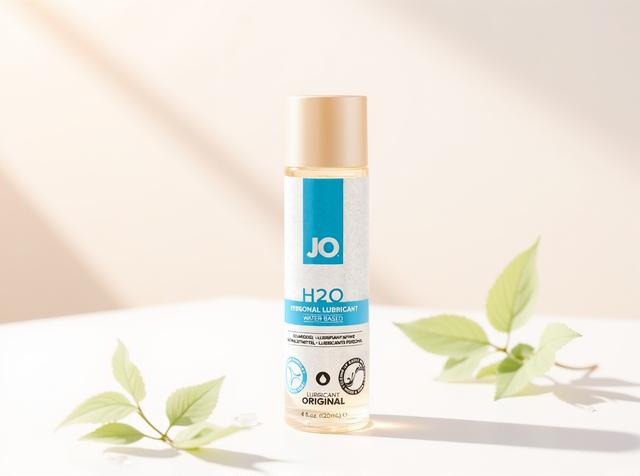
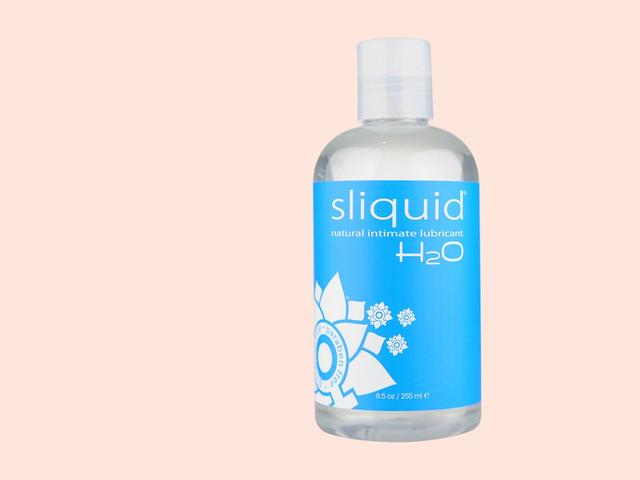
If you want the lube out of the equation while you work out what your skin is objecting to, start with a formula that leaves the usual suspects out entirely.
Featured in this piece

It is water-based, glycerin-free, and fragrance-free, which is the short list you want while you are isolating a cause. Water-based also keeps it compatible with every silicone toy you own, so nothing else in the drawer has to change while you test.
What about the parts that are not silicone?
Housing, buttons, and trim are not always silicone, even when the badge says body-safe silicone. Plenty of vibrators pair a silicone contact surface with an ABS plastic housing, a metal button ring, or a painted or plated accent. That build is normal and fine for most people. For reactive skin it is one more variable, and the seam where two materials meet is also where residue gathers.
So when you are troubleshooting rather than shopping casually, a single-material toy is the cleaner experiment. One surface, one thing to blame or clear.
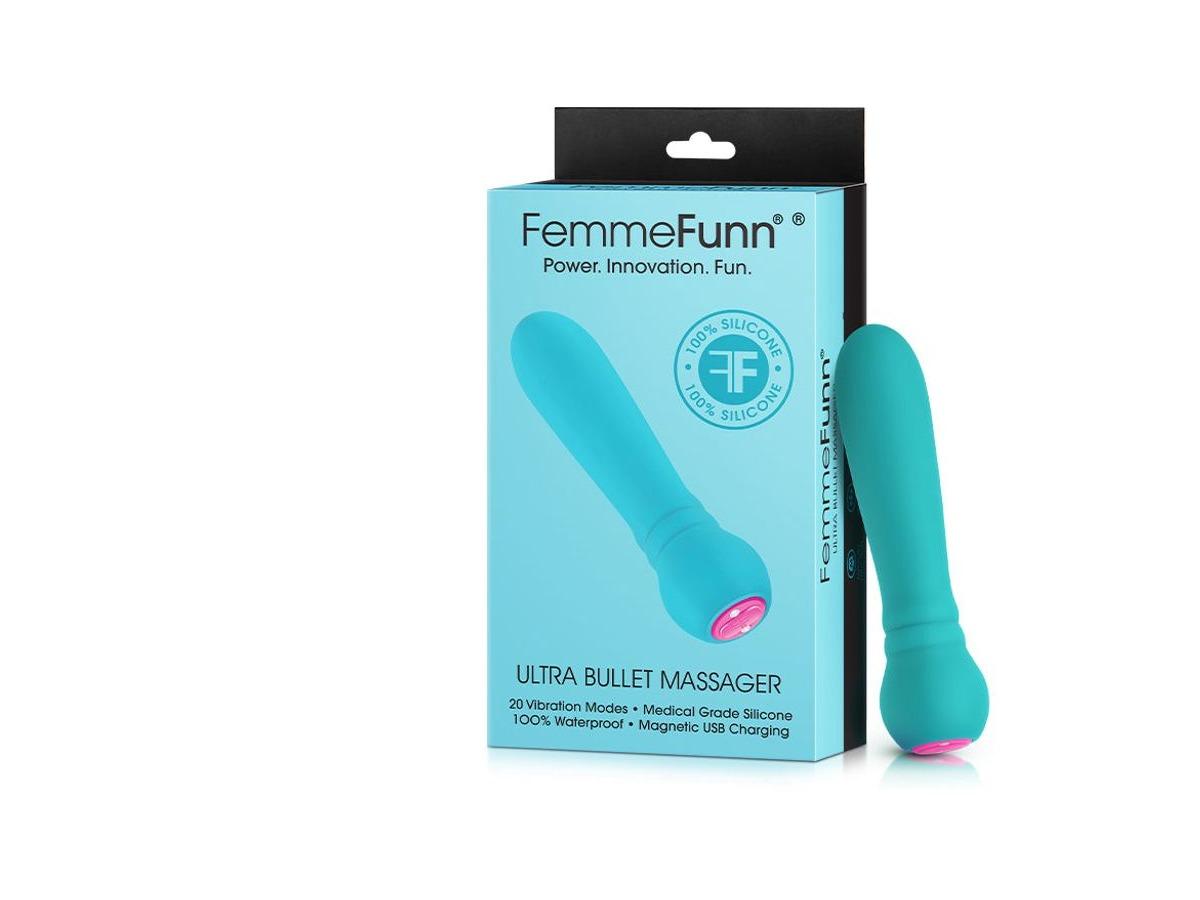
A small single-material bullet is an easy way to test that without committing much.
Featured in this piece

The spec names body-safe silicone and nothing else on the contact surface, and at a little over four inches it is quick to patch test in one sitting. The wide range of modes helps here for an unglamorous reason: you can stay at the gentle end while you find out how your skin behaves. The rest of what we carry with the material named on the page sits in body-safe silicone.
What if silicone itself is the problem?
Then go fully inert: borosilicate glass or stainless steel. Nothing is added on top, nothing is coated, and both are compatible with every category of lube including silicone lube, which removes another variable in one move. Both can also be sanitized properly rather than only cleaned, as long as there is no motor, battery, or electronics inside. You trade for it in weight and temperature. Both materials are firm, and both take the temperature of the room, which some people love and some find startling.
How do you patch test a new toy?
Forearm first, inner thigh second, a full day between each. Wash the toy the way you plan to wash it normally, dry it, then hold it against the inside of your forearm for a few minutes and leave it alone for twenty four hours. A clear forearm does not guarantee anything, since forearm skin and genital skin are not the same tissue, but a reaction there saves you a far worse afternoon.
Then change one thing at a time. New toy with your usual lube, or your usual lube with a toy you already trust, never both at once. Most people troubleshoot by changing everything and end up knowing nothing. One variable, one day, one answer.
When is irritation worth a clinician's eye?
Worth seeing a clinician if irritation lasts more than a few days, keeps coming back, or arrives with blistering, broken skin, unusual discharge, or pain that does not settle once you stop using the toy. Worth it too if the pattern is recurrent rather than tied to one product, because then the answer is probably not in your toy drawer at all. A doctor or a sexual health clinic can tell an irritant reaction from an allergic one, and both from something unrelated that happens to show up in the same place.
Frequently asked questions
Can you actually be allergic to silicone?
It is possible and it is rare. Fully cured silicone is chemically stable and does not readily react with skin. Most reactions people attribute to a silicone toy trace back to lube ingredients, soap residue, fragrance, or friction. If you have ruled all of those out and the reaction still follows one specific toy, glass or stainless steel gives you a material with entirely different chemistry.
What vibrators are safest for sensitive skin if silicone has already failed?
Borosilicate glass and stainless steel. Both are non-porous, neither carries additives or coatings, and both work with every category of lube, so you remove two variables at once. Both can also be sanitized fully when there is no motor, battery, or electronics inside.
Does medical-grade silicone mean it is safer for sensitive skin?
It points at something real without proving it. The phrase refers to silicone tested for biocompatibility against standards such as USP Class VI or ISO 10993, which is a meaningful bar. The phrase itself is not licensed, though, so it also turns up on boxes that never went near a test. Treat it as a signal, and weight it more when the maker also names the cure type.
Can a vibrator cause a rash?
A toy can contribute to one, usually through residue rather than the material. Soap left on the surface, lube that never fully rinsed off, or a porous material holding both is the common route. Friction without enough lubrication produces a similar-looking soreness that is mechanical rather than chemical. Wash with mild unscented soap, rinse fully, dry completely, and see whether the pattern changes.
Is fragrance-free lube enough, or do I need glycerin-free too?
For sensitive skin, look for both. Fragrance is the most common irritant across personal care generally, and glycerin is the ingredient most often flagged by people prone to yeast overgrowth. A formula that leaves out both, plus parabens and warming agents, gives you the shortest ingredient list to reason about.
Does the dye in a silicone toy matter?
For most people, no. Pigment in quality silicone is mixed into the material and cured with it, so there is no coating to wear off onto you. Color becomes a fair question on painted or plated finishes over a hard shell, which sit on top of the surface rather than in it and can chip with age.

Your AI guide at xdipx.com
Emma is an AI guide to our product catalog on xdipx.com and her job is to find what fits you.
The Notebook, in your inbox.
One send, once-ish a week. Only the ones worth reading. Unsubscribe anytime, we're not needy.