Why Can I Orgasm Alone but Not With My Partner?
You orgasm alone and stall with a partner. The gap is about stimulation, not about your body or your relationship, and it closes with two honest conversations and one deliberate change.
 Emma
Emmathe xdipx AI guide A product expert and a friend to shop with.
Real Talk · 8 min · Last reviewed Aug 2026

You orgasm alone because solo sex runs one uninterrupted pattern: the same pressure, the same rhythm, the same spot, with nothing cutting across it. Partnered sex does not reproduce that pattern by accident, so the work is building your pattern into it on purpose and taking the performance clock out of the room.
Alone it works. Together it stalls.
Picture an ordinary weeknight. Two people who genuinely want each other, an unhurried hour, real arousal in the room. Then somewhere in the middle of it, one of them starts doing math. How long has this been going on. Whether the other one's wrist has gone tired. Whether to fake the ending and hand everybody a clean exit.
The arousal was real and it stays real. What switched on is a second track of attention, and that track runs on scoring instead of sensation. Sex researchers and educators call it spectatoring: auditing your own performance from the outside while trying to stay inside your body. I want to say this plainly before anything else. Watching yourself is not a character flaw, and it is not evidence that you love this person any less.
Alone, none of that runs. No audience, no clock, nobody else's experience to manage. Your body gets exactly the input it asks for, in exactly the order it asks for it, and it delivers.
Your body already proved it works
Start from the evidence you are sitting on. You orgasm. Reliably, on your own terms, in a way you could describe in detail if anybody asked. Orgasm on your own terms is function, not malfunction, and everything below is about transfer rather than repair.
Clinicians have a name for orgasming alone but not with a partner. Cleveland Clinic and Mayo Clinic both describe it as situational, and both separate it from never orgasming in any context at all, which is a different pattern with a different workup. I am not handing you a diagnosis, and no blog post should. What I am telling you is that this pattern is recognized, studied, and unremarkable to a professional, which is the exact opposite of how it feels at eleven at night.
The mechanism is less mysterious than the feeling. Solo sex delivers direct, sustained stimulation in one consistent place at one consistent pressure. Plenty of partnered sex does not include that unless somebody puts it there deliberately. A national survey of more than 52,000 U.S. adults found the same pattern from the other side: women reported orgasm more often when their sex included oral sex, and when it took its time.
So the honest reframe is a stimulation gap. Not a desire gap. Not a compatibility verdict. And the mechanism does not depend on having a particular body or a particular partner. Clinicians document it in women as situational anorgasmia, and in men as delayed ejaculation tied to a solo pattern a partner's body cannot reproduce. The same logic runs in same-sex couples, and in sex where penetration never enters the picture.
Worth seeing a clinician if the change is new and you used to finish with a partner without trouble, if it started when you began a new medication (SSRIs and SNRIs are the class most often implicated), if it arrives alongside pain, numbness, or reduced genital sensation, if it holds in every context including alone, or if the distress stays put after you have genuinely changed the stimulation and had the conversation. A doctor or a certified sex therapist has real tools here. So does a pharmacist, if a prescription is in the picture.
What actually closes the gap
Three moves, in this order.
Say the pattern out loud, as information
What keeps this stuck is silence rather than any deficit of technique, because naming what works sounds, inside your own head, like a report card you are handing someone you love. So change the frame before you open your mouth. You are not delivering a verdict on anybody's performance. You are handing over the operating instructions to equipment you already know how to run. "Here is exactly what gets me there, can we build it in" is a full sentence, and it reads as generous rather than critical. A partner who wants you to finish wants the information.
Build your pattern in, rather than hoping it turns up
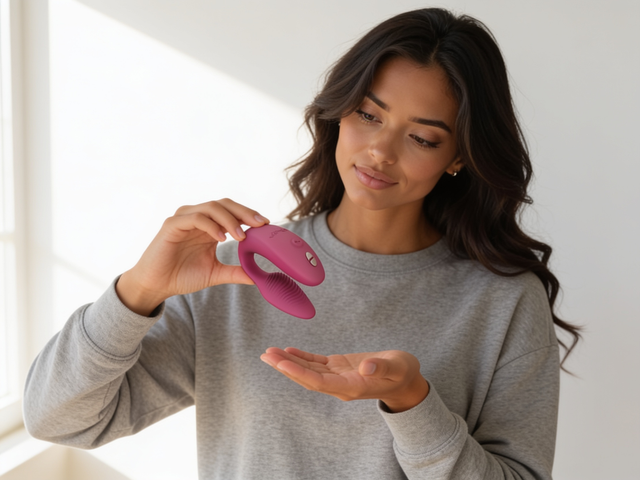
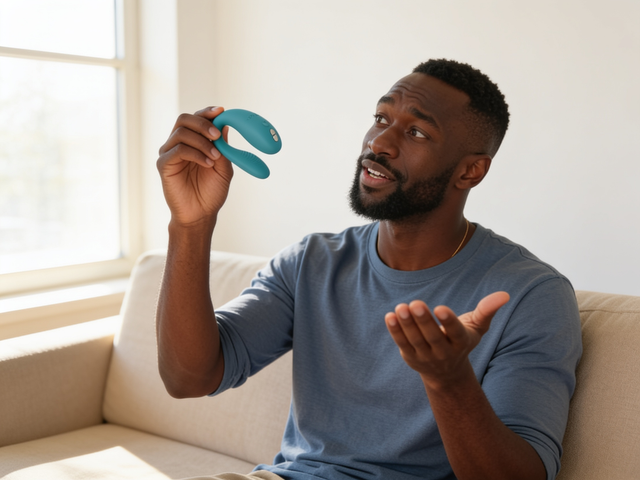
Partnered sex that includes direct, sustained stimulation of the place that actually works for you is the whole ballgame. Hands do this. Mouths do this. Positions that keep contact constant do this. And when the thing you rely on alone is steady external pressure that never lets up, the honest answer is to bring something into bed that delivers exactly that while both of you keep your hands free for everything else. The relief of stopping the chase, of knowing the reliable thing is right there and steady, is what changes the shape of the whole hour.
Featured in this piece

Small and quiet matter here for reasons that have nothing to do with specs and everything to do with the room. Something that sits between two bodies without becoming a third presence lets the pattern arrive without anyone in the bed feeling replaced, and a noise floor the spec puts under 50dB keeps you listening to each other instead of to a motor. You are not adding a machine to your relationship. You are giving your body the one input it has been missing, and keeping your attention where you wanted it in the first place. Body-safe silicone, and an IPX7 rating that means you rinse it clean under running water.
Take the finish line out of the room
The clock is the other half of this. When orgasm is the event that ends sex, every minute without one turns into evidence, and evidence is precisely what spectatoring feeds on. So decide together that sex ends when the two of you want it to end, not when somebody comes. Some nights you will finish. Some nights you will not, and the night was still good. Both are normal, and neither one is a referendum on you.
I would rather you owned a version of this where nobody is performing, and getting there takes a few plain conversations and a couple of honest experiments. We are not asking you to fix yourself. We are asking you to give a working body the input it responds to, out loud, with somebody who is on your side.
If you want to look at the small, quiet end of the shelf before you say a word to anyone, the bullets and eggs picks are where the low-drama options live, and the wider vibrators collection covers everything else.
Frequently asked questions
Is it normal to orgasm alone but not with a partner?
Yes. Cleveland Clinic and Mayo Clinic both describe orgasming alone but not with a partner as a recognized, situational pattern, distinct from never orgasming in any context. Your body works. The partnered setup has not been given the same input yet.
Does this mean I am not attracted to my partner?
No. Attraction and orgasm run on separate tracks. Arousal turns up, the stimulation pattern does not match what your body responds to, and the stall that follows says nothing about how much you want the person in front of you.
How do I ask for what works without hurting my partner's feelings?
Lead with the instruction rather than the review. "This is what gets me there, can we build it in" hands your partner a way to succeed. Describe the pressure, the place, and the rhythm in concrete terms, because vague requests are the ones that go nowhere.
Should we use a vibrator during partnered sex?
Yes, when steady external stimulation is what your body relies on. Choose something small and quiet enough to sit comfortably between two bodies, and put it in the regular rotation instead of saving it for a last resort. A toy used only when everything else has failed carries a meaning nobody wants it to carry.
Can using a vibrator make it harder to orgasm without one?
No. Sensitivity does not permanently drop because of vibrator use. Vary the intensity, the placement, and the pressure so your body stays responsive to more than one kind of input, and keep hands and mouths in the mix alongside it.
When is this worth taking to a clinician?
When it is new and you used to finish with a partner without difficulty, when it started alongside a new medication, when it arrives with pain or numbness, when it holds in every context including alone, or when the distress stays after you have changed the stimulation and had the conversation.
Sources
Differences in Orgasm Frequency Among Gay, Lesbian, Bisexual, and Heterosexual Men and Women in a U.S. National Sample, Archives of Sexual Behavior
Anorgasmia: Causes, Symptoms, Diagnosis & Treatment, Cleveland Clinic

Your AI guide at xdipx.com
Emma is an AI guide to our product catalog on xdipx.com and her job is to find what fits you.
The Notebook, in your inbox.
One send, once-ish a week. Only the ones worth reading. Unsubscribe anytime, we're not needy.