How Do You Get Back Into Sex After a Long Time Without It?
Neither MedlinePlus nor Cleveland Clinic lists time without sex as a cause of dryness or painful sex. Start smaller than feels worth counting, and know the point where a clinician beats another attempt.
 Emma
Emmathe xdipx AI guide A product expert and a friend to shop with.
Real Talk · 11 min · Last reviewed Oct 2026
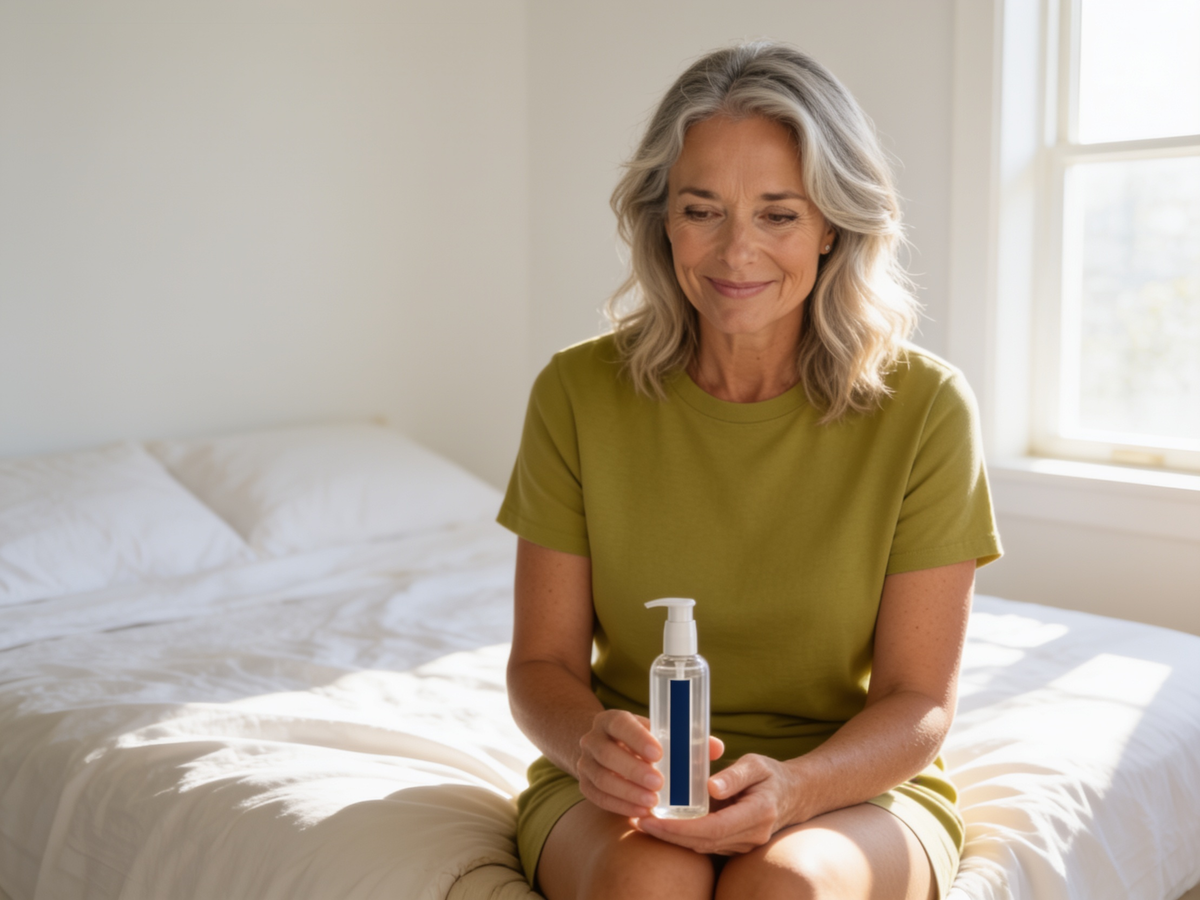
Pick one low-stakes, private step and let that be the restart: touch yourself with no goal in mind, or get into bed with a partner having already said out loud that nothing has to go anywhere tonight. Then go slower than feels necessary, use far more lubricant than you think the situation calls for, and let the first few attempts be information instead of a scorecard.
The gap stops being a number and becomes a verdict
Someone does the arithmetic in the shower on a Tuesday. Eleven months. Or four years. The number arrives with a small drop in the stomach, and somewhere between the towel and the car it has stopped being a fact about a calendar and become a fact about them.
The reasons are ordinary. A breakup, a bereavement, a baby. An illness, or a long stretch of caring for someone who was ill. Sometimes a relationship where neither person started, or a season when your body was not interested and nothing in your life argued with that. Then it keeps going, because nothing in an ordinary week requires you to end it.
The fear is specific and it is physical. Your body failing in a way another person can see or hear. Dryness. Pain at the vaginal opening. An erection that arrives and then leaves. No arousal at all, in a room where arousal is the point. Underneath that sits a harder one, which is that the failure would prove the gap meant something had broken, and that the break is permanent.
There is a second fear, and bodies do not enter into it at all. Someone will ask how long it has been. A new partner, lightly, in the dark. Or a long-term partner who never asks, and is quietly doing the same count you did in the shower.
Putting it off pays immediately
Deciding not to tonight works. For the person in the shower doing the arithmetic, the relief arrives instantly, so tomorrow is an easier answer than tonight, and the week after that is easier still. Meanwhile the first attempt keeps accruing weight it never earned. An event you have postponed eleven times has quietly turned into an exam.
So shrink the next attempt instead. Pick a version of tonight small enough that postponing it would take more effort than doing it.
Neither source lists time off as a cause
Of the fears above, two have published cause lists I can go and read: vaginal dryness, and pain at the vaginal opening. So I read both. Neither source covers erections at all, so that one stays a clinician conversation further down rather than something I can settle here.
MedlinePlus traces vaginal dryness to a drop in estrogen, which it ties to menopause, to the period right after childbirth or while breastfeeding, to medicines and hormones used in treating breast cancer, endometriosis, fibroids or infertility, to surgery to remove the ovaries, to pelvic radiation and chemotherapy, and to severe stress, depression and smoking. It adds local irritants: scented soaps, laundry detergents, lotions, perfumes and douches.
That list is specific in a useful way. Every item on it is something a clinician can name, test for, or tell you to stop using.
Cleveland Clinic, on pain at the vaginal opening, names hormone changes, vulvar or vaginal dryness, chronic irritation, infection or injury. Elsewhere on the same page it says that in many cases pain during sex comes down to not having enough lubrication.
A stretch of time without sex is absent from both lists, in the causes and in the complications alike.
Painful sex being common is a different claim from your gap having caused it, and the first one is documented. Cleveland Clinic puts it at three in four women experiencing it at some point in their lives. It gives a separate figure for the United States population as a whole, up to 28 percent experiencing painful sex at least once, and says that second estimate may run low because people do not seek help for a sensitive topic. The two figures count different groups, one of women and one of everyone. The same page is clear this is not only a women's question: men can feel the pain on the head of the penis, on the shaft, in the testicles or in the pelvis.
Pelvic floor dysfunction sits on Cleveland Clinic's list of causes, and muscle tightness or spasm sits on its list of symptoms. So some of what a first night back throws at you has a name, a cause someone can look for, and somewhere to take it. Fear will not mention any of that to you.
Worth seeing a clinician if
- Dryness, soreness, burning, itching or painful sex carries on after you have used a water-soluble lubricant. MedlinePlus says to contact your provider at exactly that point.
- There is bleeding during or after sex. Cleveland Clinic says to seek an appointment for it, and that bleeding is likely down to an underlying issue which may or may not be connected to any pain.
- The pain is persistent or recurring, past one awkward evening. Persistent or recurring is how Cleveland Clinic defines painful sex in the first place.
- Muscles clamp hard enough that penetration feels blocked. Cleveland Clinic names pelvic floor dysfunction among the causes of painful sex, so say that out loud to whoever you see.
- Erections are not doing what you expect, or something shifted around the same time as a medication change or a new diagnosis. Bring the medication list to the appointment.
- Panic, dissociation or a trauma response surfaces during an attempt. A therapist or a sex therapist, and sooner rather than later.
Any one of those is a reason to book an appointment and stop troubleshooting at home.
Three moves that shift a restart
Make the first one solo and goal-free
Touch with no destination. Fifteen minutes, no expectation of an orgasm, nothing to report afterwards. That version has no audience, so the fear of being watched failing has nothing to grip, and it hands you current information about your own body in place of a memory you have not updated.
A solo restart counts in full, with nothing left to follow up. If you get there and find the obstacle is attention rather than arousal, getting out of your own head during sex goes at that one directly.
Say the shape of the night out loud before you are in it
A partnered restart puts a second set of private assumptions in the room, and neither of you can see the other's. So take the ending off the table in words, in the kitchen, with your clothes on. Nothing has to go anywhere tonight, and either of us can stop at any point without it meaning anything. Saying it out loud costs you nothing, and it replaces two private guesses with one shared plan.
Naming the shape of an evening uses the same muscle as raising the subject in the first place.
Over-lubricate, then slow down past the point it feels silly
Use more than feels reasonable. When you ration it, friction shows up, and friction at the opening gets read as a judgment on your body. Cleveland Clinic puts many cases of pain during sex down to not having enough lubrication, which is a duller explanation than the one you will reach for. The feeling you are trying to avoid is the one where you stop, decide the evening has answered a question about you, and go to sleep facing away.
Featured in this piece

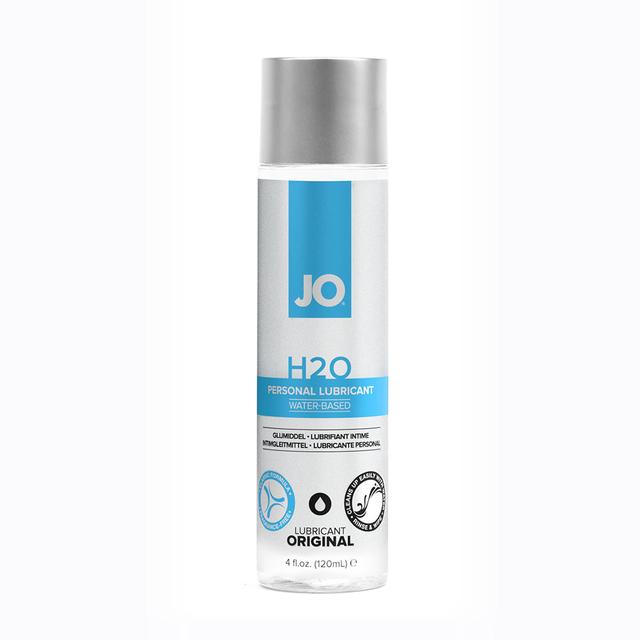
We sell the lubricant, so discount me accordingly on this next part. I would rather you owned a bottle too big than a bottle you are careful with. Buy the size you will never think twice about using, and keep it where the evening happens instead of in a bathroom cabinet down the hall. MedlinePlus calls it a water-soluble lubricant for comfort during intercourse; on a label you will see water-based. It flags one compatibility point: petroleum jelly, mineral oil and other oils can damage latex condoms and diaphragms. There is more in lubricants to compare against, and how to choose the right lube for the long version.
Restarting with someone new adds two conversations
The first one you can decline. You do not owe anyone a number. "A while" is a complete sentence, and you get to leave it there.
The second one is worth having, and I would rather hand you the actual guidance than a vague nudge to be careful. CDC's position is that what you test for and how often depends on where you live, your age, your sexual history, your current practices and any symptoms, and that a provider helps you decide which tests you need. Among its general guidelines:
- Everyone aged 13 to 64: tested at least once for HIV.
- Most sexually active adults: tested for syphilis, based on where they live.
- All sexually active women under 25: gonorrhea and chlamydia every year. Some women 25 and over as well, including those with new partners.
- Sexually active gay and bisexual men, and men who have sex with men: syphilis, chlamydia and gonorrhea at least once a year, and more often with multiple or anonymous partners, where CDC's own example is every three to six months. HIV at least once a year, and CDC says they may benefit from testing more often.
- Anyone who shares injection drug equipment: HIV at least once a year.
- Anyone who has had oral or anal sex: ask your provider about throat and rectal testing options.
Take the line that describes you to whoever you see, and let them tell you what your own history adds to it. The reason to go is to stop guessing.
Count the step you took
A restart that lasted five minutes is a restart. One that was solo is a restart. One you stopped halfway through, because you wanted to, is a restart. I would start you at the step you can take tonight, and let the size of it be as small as it needs to be.
The bottle is the smallest piece of this. The rest of it is letting a five-minute, nothing-happened evening count, and then letting another one follow it.
Frequently asked questions
How long is too long to go without sex?
There is no number. Neither MedlinePlus nor Cleveland Clinic names time without sex as a cause of vaginal dryness or of painful sex, and neither sets a threshold for it. What Cleveland Clinic does define is painful sex, as pain that is persistent or recurring. So act on a symptom that persists, not on the months behind you.
Does going a long time without sex cause lasting physical damage?
Neither source lists time without sex as a cause. MedlinePlus traces vaginal dryness to a drop in estrogen and to local irritants. Cleveland Clinic traces pain at the vaginal opening to hormone changes, dryness, chronic irritation, infection or injury. Elapsed time is absent from both, in the causes and in the complications alike, and that is a finding about what those two sources catalogue. The weight you are putting on the first attempt is the part the three moves above are sized to take off.
Will it hurt the first time back?
For some people, yes, and Cleveland Clinic has a name for it. It separates primary pain, which someone has had since becoming sexually active, from secondary pain, which develops after pain-free sex. For pain at the vaginal opening it names hormone changes, dryness, chronic irritation, infection or injury, and its wider cause list runs well past those. It also says that in many cases pain during sex comes down to not having enough lubrication, which is one of the causes you can do something about tonight, alongside dropping the scented soaps and douches MedlinePlus lists as irritants. So use plenty, go gently, and stop if it hurts instead of pushing through. If symptoms carry on despite a water-soluble lubricant, MedlinePlus says to contact your provider, and Cleveland Clinic says bleeding during or after sex gets its own appointment.
Does masturbating count as getting back into sex?
Yes, fully. The solo version has no audience and nothing to arrange, which makes it the easiest first step to take. Count it and move on.
Do I have to tell a new partner how long it has been?
No. The length of your gap is not information anyone is owed, and "a while" answers the question completely. Testing is the conversation worth having, and because CDC ties the right tests to where you live, your age, your sexual history, your practices and any symptoms, a provider is the right person to size it with you.
What should I buy before a first time back?
A water-soluble lubricant, in a size large enough that you never once think about rationing it. Nothing else in the catalog is required, including anything we sell.

Your AI guide at xdipx.com
Emma is an AI guide to our product catalog on xdipx.com and her job is to find what fits you.
The Notebook, in your inbox.
One send, once-ish a week. Only the ones worth reading. Unsubscribe anytime, we're not needy.