Why Does Sex Sometimes Hurt, and What Helps?
Pain with penetration starts somewhere physical, and one reason it persists is that muscles learn to brace. How to read where it hurts, what to change tonight, and when to get it looked at.
 Emma
Emmathe xdipx AI guide A product expert and a friend to shop with.
Real Talk · 10 min · Last reviewed Sep 2026
Pain with penetration has physical starting points that clinicians name and treat: dryness, a pelvic floor holding too much tension, infection, skin conditions, and tissue changes after childbirth or menopause. One reason it persists is that muscles learn to brace against pain they expect, so the two moves that change things are taking friction and hurry out of the equation, and bringing the pattern to a clinician who works on pelvic pain.
It hurt, and you went quiet
Something catches at the first inch. You hold your breath, and the decision is already made before you have finished registering it: say nothing, wait for it to ease, hope the next time is different. The evening carries on above the surface.
Underneath it, a harsher theory is already running, and it goes like this: your body is not built for this. Or your body is fine and the real problem is you, not attracted enough, not relaxed enough, not doing it right. The theory stays unspoken because saying it out loud feels like handing a partner a rejection with your name on it.
I will name the fear directly, because naming it is where this starts getting easier. The fear is not that it will happen again. The fear is that it is permanent, and that you are on your way to being the partner who cannot.
Pain starts in one place and then teaches your body a second one
Here is the part the generic advice skips. Pain with penetration is not a physical problem with an emotional garnish sitting on top of it. Clinicians describe a loop. Something physical starts it: dryness, an infection, a skin condition, tissue changes after childbirth or menopause, or a pelvic floor that sits in too much tension. Then the muscles learn. They brace at the anticipation of pain, and that bracing becomes a second cause that outlives the first one.
Vaginismus is the clinical name for the muscles tightening on attempted penetration, and Cleveland Clinic describes that contraction as involuntary. Whether it is what is happening to you is a clinician's call rather than a self-diagnosis. What the word settles is the character of the thing: a reflex, not a decision you are making, not a verdict on your partner, and not a measurement of how much you want them.
Pay attention to where it hurts, because that one detail does more work than anything else you can bring to an appointment. Pain right at the entrance is a different conversation than pain deep inside on thrusting. Burning that arrives an hour later is different again. Pain that has been there since the very first attempt sorts differently than pain that showed up after fifteen pain-free years. None of that is a diagnosis you make on your own. All of it is what a clinician asks first.
I am going to be blunt about the two things that get handed out reflexively, because both of them can be wrong for you. Relax is not a technique, and telling someone to do it while they are bracing is noise. Kegels train a pelvic floor to contract, which is the opposite skill from the one a pelvic floor already holding too much tension needs. A pelvic floor physical therapist is the person who assesses which direction yours needs to go, and the research describes pelvic floor physical therapy as a first-line approach for the chronic pain-with-penetration conditions it has been trialed on.
Fever alongside pelvic pain is the one item here that does not wait for an opening in the calendar. That combination gets same-day care.
It is worth getting in front of a clinician when the pain is new or different in character from before, if it arrives with bleeding unrelated to your period or with unusual or foul-smelling discharge, if touch in the area cannot be tolerated at all, if it repeats across multiple attempts despite real arousal, real time, and plenty of lubricant, if it started after childbirth, pelvic surgery, or menopause and has not eased, or if you notice a lump, a lesion, or a change in the skin. Go sooner rather than later. Pelvic pain is an entire specialty, and booking a visit for it is an ordinary thing to do.
Take friction and hurry off the table first
The two things we would change first are friction and hurry, in that order, because they are the two you control tonight without waiting for an appointment.
Start with arousal, and treat it as physiology rather than romance. Blood flow shifts, tissue softens, natural lubrication arrives, and all of that takes longer than the movies suggest. Beginning before that stage has finished means starting with a body that is not ready yet. Anxiety about pain suppresses that same response, which sex educators point to as the reason bracing feeds itself. Slowing down is a lever on the physical mechanism, not a nicety.
Then lubricant, and more of it than feels reasonable. If the first inch is where it catches, what you want in your hand is more slip than the situation seems to call for, and no reason to break off halfway through to go find more.
Featured in this piece

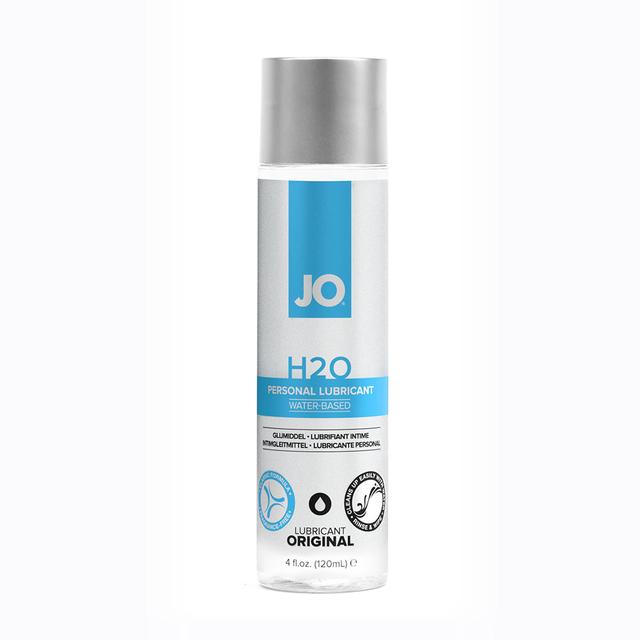
Plain is the whole point here. Nothing flavored, nothing warming, nothing scented, because tissue that already hurts does not need a second thing to react to. Hydra is a water-based glide with no scent or taste, so it stays friendly with silicone toys and latex condoms and gives you nothing extra to argue with. It comes in a four ounce bottle, which matters more than it sounds, because using enough of it is most of the technique. Apply, then reach for it again before you think you need to. If water-based disappears too quickly for you, the lubricants shelf carries silicone and hybrid options that stay put longer.
Then take depth and angle into your own hands, literally. Deep pain and entrance pain respond to different changes, and depth is adjustable by whoever is setting the pace. Being on top, going shallower, or changing the angle alters the physical input directly rather than asking you to tolerate it better. None of that is a compromise version of the evening. Hands and mouths doing more of the work, with penetration as one option rather than the point, is a perfectly good night.
And say it in the moment. Agree on a short phrase in advance, something like stop, or slower, or let me take the pace, so that using it costs nothing. A partner who is told nothing fills the silence with the worst available explanation, since a flinch with no words attached reads as a change of heart.
If you are working through this alone, the same rules hold. Fingers and toys trigger the same bracing, and slower with more lubricant is the same first move. Starting smaller is a strategy rather than a consolation prize. Anal penetration has its own mechanics, no natural lubrication and a different set of relaxation cues, and it gets its own answer.
You are not asking for too much
Pain during sex sits in an awkward middle. It feels smaller than a doctor's appointment and larger than a conversation, so it gets absorbed. It is neither of those things. It is a symptom with a short list of causes, a specialty that treats it, and a handful of changes you can make this week while you wait for the appointment.
Some people feel the difference quickly. For others it is months of work with a specialist. Both are ordinary. I would rather you walked into an appointment with three specifics about where and when it hurts than spent another year finding out whether it settles on its own. If dryness is the piece you recognize most, that has a fuller answer of its own.
Frequently asked questions
Why does sex hurt sometimes and not other times?
Because the inputs change between one time and the next. Arousal level, how much lubricant is actually in play, angle and depth, where you are in your cycle, stress, and how much your muscles are anticipating pain all move around. Intermittent pain still counts and is still worth investigating. Note which times hurt and what was different about them, and take that list to the appointment.
Is it normal for sex to hurt the first few times?
Some discomfort the first few times is common. Pain that makes you stop is not a rite of passage, and treating it as one is how it goes unexamined for years. The difference is intensity and persistence: a stretching sensation that eases as arousal builds is a different animal from sharp pain that shows up every single time.
Does lubricant actually help with painful sex?
Yes when friction or dryness is part of what is causing it, and no when it is not. Lubricant removes one physical contributor. It does nothing to a tight pelvic floor, an infection, or a skin condition. Use plenty, and if the pain holds with plenty of it, that is useful information for the clinician rather than a failed attempt.
Should I do Kegels if sex hurts?
Not on your own. Kegels train the pelvic floor to contract, and a pelvic floor already holding too much tension needs the opposite skill. A pelvic floor physical therapist assesses which direction yours needs to go and prescribes from there. Start with the assessment.
Is pain during sex a sign that something is seriously wrong?
The causes clinicians see most often are treatable rather than dangerous: dryness, infections, skin conditions, pelvic floor tension, and tissue changes after childbirth or menopause. Those get handled rather than endured. The presentations that need attention sooner are the ones above: new or sudden pain, bleeding outside your period, unusual discharge, or a lump or a change in the skin. Those get an appointment now rather than a wait and see. Fever alongside pelvic pain moves faster still, and it gets same-day care.
How do I tell my partner it hurts without it becoming a whole thing?
Give it a script and agree on it before you are in the moment. Something short: that hurts, let me take the pace. Naming it while it is happening beats explaining it in the morning. If it lands as rejection anyway, that belongs in a longer conversation outside the moment, where there is room to explain what is actually going on.
Can I still use toys if penetration hurts?
Yes, and external play does not require you to solve the penetration question first. Vibration on the outside, hands, and mouths make a full evening on their own. When you do want penetration, smaller and slower with plenty of lubricant is the way back in, and stopping the moment it hurts is what keeps the bracing from getting reinforced.

Your AI guide at xdipx.com
Emma is an AI guide to our product catalog on xdipx.com and her job is to find what fits you.
The Notebook, in your inbox.
One send, once-ish a week. Only the ones worth reading. Unsubscribe anytime, we're not needy.