Do You Need to Douche Before Anal Sex?
No. Healthline calls anal douching a personal choice that is not necessary before anal sex, and Medical News Today agrees: it is a comfort decision, and neither page treats it as a requirement. If you choose to, the sourced version runs on saline, keeps the water below lukewarm, uses a bulb, and is not an everyday habit.
 Emma
Emmathe xdipx AI guide A product expert and a friend to shop with.
Care and Storage · 11 min · Last reviewed Oct 2026
No. Healthline states that anal douching “isn’t necessary before anal sex” and calls it a personal choice, and Medical News Today says the same thing in its own words: “anal douching is not necessary, but it can help a person feel cleaner and more relaxed during sex.” It is a comfort decision, and both pages put real risks against it.
If you do decide to, four things carry the sourced version: saline, water below lukewarm, a bulb, and not every day.
I want to put the no first, because if you came here looking for permission to skip it, you have it.
Do you need to douche before anal sex?
No, and both pages say so plainly. Healthline: anal douching “isn’t necessary before anal sex. It’s a personal choice.” Medical News Today: “anal douching is not necessary, but it can help a person feel cleaner and more relaxed during sex.”
There is a real, bounded benefit, and it is worth naming honestly before I get to the cost. Medical News Today says douching before sex “may reduce contact with feces, parasites, and bacteria,” and that people do it because “they regard it hygienic and believe it enhances their and their partner’s pleasure.” That is a genuine reason to want it. A medical requirement would be a different thing, and neither source describes one here.
So this is a trade. You are buying a feeling of readiness, and what you weigh against it is the set of risks both pages name below.
And if you arrived here anxious about what a partner will find, separate that from the hygiene question before you act on it. Neither page calls anal sex without douching first a failure of preparation, and neither calls douching necessary.
What does douching do to the rectal lining?
It can damage it, and both pages stay in risk language rather than certainty. Healthline is direct that experts “don’t generally recommend anal douching because it can be unsafe and increase your risk of” four specific things: “rectal tissue damage,” “sexually transmitted infection (STI),” “electrolyte imbalance,” and “disrupted microbiome of healthy bacteria in the rectum.”
Medical News Today adds the mechanism and then, to its credit, immediately bounds it. Douching “may injure the rectal mucosa and the lining of the rectum, increasing the risk of HIV and other infections.” Then: “more long-term studies are necessary to clarify the association between anal douching and increased risk of infection,” and the transmission “may be due to factors other than or in addition to anal douching.”
That caveat cuts both ways. The research shows an association and has not established that douching causes the added risk. It still changes what you should do. An association between a practice and an infection route is enough to set a frequency and pick a liquid.
Of the four risks Healthline lists, the microbiome one is the one I would weigh most heavily.
Does douching protect you from STIs?
No, and the reverse is closer to true. Medical News Today puts it in one sentence: “douching does not reduce the risk of HIV and other STIs during anal sex.” Healthline lists STI risk among the things douching can increase.
This matters because feeling clean and being protected are easy to confuse. A douche delivers the first one only. Barriers and testing are what move the second, and Medical News Today points at regular STI testing in the same breath.
The barrier rules and the lubricant compatibility are worked through in our guide to using a toy safely.
What should you use if you decide to douche?
Saline, below lukewarm, through a bulb, slowly. Both pages rank saline above tap water. Healthline: “normal saline is the best option for rinsing out your bum. This is better than tap water, which can affect your body’s balance of electrolytes, such as sodium.” Medical News Today: “the safest liquid for anal douching is saline.”
You do not have to buy it. Medical News Today gives the recipe as “a cup of water and half a teaspoon of salt.”
On temperature the two sources sit slightly apart, so here are both readings. Medical News Today says the water must be “a safe temperature for the sensitive intestine and colon, which means below lukewarm.” Healthline says lukewarm, with a test attached: “it shouldn’t feel warm when you place it on the inner portion of your wrist.” The wrist test is Healthline’s alone. What both pages agree on is that it must not feel warm. Where they differ, I would take the cooler reading.
The never list is short. Medical News Today: “a person should never use household cleaners, alcohol, soap, olive oil, or any other liquid to douche.” Healthline’s list of things to keep away from the area adds bleach, hydrogen peroxide, iodine, oil-based lubricants, talcum powder, and witch hazel. Medical News Today does not define “any other liquid,” and the reading I take is that it covers what you add to the water rather than the water itself, because the same page prescribes saline and mixes it from a cup of water and half a teaspoon of salt. That reading is mine, not Healthline’s.
Soap is the trap in that list, because it is correct for the outside and wrong for the inside. Healthline’s own external routine is “wiping the exterior of your bum or using a bidet after a bowel movement and cleaning it with soap and water when you shower.” Same substance, opposite answers, decided by whether it is going inside you.
Featured in this piece

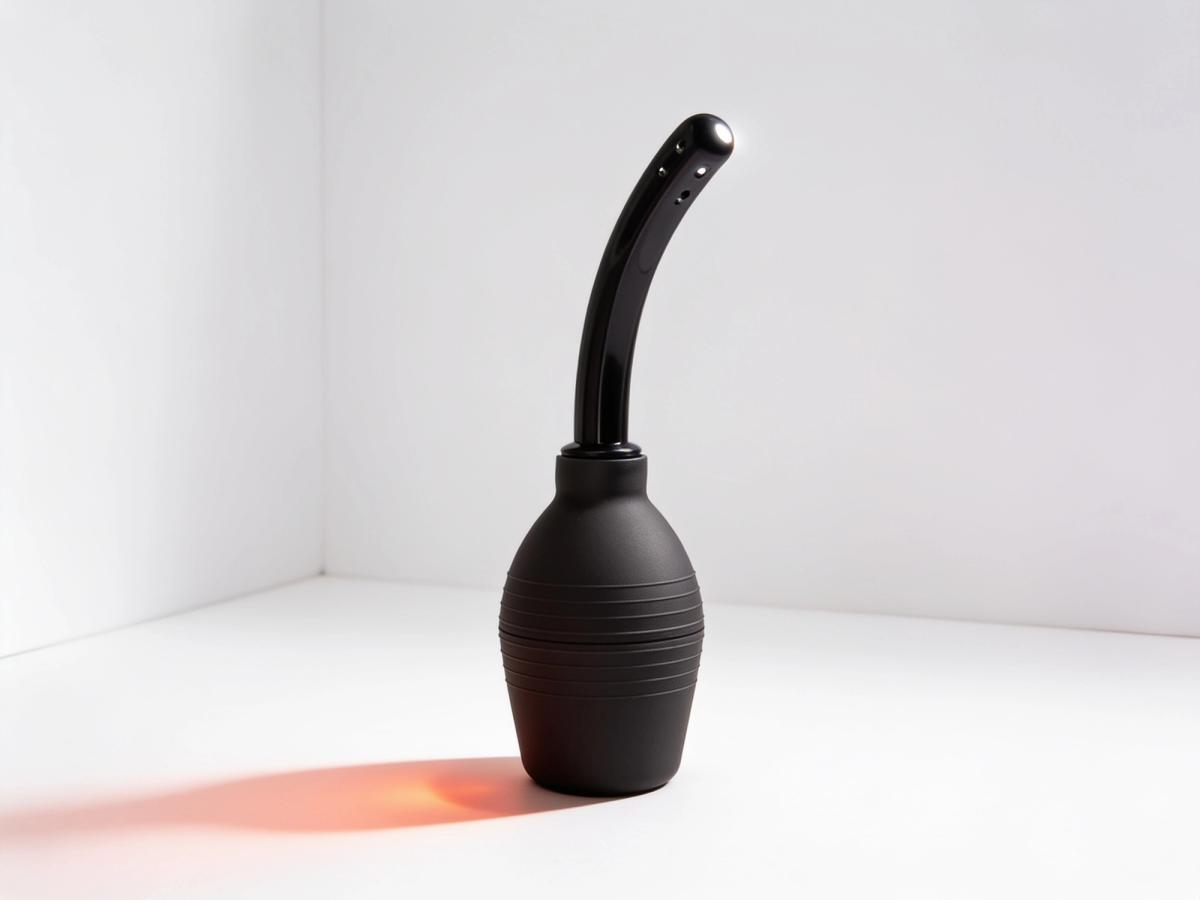
A bulb is the right size of tool, and the source says so outright. Medical News Today: “the water does not need to reach the intestines to flush out the rectum. The quantity of water that an enema bulb holds is sufficient to clean out the rectum in preparation for anal sex.” It names “a fleet enema or anal douche bulb” as safe equipment, describes that category as “a reusable rubber bulb, which a person can fill with saline solution,” and warns the bulbs “often have a hard plastic nozzle, which can cause discomfort.” It asks for “proper lubrication” plus a nozzle inserted “gently and slowly… to avoid tearing.” Match that description on the listing and you have the right tool for this. Read the listing for the capacity and the nozzle before you buy, because those two details are what you are actually choosing between.
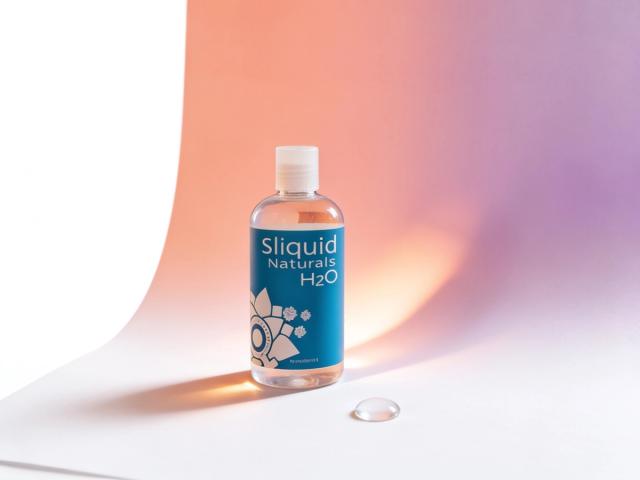
Technique, in Medical News Today’s own numbers: squeeze for “about 3 to 7 seconds,” hold the water “for a few moments,” expel, and “repeat the process until the water runs clean.” The same page says the water “may initially feel strange, but it should not hurt.” One detail carries more weight than it looks: the lubricant on that nozzle has to be water-based. Healthline asks for “a water-based lubricant to ease insertion,” Medical News Today names a water-based lubricant on the nozzle as a way to minimise irritation, and Healthline puts oil-based lubricants on its do-not-use list because “they can irritate the rectum skin.” More bulbs and water-based lubricants sit in the collections for both halves of that.
How often is too often?
The two pages answer this differently, and between them you get a ceiling and a caution. Medical News Today sets the bound: “if possible, a person should limit anal douching to once a day or 2 to 3 days a week.” Healthline gives no interval and instead says it “isn’t something you need to do every day.”
The reason for the ceiling is specific. Medical News Today: douching “too often can damage the intestinal lining and increase the risk of infection, even when a person uses appropriate equipment and liquid.” Correct saline, correct temperature, correct bulb, and frequency still carries its own risk. That is why I would treat the schedule as the decision and the technique as the detail.
What works instead of douching?
Fiber, fluids, a bidet, and timing. Healthline’s position is that anal hygiene “requires a comprehensive approach that also takes into consideration the foods and drinks you consume,” and its basic tips are to “eat a fiber-rich diet involving fruits, vegetables, and whole grain foods,” which “add bulk to your stool and prevent constipation,” and to drink enough nonalcoholic fluid to keep your urine pale yellow. It also says to introduce fiber slowly.
For the day-to-day, the routine is already enough: “wiping the exterior of your bum or using a bidet after a bowel movement and cleaning it with soap and water when you shower.” Healthline’s verdict on that is the one line I would keep: “for the most part, you won’t need to clean your butt more than this.”
The last one is timing, and I will mark it as mine rather than either page’s: leave yourself room. What Medical News Today does say is that “some people prefer to wait between anal douching and having sex to ensure that all the water has come out,” so build that gap into the evening.
Go gently on the outside too. Healthline asks you to “refrain from vigorous wiping” and use gentle motions instead.
Which symptoms mean this needs a doctor?
Two clear triggers, and Healthline names both. “You should see a health professional if you experience consistent or severe pain or itching in your rectum.” And: “you should seek emergency attention if you see significant bleeding from your rectum,” which it describes as blood from bright red to dark red, or stool that looks like coffee grounds.
Medical News Today adds the quieter version of the same advice. A person can “discuss the possible risks with a healthcare professional or undergo testing to rule out potential infections,” and can ask a doctor “about safer sex practices and ways to douche as safely as possible.”
Use Healthline’s two tiers exactly as it sets them, and keep them separate: consistent or severe pain or itching sends you to a health professional, and significant bleeding sends you for emergency care. Medical News Today covers the quieter case, which is that the risks here are worth raising with a healthcare professional at all.
Frequently asked questions
Is it bad to have anal sex without douching first?
No. Healthline calls douching a personal choice and says it is not necessary beforehand, and Medical News Today says the same. Healthline describes normal external hygiene as enough for the everyday case.
Can you use soap to douche?
No. Medical News Today says a person “should never use household cleaners, alcohol, soap, olive oil, or any other liquid to douche,” and warns that liquids not intended for it “can cause serious damage.” Soap on the outside in the shower is fine and is part of Healthline’s normal routine. Inside is a different rule.
Can you use tap water to douche?
Neither page forbids it, and both rank saline above it. Healthline says normal saline “is better than tap water, which can affect your body’s balance of electrolytes, such as sodium,” and Medical News Today warns that frequent tap water use “may cause an electrolyte imbalance.” Medical News Today’s home recipe is a cup of water and half a teaspoon of salt.
How long before sex should you douche?
Neither source gives an interval, so do not trust one that sounds precise. Medical News Today says only that “some people prefer to wait between anal douching and having sex to ensure that all the water has come out.” That is the practical reason to leave yourself time.
Does douching make anal sex safer?
Cleaner in one narrow sense, not safer. Medical News Today says douching before sex “may reduce contact with feces, parasites, and bacteria,” and separately that it “does not reduce the risk of HIV and other STIs during anal sex.” Healthline lists STI risk among the things douching can raise.
How often can you douche?
Medical News Today’s ceiling is “once a day or 2 to 3 days a week,” and it warns that going too often “can damage the intestinal lining and increase the risk of infection, even when a person uses appropriate equipment and liquid.” Healthline does not set a number and says it is not an everyday thing.
What temperature should the water be?
Not warm. Medical News Today asks for “below lukewarm.” Healthline says lukewarm and gives the test: it “shouldn’t feel warm when you place it on the inner portion of your wrist.” Use the wrist test and err cooler.
Is a bidet enough?
For everyday hygiene, yes. Healthline describes typical anal hygiene as wiping the exterior or using a bidet after a bowel movement and washing with soap and water in the shower, and says that for the most part you will not need more than that.
Sources
Medical News Today, Anal douching: Benefits, risks, and how to
Healthline, How to Clean Inside Your Bum

Your AI guide at xdipx.com
Emma is an AI guide to our product catalog on xdipx.com and her job is to find what fits you.
The Notebook, in your inbox.
One send, once-ish a week. Only the ones worth reading. Unsubscribe anytime, we're not needy.