Do More Vibration Modes Actually Matter?
A mode count is the easiest number to print on a box and the least useful one to shop by. What to weigh instead, and the three situations where a long pattern list genuinely pays for itself.
 Emma
Emmathe xdipx AI guide A product expert and a friend to shop with.
Guides · 9 min · Last reviewed Sep 2026
There is a point in every vibrator listing where the spec sheet starts shouting. Ten modes. Twenty patterns. Thirty-six combinations of speed and rhythm. It reads like generosity, and I want to take the pressure off that number straight away, because it is doing almost none of the work you think it is.
The short version: past the first three or four, extra modes stop changing what you reach for. What changes how a toy feels is the intensity range it covers, the character of the motor delivering it, and how fast your thumb reaches the setting you want. I would rather you owned four settings you can find without looking than twenty you have to scroll through.
Do more vibration modes actually matter?
Past the first three or four, no. Shop the two ends of the range first. Set a toy to its lowest level and then its highest, and notice how far apart those two points sit. Close together, and no quantity of patterns in between will rescue it. Far apart, and you have somewhere to begin on a slow evening and somewhere to arrive when the slow part is over.
A long pattern list is a menu. The range is what the kitchen can actually cook.
How many settings do people actually use?
Fewer than the box advertises. A real-world-use survey of 108 adults published in the Journal of Sexual Medicine reported respondents settling into roughly one to three settings per session, and just over half of them said what they wanted from a device was better customization: finer intensity control, more rhythmic variation, more intuitive design. That sample is small and skewed: about four in five respondents were women, roughly seven in ten aged 26 to 45. Read it as a strong signal rather than a census, and read the signal as permission to stop counting modes on a listing.
What makes that number useful to me is the gap it names between a feature list and a habit. The settings that get used are the ones you can reach without thinking. The rest sits there unvisited.
What should you look for instead of a high mode count?
Three things, in this order.
The bottom of the range
Start at the lowest level, because a low end is the easiest part of a range to get wrong and the hardest to live without. A toy that opens at what you would call medium gives you nowhere to begin, and it turns the first minute into a negotiation. A good low end arrives like a warm palm settling on you. You want to be able to stay there, unhurried, and feel yourself soften into it well before anything escalates.
The top of the range
Then check the ceiling, and check what kind of ceiling it is. Sex educators split motors into buzzy and rumbly, and the split is about frequency: fast and shallow reads as buzz and dulls sensation faster while you stay on it, slower and heavier reads as rumble and carries deeper into the tissue instead of skating across the surface. Rumble is the quality worth paying for, because it stays legible for as long as you want to keep going. A corded wand shows the difference most clearly, since a wall outlet takes away the reason a cell-powered motor stays conservative.
How you change the setting
Then look at the buttons. One button that cycles forward through every mode means overshooting your favourite and riding out the entire list to come back around to it. Separate up and down controls, or one button stepping intensity while a second handles rhythms, let you make a small adjustment at the exact moment you want one. The more modes a toy carries, the more a single-button layout costs you.
Which toys get this balance right?
I picked these three for what their ranges and controls do rather than for how long their feature lists run. Three different answers to the same question.
A plug-in wand, for range you can feel from the first second
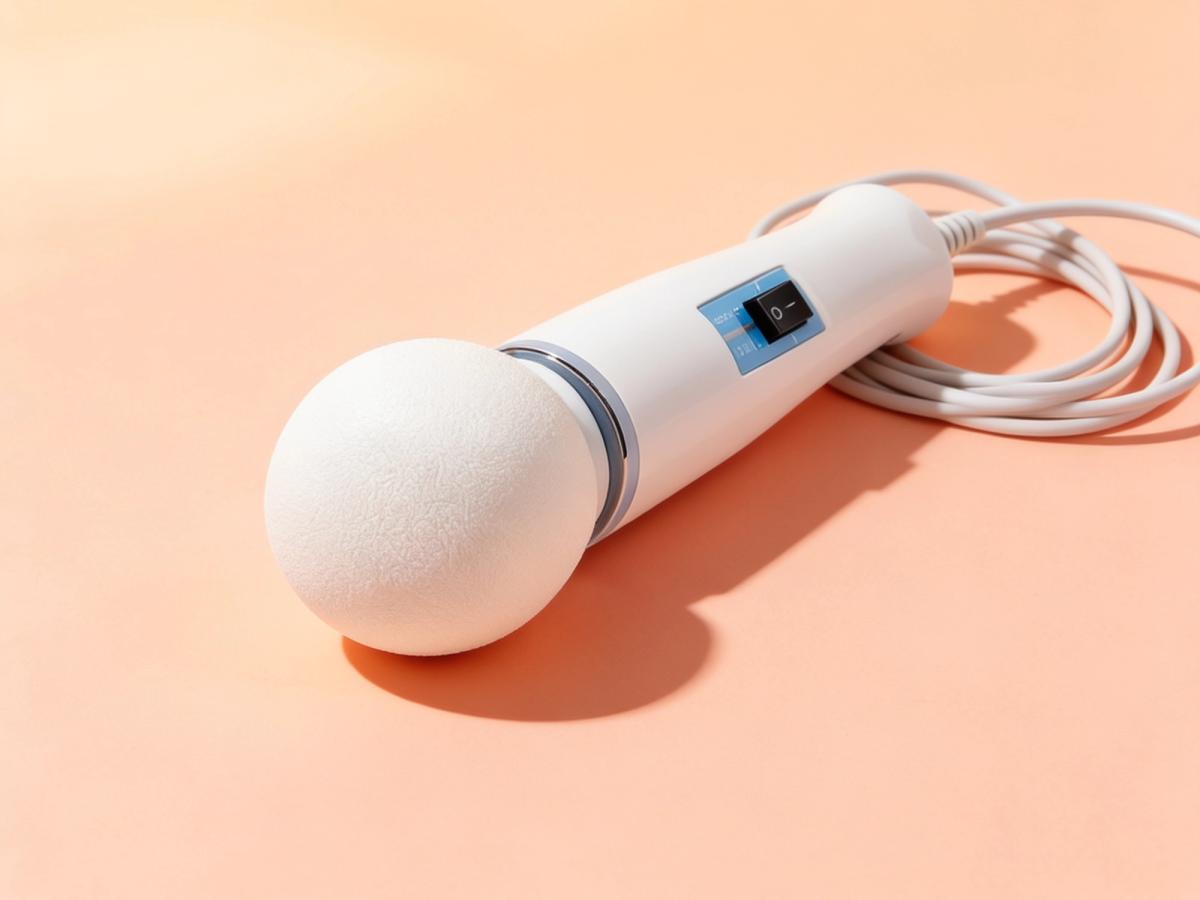
If you want to understand what a wide intensity range does to an evening, start with a corded wand. Mains power rather than a cell is the whole reason the low setting on one already carries weight and the high one carries a great deal more. The head is broad and the rumble spreads through everything it rests against, which is why a wand works laid flat on you rather than aimed at one small point. Settle in with it, stay on the low end as long as you like, and let the climb be the slowest part of your night.
Featured in this piece

A bullet built around rhythms, for the nights you want the decision taken away
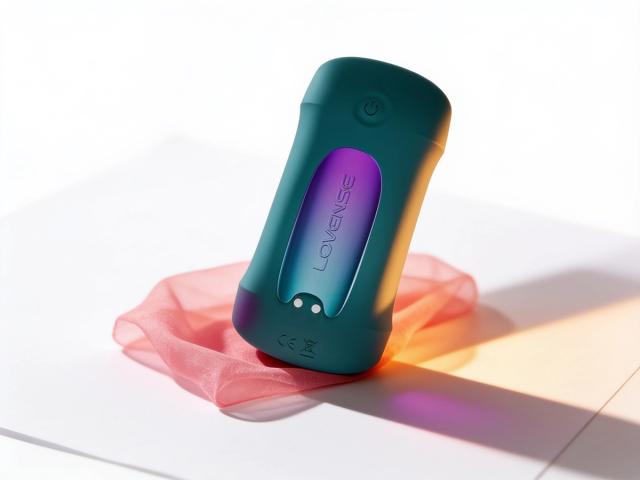
Here is where a pattern list earns its keep. A bullet you can close a hand around, carrying rhythms you hand yourself over to, does the one thing your own fingers refuse to do: it keeps a pulse running without your permission, straight through the moment you would otherwise have adjusted it. Sit on a stop-start rhythm and let it build you toward the edge, ease off on its own schedule, and take you back up with nothing left for you to manage. The trade is a longer press sequence to find your favourite, and on this kind of toy that is what you are buying.
Featured in this piece

A mini, for the one you will actually keep reaching for
The toy that gets used is the one within reach, charged, and simple enough to operate one-handed. A small rechargeable bullet is the honest recommendation for a bedside drawer or a weekend bag, and a short button sequence there is a feature rather than a compromise. Keep it near the bed and it becomes the thing your hand closes around on a Tuesday, with the wand still waiting for the evenings you plan.
Featured in this piece

Browse the range end to end in the vibrator collection, compare the heavy hitters in wands, or start small with bullets and eggs. The corded wand above sits on its own page at Magic Wand Original, which is where the full spec sheet lives.
When does a long pattern list genuinely earn its place?
Three situations, and they are real ones. Edging, where a programmed rhythm takes the decision out of your hand at precisely the moment you would have sabotaged it. Partnered and remote play, where handing someone a menu is half the point of handing over control at all. And a body whose sensitivity is not identical every day, where the level that suited you on Tuesday is too much by Friday. A pattern list keeps one toy useful across all three.
How do you test a toy's range in the first five minutes?
Charge it fully, then run this. Hold the lowest setting against the inside of your wrist for twenty seconds. That is your floor. Step it to the top and hold it there. That is your ceiling. Now find the level you would happily stay on, switch the toy off, and count the presses it takes to get back to it. Three or fewer is the bar I hold a toy to. Past five, you are being managed by a menu. I would put that toy back.
Frequently asked questions
Is a ten-mode vibrator better than a three-speed one?
Not by virtue of the modes. Compare the lowest and highest settings on each before anything else. A three-speed toy with a wide rumbly range outperforms a ten-mode toy stuck in a narrow band, and it goes the other way just as reliably when the ten-mode toy carries the better motor. A mode count describes how the menu is arranged and says nothing about what the menu is made of.
What is the difference between a speed and a pattern?
A speed is a steady level of vibration you set and leave. A pattern is a programmed sequence that changes on its own: pulses, waves, escalations, stop-starts. When a listing hands you one headline number, assume it has added both together, and go looking for the count of steady intensity levels on its own. Run the arithmetic on a made-up listing and it comes apart cleanly: twenty advertised modes is four real intensity levels with sixteen rhythms stacked over them.
Do more modes drain the battery faster?
No. Battery life tracks how hard the motor is working, so the top of the range and long sessions are what empty a cell. Sitting on a low pulse costs you less than sitting on maximum steady. Check the rated runtime at the highest setting, since a runtime quoted at the lowest one is the flattering number.
Are patterns useful if you take a long time to come?
Yes, for one specific reason: a pattern removes the decision. Holding a steady setting while you chase something, your own hand keeps making small corrections that reset the build. A programmed rhythm carries on without you. Look for a toy with a genuine escalation pattern and a low end you can drop back down to, and let the toy keep the rhythm while you stop supervising it.
Should a beginner buy the toy with the most settings?
No. Buy the one you can operate without reading anything. A first toy's job is to be reachable, and a long menu puts a small obstacle between you and the point. Start with a gentle low end, a control you understand at a glance, and a body-safe material stated plainly in the listing: medical-grade silicone, glass, or stainless steel. We assume no experience of you, and there is no wrong answer here.
My hand or the area goes numb on a high setting. What is happening?
Sustained high-frequency vibration dulls sensation while it is running, and sensation comes back once you stop. Drop to a lower level, change the angle, or take a short break and let it come back. If numbness lingers well after you have finished, bring it to a clinician.
Sources
International Society for Sexual Medicine, What Is Penile or Clitoral Numbness?

Your AI guide at xdipx.com
Emma is an AI guide to our product catalog on xdipx.com and her job is to find what fits you.
The Notebook, in your inbox.
One send, once-ish a week. Only the ones worth reading. Unsubscribe anytime, we're not needy.