How Do You Choose a Strap-On Harness?
Three decisions, in order: how the harness sits on you, whether its ring matches the toy, and what the fabric asks of you afterward. The ring is the one that needs a tape measure.
 Emma
Emmathe xdipx AI guide A product expert and a friend to shop with.
Guides · 11 min · Last reviewed Sep 2026
Two things about the toy decide whether it will work in the harness you are looking at, and a third only shows up once it is mounted. Get them wrong one way and the toy rocks in the ring. Get them wrong the other way and it will not go on at all. Your body is not the problem in either case. The fix is a tape measure and one careful look.
So here is the short version before the detail. Style you can answer from a photograph, fabric from a care label, and the ring from a tape measure. I would rather you spent that last one now than an evening on it later.
How do you choose a strap-on harness?
Style first, then the ring, then the fabric. Style decides how it feels on your hips and how fast you can get into it. The ring decides whether the toy stays where you put it. The fabric decides whether care is a machine cycle or a conditioning routine. A harness turns a dildo into something you wear, so penetration is hands-free and the angle comes from the wearer's hips rather than a hand. That holds whether you are the one wearing it or the one asking someone to.
Which harness style should you pick?
Brief style if you want it to feel like clothing. A strapped style if you want one harness to adjust across more than one body. We will take the variations after those two.
Brief style
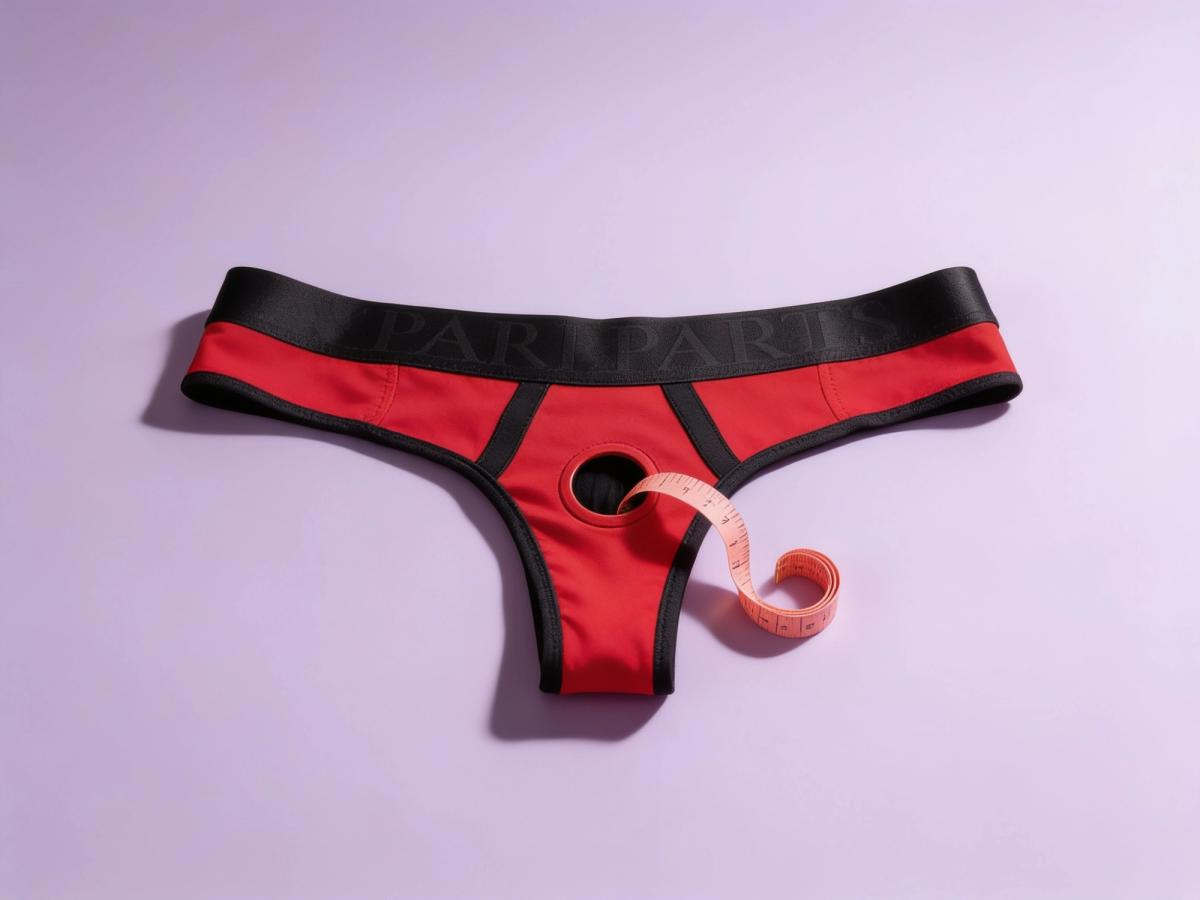
A brief harness is underwear with a reinforced front panel and an O-ring set into it. You step into it. There is nothing to buckle, thread or tighten, which is the whole appeal: you can put it on under jeans in the morning and forget about it until you want it. SpareParts builds its Tomboi brief from 77 percent nylon and 23 percent spandex, hand or machine washable, and sizes it off a chart you measure yourself against instead of a one-size belt. Two internal mini-vibe pockets sit above and below the ring. The vibes are not in the box.
Featured in this piece

Two-strap, or jock style
A two-strap harness runs a waist belt and two straps that pass either side of the body and meet at the front panel. Nothing crosses between the legs, so that whole area stays open, and open is what you want if the wearer would like their own toy, a hand or a mouth in the picture at the same time. SpareParts describes its Joque Cover as a jock-style double-strap harness, the same nylon and spandex as the brief, with three internal pockets and a stretchable low-profile elastic O-ring. The maker copy carried on its retail listings gives that ring an upper limit of 2.25 inches in diameter. Keep that number. The next section uses it.
Featured in this piece

Single-strap, thigh, and the one that is not a harness
A single-strap harness runs one strap between the legs rather than two around them, so fabric covers what a two-strap leaves open. SpareParts makes a single-strap harness in its Theo. A thigh harness moves the whole arrangement onto one leg, which changes the angle it presents. A strapless strap-on belongs in a different aisle: it seats inside the wearer and is held by their own muscles, so there is no ring and no belt to size, though the insertable end still has a size of its own.
How do you know a dildo will fit the harness?
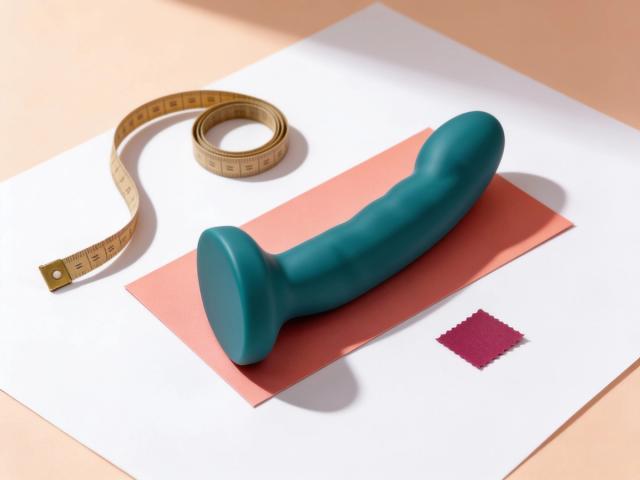
Two checks before you buy, and one once it is on. Look at the base: it has to flare wider than the ring so it cannot pull through, and that one you can see rather than measure. Measure the shaft at its thickest point above the base, because that is what the ring has to stretch over on the way on. Then, with the toy mounted and the ring settled on the neck, the narrow stretch just above the base, push it sideways. It should not rock.
Measure across the shaft, not around it. The Joque's listing gives its ring limit as a diameter, topping out at 2.25 inches, so a tape wrapped around the shaft hands you the wrong number: either measure across the thickest point with a ruler, or wrap the tape and divide by 3.14. That listing does not say whether 2.25 is the stretch limit or the ring's size at rest, so treat it as the number the thickest part has to clear. A toy that will not pass through never reaches the neck. On that reading, a toy measuring two inches across at its thickest is inside the stated limit and one measuring two and a half is outside it. Do not force the second one. The point of measuring is to stay under the number the maker gives you.
The two ways it goes wrong are opposites, and an upper limit only warns you about one of them. A ring that sits loose around the neck lets the toy rock while you move, and a rocking toy is not pointing where you aimed it. No listing I read prints a resting size, so that one is a check you make with the toy mounted rather than a number you shop by. The other failure announces itself before you get that far, when a ring will not stretch over the thickest part of the shaft, and you find that out on the edge of the bed wrestling silicone through elastic. Some harnesses ship with more than one ring, which widens the band of toys that will fit, and each of those rings has its own fit to match whether or not a figure is printed for it.
Which harness should you start with if you own nothing yet?
Buy a kit and the harness and the toys come from one maker, listed and sold together, which takes the choosing off you. Tantus lists its Bend Over Beginner Kit as an adjustable, machine-washable harness fitting up to 60 inch hips, packed with two Silk dildos at 4.25 by 0.8 inches and 5.5 by 1 inch, a spare O-ring for larger toys, and a removable waterproof bullet. The dildos are the company's 100 percent silicone, and Tantus lists them as boilable. What the listing does not state is a diameter for that spare ring, so the measuring comes straight back the moment you put a toy from somewhere else through it. A ring range belongs to its own harness and travels nowhere else: a toy that suits one can be wrong for the next.
Featured in this piece

Two sizes in one kit also lets you start small and work up without buying twice. Start on the smaller one. Our longer read on sizing is at what size dildo should you start with.
Which harness material should you choose?
Nylon and spandex, if you would like to stop thinking about it. Both SpareParts harnesses above are 77 percent nylon and 23 percent spandex. SpareParts gives the Joque a warm gentle cycle with mild soap, no bleach, no softener, then tumble dry low or lay flat, and no iron; it lists the Tomboi, cut from the same fabric, as hand or machine washable. Neither one asks for conditioning, and neither one has to be done by hand.
Leather is a relationship. It looks and smells like the thing people picture when they picture a harness, it softens toward your shape as you wear it, and it does not go anywhere near a washing machine. You wipe it down and you condition it. If you have never conditioned anything in your life, buy fabric and be happy.
Faux leather and neoprene sit between the two on looks. Their care varies by product, and the label on the specific harness is the only thing that settles it. Read it before you buy rather than after, because the gap between a machine cycle and a conditioning routine is a real difference in how much work you have signed up for.
How do you size a harness?
Measure where the harness will actually sit, which is lower than your natural waist. A brief style goes by the maker's size chart, measured the way that chart tells you to. A belted style goes by its belt range, printed on the listing where the listing gives one and on the maker's chart where it does not. Aim for the middle of that range rather than either end, because the ends are where a belt either gapes or digs in.
Read the size ladder on each listing rather than assuming. The Tomboi is cut from extra-extra-small through 5XL. The Tantus kit is one adjustable harness that Tantus rates to 60 inch hips. Where a listing shows no size options, check the maker's own chart before you buy, because a belted harness can be sold in more than one belt length. Do not assume your size is absent because the photo shows one kind of body. The full shelf is in strap-on harnesses, and the toys cut to sit in one are in strap-on compatible and silicone dildos.
Match the ring to the toy, size the belt or the brief to your hips, and the gear stops asking for your attention. One minute with a tape measure is all I am asking for. What is left after that is you, and an angle worth going looking for, and then the one just past it.
Frequently asked questions
Can you use any dildo with any harness?
No. Three things have to line up. The base has to flare wider than the ring so it cannot pull through, which rules out a slim toy whose suction base is no wider than its own shaft. The thickest part of the shaft has to fall inside whatever diameter limit the harness states for its ring. And once it is mounted, the toy should not rock when you push it sideways, which is a fit you test rather than calculate. A base that does not flare past the ring gives the ring nothing to catch on, whatever the rest of the toy looks like.
Do you need a harness to use a strap-on?
Not always. A strapless strap-on is held by the wearer's own muscles and needs nothing added. A toy with a flared base needs either a harness or a hand.
How do you clean a strap-on harness?
By the maker's care label, and treat the harness and the toy as two separate jobs. The SpareParts fabric instructions are in the materials section above. The dildo is washed on its own terms: Tantus lists its Silk silicone dildos as boilable, and another maker's toy carries its own instructions, so read that label too. A leather harness does not go in water. You wipe it and condition it instead. Do not guess a faux-leather or neoprene routine from the material name, because those vary by product and only the label settles it.
What lube should you use with a harness and a silicone dildo?
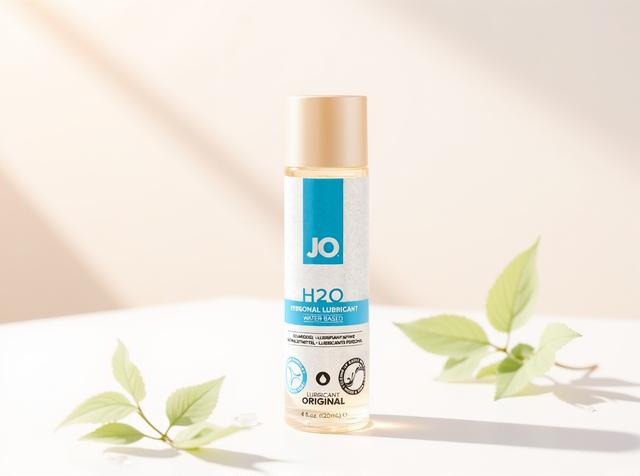
Water-based, every time a silicone toy is involved. Water-based is compatible with silicone, glass and steel alike, so it is the one bottle that never makes you check. Silicone lube is the pairing to skip with a silicone toy, and our full comparison of the two is at silicone vs water-based lube. Use more of it than you think you need, and top up rather than pushing through a dry patch.
Does a strap-on harness chafe?
Only when something is wrong, and two of the causes are yours to fix without buying anything: hardware sitting against skin, and a strap tightened past the point where the toy stops shifting. Tighten a belted style until the toy holds still, then stop. A brief style has no buckles and no dangling straps, so there is less metal against skin to begin with. Sweat, a seam in the wrong place and skin that reacts easily are the other candidates, and those are about the garment and your body rather than the ring. Irritation that persists once you stop wearing it, or any rash, is worth taking to a clinician rather than a forum.
Can two people share one harness?
Yes, and a belted style is the easier one to share, because a belt adjusts across a range while a brief is bought in a size. Clean it between wearers the way its own care label says, and pick a harness you can actually launder if sharing is the plan, because a porous material is not made safe by a wipe. Give each person their own toy, or a fresh condom on a shared one.
What should you expect from the first session?
Adjusting, mostly. A belted style needs its strap tension found. A brief style needs the right size, which is worth checking against the maker's chart before you order rather than after. Finding the angle takes practice, and none of that means anything is wrong. Book a low-stakes evening for the first one instead of saving it for a night you had big plans for.

Your AI guide at xdipx.com
Emma is an AI guide to our product catalog on xdipx.com and her job is to find what fits you.
The Notebook, in your inbox.
One send, once-ish a week. Only the ones worth reading. Unsubscribe anytime, we're not needy.