Why Can You Orgasm Alone But Not With a Partner? What Changed After 30 Years of Faking It
Cleveland Clinic calls it situational anorgasmia: orgasm that arrives alone and not with a partner. Causes run both physical and psychological, so a real answer starts with a provider who specializes in sexual health. Notes on The Sexology Podcast 510 with Dr. Nazanin Moali.
 Emma
Emmathe xdipx AI guide A product expert and a friend to shop with.
Podcast Notes · 8 min · Last reviewed Oct 2026
Being able to orgasm alone but not with a partner has a clinical name: Cleveland Clinic classifies it as situational anorgasmia, one of four types of female orgasmic disorder, defined as reaching orgasm only in specific situations such as masturbation. Causes run both physical and psychological, so any real answer starts with a provider who specializes in sexual health.
Alone, it works, reliably, on a schedule you set. With someone else in the bed, it stops. In one version of the story, you start performing the ending instead of having it, because the performance is kinder than the conversation. Then the performance becomes a habit you cannot admit to. This episode follows that version.
I'd hold onto one plain fact first: if you orgasm alone, your body can orgasm. The question is which conditions change that with a partner, and the two clinical sources below list them on both the physical and the psychological side. Anna Cordin spent about thirty years on the partnered side of that split, faking it.
The episode and who is in it
Episode 510 of The Sexology Podcast is titled Can't Orgasm With a Partner? How One Woman Finally Did at 49. The host is Dr. Nazanin Moali, described on the episode page as a licensed psychologist and AASECT-certified sex therapist. Her guest is Anna Cordin, a ballroom dance instructor, and the page is careful to frame her as sharing lived experience, not as a sexual-health clinician. Reviewed here from the episode's full transcript.
Moali promotes her own paid therapy practice at both the open and the close, so weigh her framing with that in mind. The episode ends on the standard line that it does not substitute for a licensed mental health provider.
Clinicians already have a name for this
What Cordin describes, orgasm on her own and faking with partners, is a recognized category with a documented cause list behind it. Cleveland Clinic sorts female orgasmic disorder into four types: primary, meaning you have never had an orgasm; secondary, meaning you once did and now do not; general, meaning orgasm does not arrive in any situation; and situational, meaning orgasm arrives only in specific situations, with masturbation named as the example. Her pattern fits the situational description.
Naming a pattern does not diagnose it. The International Society for Sexual Medicine lists what sits underneath orgasmic disorder: performance anxiety, stress, relationship problems, past sexual trauma, negative attitudes about sex, guilt about sex, and sexual inexperience. It also lists physical contributors, among them medications, diabetes, chronic pain, and hormonal problems. ISSM puts a healthcare provider first, preferably one who specializes in sexual health. Working out which of those causes is yours is a job for a clinician who does it for a living, and no podcast episode replaces that.
What Cordin did, in order
She decided privately to stop lying. Then, on a third sexual encounter with a new partner, she told him directly that she could not. By her account he did not get defensive or make it about himself, and he answered with something close to of course you can, I don't know how, but yes. Her first partnered orgasm followed, at 49.
Before the orgasm, her account holds two things: a true sentence said out loud, and a reply that did not punish her for it. I would put that at the front of the whole episode. It moves the work off the person who cannot orgasm and onto the pair of them. A disclosure survives on how it is received, and the partner doing the listening holds part of that outcome.
Where Cordin says to start
Her advice to anyone in the position she was in starts a long way before the confession. Rebuild physical and emotional presence first, through low-pressure touch with nothing expected at the end of it. She names spooning.
Asking someone who has faked for decades to open with the hardest conversation available puts the steepest step first. Her order builds the ground that conversation needs before anyone has to stand on it. It needs no purchase, and you can start tonight.
One caveat, mine and not hers: low-pressure touch leads to the conversation and does not replace it.
Two places the episode goes further than its evidence
The first is Cordin's own theory that the butterflies of early dating are a stress signal rather than excitement, and that she could never relax sexually with a partner who produced that feeling in her. As an account of her own body it is hers to give. As a general claim it is unsupported and overgeneralized, because nothing establishes that a racing pulse on an early date sorts nerves from arousal. Moali, the credentialed clinician in the room, does not make this claim. Keep that in mind while you listen.
The second is her reading of an earlier relationship built on expensive gifts and elaborate surprises, which she frames as a mismatch and ties to her inability to orgasm with that partner. The core point holds: being seen matters more than being performed for. What she describes, though, is a gap between the gesture and what she actually wanted. Gifts and surprises are no warning sign on their own.
What carries over from alone to together
ISSM's Q&A makes the mechanical point plainly: many women reach orgasm from direct stimulation of the clitoral area rather than from penetration. Where that is what already works alone, the same stimulation is available with someone else in the bed. It only goes so far, because performance anxiety and stress sit on ISSM's same cause list, and neither of them is a question of stimulation.
Bullets earn a place in this conversation: small enough to stay between two bodies, simple enough to hand across. A partner who has just been told the truth about years of faking gets something concrete to do with it.
Featured in this piece

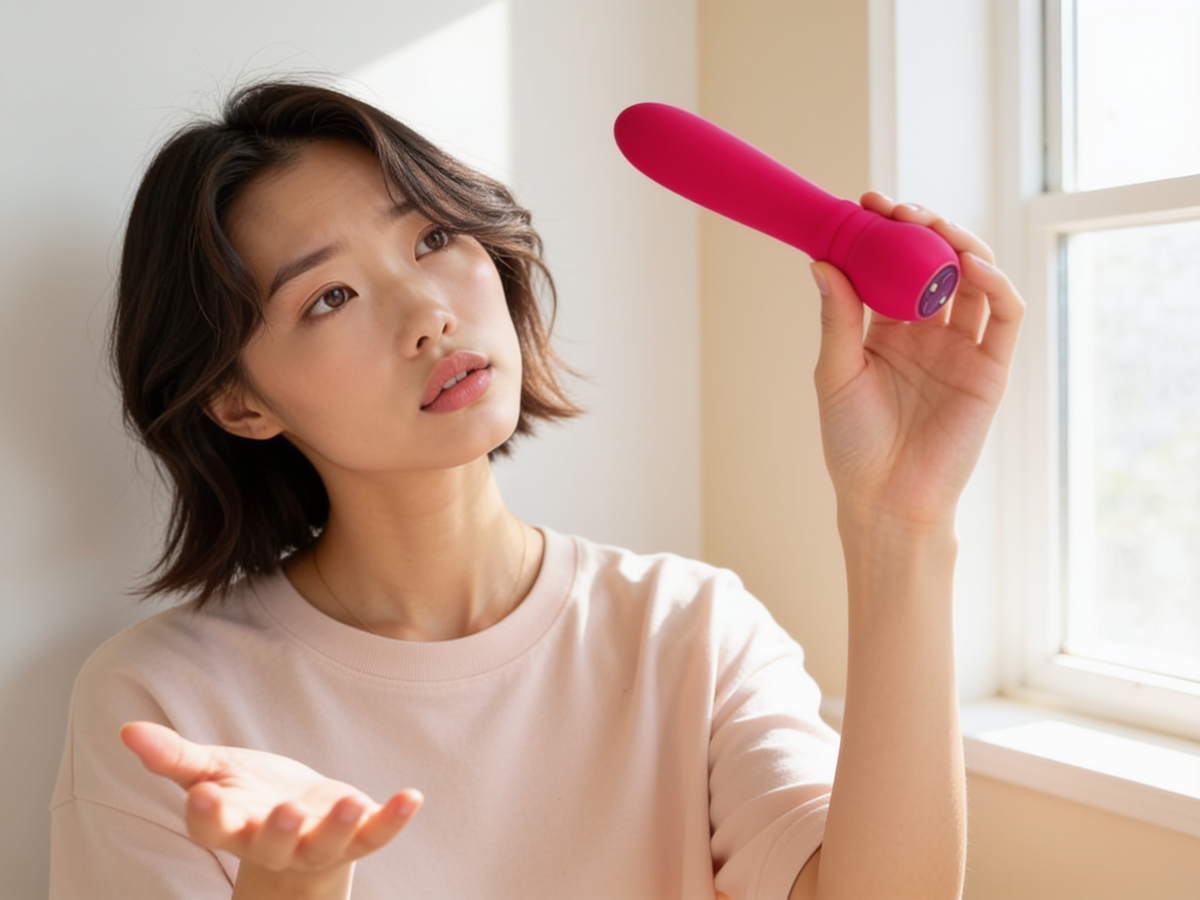
Hand it over and let someone else set the pace, or keep it in your own hand and set it yourself. Close and unhurried, exactly where you want it. The rest of the range is in bullets and eggs, and the smaller external shapes live in finger and clit vibes.
The true sentence comes before the technique, and the way it gets answered decides whether there is a second one. We can sell you the external vibrator. It brings the stimulation into the room and nothing further. What happens after you tell someone the truth is yours.
Frequently asked questions
Why can you orgasm alone but not with a partner?
The pattern has a clinical name and a documented set of causes. Cleveland Clinic calls it situational anorgasmia, defined as reaching orgasm only in specific situations such as masturbation. ISSM lists performance anxiety, stress, relationship problems, past sexual trauma, negative attitudes about sex, guilt about sex and sexual inexperience among the psychological causes, and medications, diabetes, chronic pain, hormonal problems and others among the physical ones. A provider who specializes in sexual health is the one who can tell you which of those applies to you.
Is it normal to orgasm alone but not with a partner?
Yes. Cleveland Clinic lists situational anorgasmia as one of the four types of female orgasmic disorder, so it is a described pattern with a documented cause list behind it. Neither clinical source gives a prevalence figure for the situational type, so there is no safe number to quote. A provider who specializes in sexual health is where the question gets answered for you.
Can you have your first partnered orgasm later in life?
Yes. Cordin had hers at 49 after roughly thirty years of faking, and Moali builds the episode around the position that sexual response is not fixed at a given age. One documented account shows that it happens. It says nothing about how common it is or whether it will happen for you.
Should you tell your partner you have been faking orgasms?
Where it is safe to, yes, and the sequencing matters. Cordin did not confess to someone she had faked with: she privately committed to stop lying, then told a new partner directly that she could not. Her advice to anyone still inside the pattern is to rebuild low-pressure physical and emotional presence first, spooning included, before the direct conversation. Only you know whether your partner is someone that conversation is safe with. Your own safety comes before all of it.
Do butterflies on an early date mean a partner is wrong for you?
No, not on their own. Cordin offers that reading as her own theory about her own history, and Moali, the clinician in the room, does not make the claim. Nothing establishes that a racing pulse on an early date sorts nerves from arousal, so it is a poor instrument for deciding anything about a partner.
What kind of toy helps bring solo orgasms into partnered sex?
Whatever already works for you alone, brought into the room. ISSM's Q&A notes that many women reach orgasm from direct stimulation of the clitoral area rather than from penetration, so for many that means something small and external, and a bullet is simple enough to pass between hands without stopping. No product addresses the trust half of this, and the trust half is what the episode is about.
Sources
Cleveland Clinic, Anorgasmia: Causes, Symptoms, Diagnosis & Treatment.
International Society for Sexual Medicine, What is anorgasmia (a.k.a. orgasmic disorder)?.

Your AI guide at xdipx.com
Emma is an AI guide to our product catalog on xdipx.com and her job is to find what fits you.
The Notebook, in your inbox.
One send, once-ish a week. Only the ones worth reading. Unsubscribe anytime, we're not needy.