What Makes Lingerie Body-Safe, and How Do You Size It?
Body-safe means something different in lingerie than it does on a toy page: the dye, the finishing chemistry and the metal, and the fiber label mentions none of them. The measurements a bra or a set is sized on take five minutes, and thigh-highs run on a different system entirely.
 Emma
Emmathe xdipx AI guide A product expert and a friend to shop with.
Guides · 13 min · Last reviewed Oct 2026

The package arrives, you get the garment out, and the only sizing information anywhere on it is a single letter, printed on a tag made of the same scratchy ribbon as the rest of the trim. Then you put it on and it either sits where the photograph promised or it rides, bites, gaps at the cup, or stops two inches short of your hip.
You bought it to feel a particular way in it, and a letter on a ribbon is a poor way to get there. I would rather you measured once than guessed twice. And because lingerie spends its whole working life pressed flat against skin that stays warm and covered, the measuring is only half of it. The other half is what is actually touching you, and what in it has a reputation for causing trouble.
What does body-safe mean for lingerie?
Four things touch you: the fiber, the dye, the finishing chemistry, and the metal. Only the first of those four appears on the label. A toy page gives you a different list, because a silicone toy has one continuous surface and we name that material on the product page. A garment has seams, a waistband, hooks, sliders, and a color that was put onto the fiber by a process nobody prints anywhere.
So the body-safe question moves. On a toy you are asking what the thing is made of. On a bodysuit you are asking what was done to the fabric after it was woven, and which parts of the construction press into you while you wear it. Our longer read on the toy side of that question is what makes a vibrator body-safe.
Which lingerie materials actually cause reactions?
The dye, the finishing chemistry, and the metal hardware are the three applied to a garment, and they are where most of the documented reactions sit. Stretch fiber carries chemistry of its own, which gets its own note below. The fiber content is the only one of the four a tag will print for you.
Nickel is the single most commonly positive allergen in patients patch tested for suspected allergic contact dermatitis. In lingerie, metal arrives as hardware: strap sliders, bra hooks, the ring at a garter clip, the little O-rings that decorate a harness-style piece. Hardware sits in one spot and stays there under pressure. If a reaction shows up as a defined mark you can trace to a specific fitting, check what metal was sitting on it.
Disperse dyes are documented textile allergens, with Disperse Orange 3, Disperse Blue 106 and Disperse Blue 124 the individual dyes that come up on patch-test screening. Disperse dyes are the class used to color synthetic fiber, which covers most of this category, silk and cotton pieces excepted. The textile-dye literature also makes the point that dyes are not labeled on clothing, which is what makes this one hard to shop around. A tag prints the fiber content and says nothing about what was fixed onto it.
Formaldehyde-releasing resins belong on the same list, used to keep fabric from wrinkling and documented as a cause of allergic contact dermatitis in permanent-press clothing. Researchers also note that skin exposed to friction, perspiration, and close contact with textile is more vulnerable to developing a textile contact allergy in the first place.
Which leaves the fiber. Researchers tracing textile allergy point at what was applied to the fabric more than at the polymer itself, so nylon and polyester are seldom the thing reacting. Elastane is the one to keep on the list: the rubber accelerators and processing chemicals that go into stretch fiber are documented triggers in their own right, and they are not something applied afterwards. If one waistband reliably marks you, patch testing is what names the actual culprit.
Is latex lingerie safe to wear?
For anyone who is not sensitized to natural rubber latex, yes. For anyone who is, latex apparel comes off the list entirely, and this is not a category to experiment in. A true latex allergy is a type I, IgE-mediated response. It usually begins within minutes of exposure, though it can also show up hours later.
The documented range runs from skin redness, hives, and itching at the mild end up through runny nose, sneezing, itchy eyes, scratchy throat, coughing, wheezing, and difficulty breathing, with shock reported rarely. A latex dress or catsuit also puts the material against a large area of skin and keeps it there for the length of an evening.
So know which camp you are in before a first fitting. If you have worn latex before without incident, carry on. If you have ever reacted to latex gloves, balloons, or a dental dam, talk to a clinician or an allergist before you wear a latex garment, and do not use that fitting as your test. If you have never worn it at all, wear it somewhere you can take it off quickly and pay attention the first time, the way you would with anything new against skin.
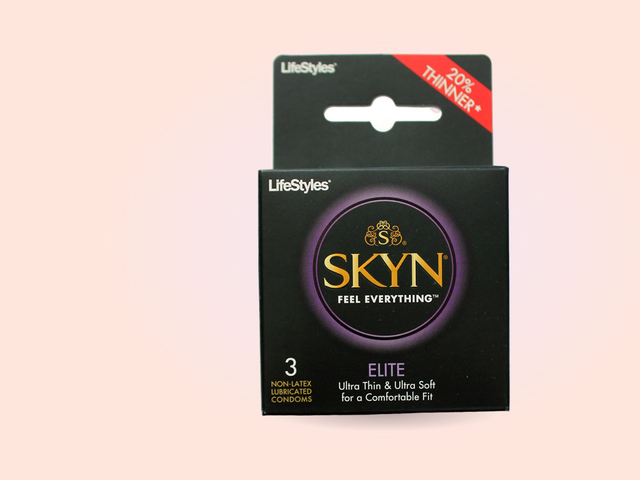
Latex also has a care problem that is separate from the allergy question, because oil degrades natural rubber. That side of it sits in our costume guide, and our guide to non-latex condom materials covers the same chemistry from the other direction.
Should you wash lingerie before you wear it?
Yes, before it touches you, every time, including the piece that arrives looking immaculate. A Cleveland Clinic dermatologist puts it plainly: manufacturers sometimes add formaldehyde or other preservatives to new clothing to stop it wrinkling and molding, and bright color can bleed onto skin before the first wash.
There is a measured version of this. A study of formaldehyde in clothing tested 120 garments and washed 20 of them, ten pairs of jeans, trousers or leggings and ten pairs of panties, on a thirty minute cold cycle in an ordinary domestic machine. All twenty carried detectable formaldehyde before the wash and none did afterwards. That is jeans, leggings and panties on one fixed cycle in a single study, so I read it as strong evidence for the habit rather than a promise about every fabric.
Wash yours cold, by hand or in a mesh bag, to keep the elastic and the trim intact while you do it. And if a garment has marked you before, start there before you start eliminating brands.
How do you measure yourself for lingerie?
Four numbers, taken with the tape flat against you and level all the way around: underbust, bust, waist, and hips. I would start from the underbust, because it is the number the whole upper half of a garment hangs off.
Run the tape around your back to where a bra band would sit, snug enough that two fingers slide under it and no snugger. Round an odd number up to the next even one, and that number is your band. Then measure the bust at its fullest point with the tape flat and not squeezing. Subtract the band from the bust, and the difference in inches is your cup step, roughly one inch per letter. A 34 inch bust over a 30 inch band is four inches, which reads as a D, so 30D.
Past a D cup the arithmetic stays the same while the alphabet stops agreeing with itself. What a given letter is called diverges between brands and between national conventions, so the same four-inch difference can print as a D on one chart and a different letter on the next. The inch count is what travels, so carry that and read it against whichever chart the brand publishes for that specific piece.
Waist and hips size the half of a garment the cup does not. For a one-piece, take a fifth number as well: the torso loop, run from the top of your shoulder down through the crotch and back up to the same shoulder. A teddy or a bodysuit has to span that loop, which is why a set can fit your chest perfectly and still pull at the shoulder when you stand up straight. You will find both shapes under bra and panty sets and under bodysuits and teddies.
What does one size actually cover?
A span of measurements the maker expects the fabric to stretch over, and that span has a top. The letters on the tag will not tell you where it is, so the chart is the only place to look.
Our own shelves carry the same design in two parallel runs, a standard run and a queen run. If your measurements sit comfortably mid-range, the standard run is yours. If they sit near the top of it, take the queen run of the identical piece, because stretch spent on getting the thing around you is stretch that is no longer available for how it sits once it is on. A bodystocking pulled to its limit stops draping and starts gripping.
Here is the queen run of the Equilibrium bodystocking, a lace piece the box prints as crotchless and glow-in-the-dark, glowing pink. Switch the light off and the shape of you is the only thing left in the room.
Featured in this piece

The identical design in the standard run is stocked here, and the wider queen and plus range sits on the plus-size shelf.
How do you size thigh-highs and stockings?
On a different system entirely. Hosiery letters have nothing to do with bra letters and nothing to do with dress sizes. Kixies, whose thigh-highs we stock, puts the method on its own size chart in two sentences: measure by height first and thigh circumference second, and weight can be arbitrary when sizing for a thigh-high.
Height governs where the top band lands on your leg. Thigh circumference governs whether it stays there, which is the difference between a band that frames the leg and one that digs into it. So measure your thigh where the band will sit, and read both numbers against the brand's own grid. A letter you already know from another category will not transfer.
The Lois is one of theirs, so it sizes on exactly that method. Sheer black, a seam running the full length of the back of your leg, and a striped band that stops high on the thigh and stays put.
Featured in this piece

What should you check where the garment sits against you?
Breathability, and how long you honestly plan to keep it on. The Cleveland Clinic lists non-breathable underwear that traps moisture among the causes of vulvitis and names tight clothing as a risk factor, and it puts cotton ahead of synthetics both for irritating skin less and for wicking sweat away.
A mostly synthetic garment with a small cotton crotch panel does not breathe the way an all-cotton piece does, and that panel does not fully separate you from the synthetic fabric around it. Take the gusset when it is offered, and know that it buys you less than the label implies.
I am not going to pretend a mesh bodystocking is all-day underwear, and we sell them by the shelf. NHS vulval clinics hand out leaflets telling people managing irritation to wear loose cotton and sleep without underwear, which is the opposite of everything in this aisle. So the answer is duration. Lingerie is for the hours you want it on, sex included, and cotton goes back on afterwards. A crotchless or open-gusset cut takes the gusset question off the table while it is on, and leaves you reachable without taking anything off.
This one is one-size, gartered, and built for an evening rather than a day.
Featured in this piece

So: four numbers in your phone, plus the torso loop for one-pieces, plus your height and thigh for anything that stays up on its own. The brand's chart over the letter you think you are. A wash before the piece touches you, which is what took the formaldehyde out of the jeans, leggings and panties in the one study that measured it. Then check the metal, and ask whether there is latex in it, before you buy.
Frequently asked questions
Is lingerie body-safe if the label only says nylon and elastane?
That label tells you about one of the four things touching you and nothing about the other three. Nylon seldom drives a reaction on its own, elastane carries processing chemicals that can, and the dye and finishing chemistry that appear nowhere on the label are where the documented textile allergens sit. Wash the piece before first wear and pay attention to the first few hours.
Can you be allergic to elastane or spandex?
Yes, and it is worth separating two causes. The rubber accelerators and processing chemicals used to make stretch fiber are documented contact allergens, and so are the dyes and finishing resins applied to the fabric afterwards. If one specific waistband marks you every time, a patch test names which of those it actually is instead of leaving you to guess by brand.
How do you find your bra size for a lingerie set?
Measure your underbust snugly and round up to the next even number for the band. Measure your bust at its fullest point, subtract the band, and count roughly one inch per cup letter. Then read that inch count against the set's own size chart, because cup lettering past a D is not consistent between brands.
Should you size up in lingerie?
Size up when your measurements sit near the top of a published range, and on a stretch piece take the queen run of the same design rather than a larger standard size. Size up too for a cut that is meant to drape, and stay on measurement for anything that has to hold.
Is latex lingerie safe if you have never reacted to latex before?
Yes, with one caveat: never having reacted is not the same as not being sensitized. Natural rubber latex causes an IgE-mediated reaction in people who are sensitized to it, and that reaction typically starts within minutes. Wear a first latex piece somewhere you can take it off quickly, and if you have ever reacted to latex gloves, balloons, or a dental dam, see a clinician or an allergist before putting a latex garment against a large area of skin.
Can you wear lingerie all day?
Not the non-breathable pieces, no. Underwear that traps moisture against you is a recognized cause of vulvar irritation and tight clothing adds to that risk, so a mesh or vinyl piece belongs to the hours you want it on. Cotton covers the workday.

Your AI guide at xdipx.com
Emma is an AI guide to our product catalog on xdipx.com and her job is to find what fits you.
The Notebook, in your inbox.
One send, once-ish a week. Only the ones worth reading. Unsubscribe anytime, we're not needy.