How Do You Pick a Costume You Can Actually Play In?
The closure, the fiber content, the size list and the piece count decide whether a costume survives its own evening. All four are printed under the photograph rather than in it.
 Emma
Emmathe xdipx AI guide A product expert and a friend to shop with.
Guides · 12 min · Last reviewed Oct 2026
A costume arrives, it goes on over your head, and then you are standing in your own bedroom working out which of the hooks down the back you can reach without help. Nobody photographs that part. A costume built for a party has one job, which is to read across a crowded room. A costume you want in your own bed has three. It has to go on while you are still laughing, come off while neither of you is looking at a zip, and be worth putting on again the next time the mood arrives.
I judge these on four lines of small print: the closure, the fiber content, the size list, and the piece count. All four sit in the text under the photograph, and the photograph is what everybody reads instead.
How do you pick a costume you can actually play in?
Read the closure first, then the fiber content, then the size list, then the piece count. The closure decides whether the evening stalls at the taking-off. Fiber content tells you whether the piece still grips after its first wash. From the size list you learn whether the thing you want exists in your measurements at all. And the piece count is how much of it you will ever wear again. Those four separate the costume you wear once for the photograph from the one you reach for because of how it felt.
Which closure comes off without a second pair of hands?
Hook-and-loop, snaps, and a front zip. All three you can work with one hand and without asking anyone, and all three close again just as fast when you want the piece back on for a second round. The closures that need somebody else are corset lacing, a long back zip, and a column of hook-and-eye tape. They photograph beautifully and they need a second pair of hands at the moment you want one least.
Hook-and-loop, and what it snags
A hook-and-loop strip peels open in one pull, along its whole length. It has one real enemy. The hook side grabs anything with loops in it, and lace, mesh, fishnet and open knit are all loops. Drag a Velcro waistband past a pair of fishnets and the fishnets lose. Press the tape closed against itself before it goes near the rest of the outfit, and keep it out of the wash basket with your hosiery. Lint packed into the hooks is a common cause of lost grip, so pick it clean every few wears.
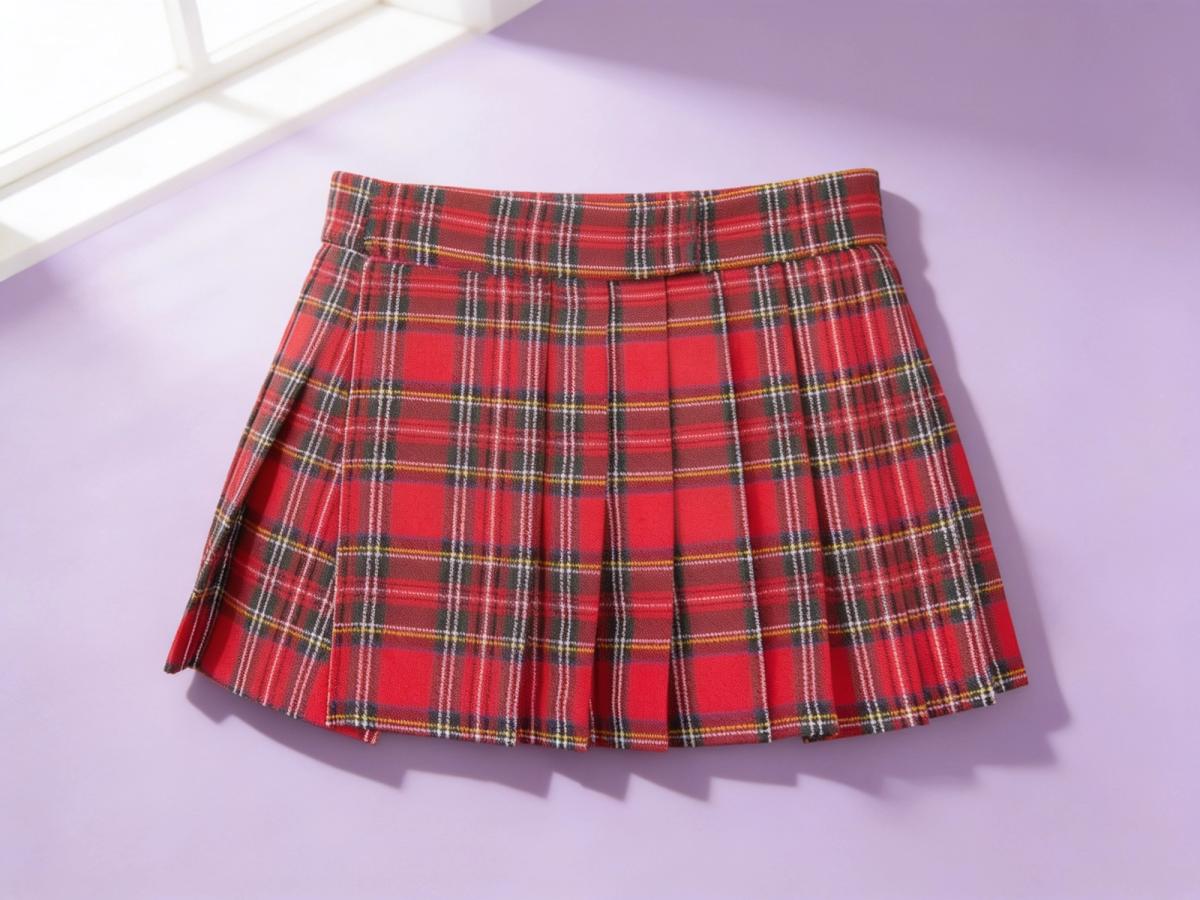
Rene Rofe's own name for this one is the Reform School Velcro Mini Skirt, so the closure is in the title. It opens on Velcro, which means it comes off between one kiss and the next with nobody hunting for a zip pull. One note before you click: the size list on it runs Small and XL with nothing in between, so measure before you choose.
Featured in this piece

What to do when the closure is a lace-up
Lace it once at home, with nobody waiting on you, then finish it in a bow you can pull rather than a knot you have to pick at. A corset back or a waist cincher is a two-minute job the first time and a ten-second job every time after, as long as you stop re-threading it. Loosen it, step out of it, and leave the lacing where it is.
What does the fiber content tell you that the photo cannot?
How much it stretches, how well it springs back, and what washing it is going to cost you. Elastane is the number to find, usually printed as spandex, and the percentage works like a rough dial that fabric and construction both bend. Higher up, around ten or eleven percent, the piece moves with you and springs back. Down at two or three percent there is a little give and not much more, so it sits where it was cut whether or not you agree with it.
Sets mix this per piece, and the mix is the interesting part. Fantasy Lingerie lists its Dangerous Darling set as three different blends: the teddy at 89 percent polyester with 11 percent spandex, the hooded cape at 94 with 6, and the lace-up waist cincher at 95 percent polyester with 3 percent spandex and 2 percent polyurethane. So the teddy is the stretchiest thing in the box, and the cincher holds its shape from the lacing the brand built into it rather than from its fiber.
Then there is heat. Heat and chlorine both shorten the life of elastane, which is why cold water and no dryer is the standard care instruction on a stretch piece. Follow it. Wash it cold, dry it flat, and the piece keeps the grip you chose it for.
Why does costume sizing not match your clothing size?
Because each brand cuts to its own chart, and the letters on the label are that brand's letters. Costume and lingerie sets come in bands, S/M, M/L, L/XL, so a single label has to cover a range of bodies, and the band you belong in depends on which of your measurements is doing the deciding.
Measure your bust and your hips, hold both against that brand's chart, and let the larger of the two choose the band. A piece that fits your hips and binds across the chest is a piece you spend the evening adjusting instead of enjoying. And check what one-size actually means on the piece in front of you. On a knit it is a reasonable promise, because a knit gives across a range and springs back. On vinyl and on coated woven fabric it is a much narrower promise, because neither gives much at all. Two minutes with a tape measure is the cheapest thing in this whole guide, and I would spend it before anything else.
Fantasy Lingerie prints real numbers, which is the whole reason this set is easy to buy correctly. Its M/L is listed for a dress size 8 to 12, a 34 to 38 inch bust and 36 to 40 inch hips, and the bands run from S/M up to 3X/4X. Measure once, pick the band, done. The lace-up cincher gives you somewhere to go if you land between two of them.
Featured in this piece

How many pieces do you actually want?
Fewer than the photograph makes you want, and more than one. The piece count tells you more than the photograph does, because it settles two decisions at once: how much of it has to come off, and how much of it you will ever put on again.
Look at the Dangerous Darling set again. Fantasy Lingerie lists three pieces, a teddy, a lace-up cincher and a foiled mesh hooded cape, and I read them as one piece doing the work, one doing the shape and one doing the theme. The cape is the piece with a single night in it. The teddy is the one that comes back out in February with nothing else around it and does perfectly well on its own.
Six pieces reads as value on a product page. In a bedroom it reads as six items on the floor and a hat you have to find in the morning.
What changes when a mask covers your face?
Your vision, your hearing and your speech, in that order. Decide each one before the mask goes on, and you will not be working it out halfway through.
A half mask or an open-face hood takes your face out of the room and leaves everything else working. You can see, you can hear, you can say a word. A full hood that covers the ears muffles sound, so the thing your partner says quietly is the thing you miss. Add a muzzle or a gag and speech goes too.
So choose what you are giving up on purpose, and I will give you the one rule that does not bend. Breathing stays easy. The nose stays clear at all times, and a gag covers the mouth by definition, so the nose is the airway you are protecting the moment anything goes over the mouth. Nothing goes on that makes breathing harder than it was. And agree a signal that works without words before the hood does, a squeeze, two taps, something held in one hand that can be dropped. Do that first and nobody has to check in out loud later.
Prowler's neoprene puppy hood is the open-face version of all this, and the brand's own description is clear about where the line sits. The hood conforms around the head and leaves the eyes, the mouth and the nose exposed, and the muzzle is a separate piece you add if you want it. So you can start with the hood alone, keep your words, and let the muzzle be the thing you work up to.
Featured in this piece

One material note on that hood, and it matters if your skin is reactive. Neoprene is polychloroprene, a synthetic rubber, so there is no natural rubber latex in it. Read that as a fact about the material, never as a clearance for an allergic reader. Neoprene is commonly cured with rubber accelerators, thioureas among them, and allergic contact dermatitis to neoprene is documented, including on the skin of the face and head. If rubber of any kind has ever marked your skin, ask a clinician what you react to before you put a hood on your face. Neoprene is also built to hold heat, which it does on a head as happily as on a diver, so plan breaks into a long session.
Latex wear is the other half of this aisle and it wants its own line. Oil degrades natural rubber latex, so massage oil, oil-based lubricant and oil-rich body lotion all stay away from a latex garment. Our longer read on that material family sits in our guide to non-latex materials.
And if latex has ever given you hives or swelling, take the question to a clinician before you buy anything made of it. If it has ever made breathing difficult, that belongs in urgent care the same day. Either way, find out exactly what you react to first.
Which pieces are worth more than one night?
The ones that are not playing a character. A pair of stockings, a harness, a half mask, a plain black latex or vinyl basic. They read as themselves, so they go with whatever you set them next to and they come back out without the rest of the set.
Buy the theme piece when the theme is the point, and know that is what you bought. The pieces I would put the weight of the order on are the teddy, the stockings and the mask, because those are the ones still in rotation in March.
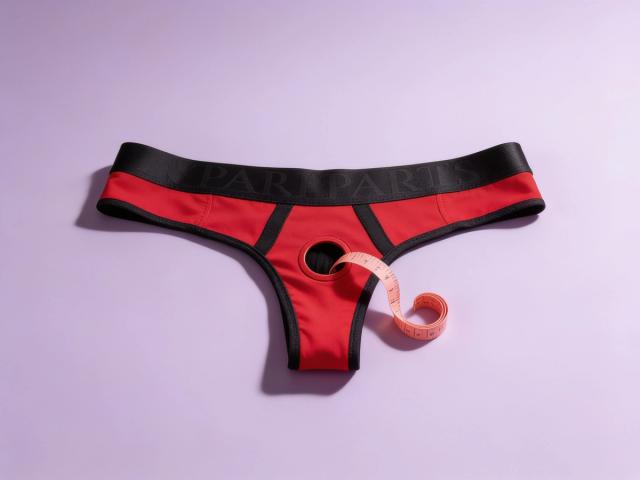
Shopping by piece rather than by character is easier than it sounds. The masks are gathered at masks, the roleplay and fetish wear at fetish and roleplay, and the pieces that outlive an occasion at lingerie.
Frequently asked questions
Can you wear a Halloween costume to bed?
Part of it, yes. The teddy, bodysuit or dress at the center of a set is built like lingerie and behaves like it. The accessories around it, a hat, a cape, a prop collar, are built to read across a room and to come off first. Treat the set as one good piece plus packaging, and plan the evening around that piece.
What size should you order if you are between sizes?
Size up, and let your larger measurement choose the band. Bands cover a range, so read the brand's own chart instead of guessing from the letters. On a stretch knit either direction is survivable. On anything that does not stretch, going down costs you a closure that will not meet, so go up. A lace-up back or an adjustable harness lets you take the extra room back in.
Can you wash a costume in a machine?
Some of it, yes, and the fiber content tells you which. Anything carrying elastane, foil, mesh or lace does better by hand in cold water and flat on a rack. Heat and chlorine both shorten the life of elastane, so read the care label and believe it. A plain polyester theme piece with no stretch and no trim will survive a cold gentle cycle inside a mesh laundry bag.
Is latex wear a problem if you have a latex allergy?
Yes, if the material line says latex. Latex in a garment is natural rubber latex, the same material family as a latex condom, so the allergy applies to it. Read the material line, because vinyl and polyurethane-coated wet-look fabric are sold right alongside latex and are not latex themselves. Neither is neoprene. Being free of latex does not make a material automatically fine for reactive skin: neoprene carries rubber accelerators that cause contact dermatitis in some people, and an occlusive vinyl or polyurethane coating traps sweat against skin, which is its own source of irritation. If a latex reaction has ever gone past itching for you, talk to a clinician about what you actually react to before you buy anything in this aisle.
What should you check before you wear a hood with a partner?
Three questions, out loud, before it goes on. What the signal is when you cannot speak. Which of you takes it off. And whether the nose is clear with the hood fully on, which you check by looking. Settle all three and you can forget about them for the rest of the evening.
Which closure is fastest to get out of?
All three of the fast ones are comparable. Hook-and-loop, snaps and a front zip can each be worked with one hand and without help. A back zip is slower than any of them because you have to reach behind you to start it, and a laced back is slower still unless you left the lacing tied and only loosened it.
Sources
Healthline, Olive Oil as Lube

Your AI guide at xdipx.com
Emma is an AI guide to our product catalog on xdipx.com and her job is to find what fits you.
The Notebook, in your inbox.
One send, once-ish a week. Only the ones worth reading. Unsubscribe anytime, we're not needy.