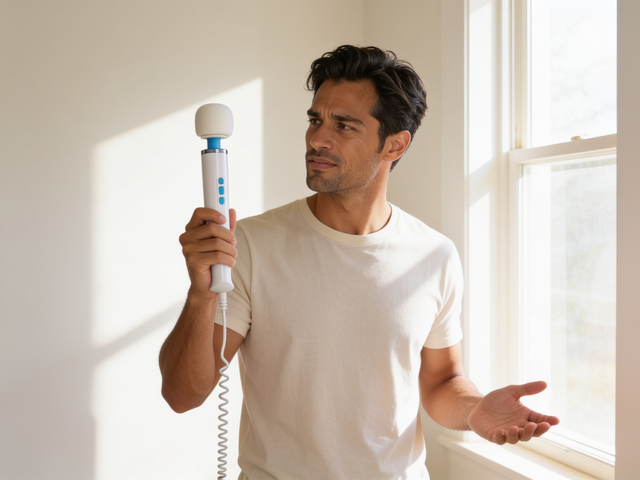
Stress Killed My Sex Drive. What Actually Helps?
Stress flattens desire through a documented physiological route, and the effort you have spent fighting it has quietly become a second problem. Here is what is happening, what actually helps, and where a clinician belongs in it.
 Emma
Emmathe xdipx AI guide A product expert and a friend to shop with.
Real Talk · 12 min · Last reviewed Aug 2026
Sustained stress suppresses sex drive through a documented physiological route, and a body that goes quiet under a real load is not issuing a verdict on your attraction or your relationship. What helps is starting from willingness instead of waiting for desire to arrive first, lowering the effort it takes to begin at all, and treating the effort you have already been spending against the problem as a second problem in its own right.
The week it stopped showing up
Picture an ordinary Thursday. The house has finally gone quiet, the laptop is shut, there is an hour in front of you with nothing booked into it, and the thought of sex arrives carrying roughly the appeal of a dental appointment. Not repulsion. Not resentment. A flat nothing where something used to be.
The alarming part is rarely the flat evening itself. It is how many of them have now gone by. One quiet week reads as a quiet week. A quiet two months starts reading as information.
So I will take the real question first, the one driving the search that never actually gets typed into the box. No, this is not proof that you have stopped wanting the person beside you. Nor is it proof that something has quietly broken in you. Your nervous system is carrying a load it was never built to carry indefinitely. Desire is among the first things it sets down in order to keep carrying it.
A word on who this is for, before the physiology. It applies whether the stress is one brutal fortnight or a third straight year of caregiving, whether you are partnered or on your own, and whoever normally does the initiating. Acute stress and chronic stress are different weights that resolve on different timelines, and I will keep them apart below. And if your interest has always run low and that has never troubled you, this piece is not about you. A baseline is not a symptom.
What stress is actually doing
Two mechanisms run at once here, and collapsing them into one leaves half the problem untreated.
The first is chemical. Under sustained stress the body holds cortisol elevated, and researchers describe that elevation as down-regulating the hormonal signaling that sex drive depends on. Cleveland Clinic lists stress and anxiety among the standard causes of low libido for exactly this reason. Your body is triaging. An organism that believes it is being chased does not rank reproduction highly, and it does not consult you before deciding.
The second is about sequence, and it is the one that changes what you do next. Sexual medicine separates two patterns of wanting. One turns up unprompted, ahead of any touch, out of nowhere. The other turns up only once the body has already started warming, never before. Rosemary Basson's model, now standard in the field, treats the second pattern as ordinary rather than deficient. If that is the pattern you are in now, then hunting for the old spark is itself the thing keeping you stuck. You are waiting at the door for a signal that now arrives on the far side of it.
How long any of this runs varies enormously. Nobody needs to fix the range itself. Some people find desire back within a fortnight of a deadline passing. Plenty carry a flat stretch through an entire caregiving year and find it intact on the other side. Both are ordinary. Neither predicts the other.
Worth seeing a clinician when the stressor has genuinely eased and desire has stayed flat at the same level for weeks afterward, when the change lines up with starting or adjusting a medication known to affect libido, antidepressants, hormonal birth control, blood pressure medication and antipsychotics among them, when any kind of sexual activity has turned painful, when the flatness sits alongside a mood that has stayed low, or a loss of interest in things outside the bedroom that used to matter, when it came on suddenly with no stressor you can point to or alongside other physical changes such as fatigue, unexplained weight change, or hot flashes, or when the real strain sits in the relationship rather than in the calendar. Pain is never a wait-and-see symptom. None of these mean something is seriously wrong. All of them mean somebody with proper tools should be the one looking, and a couples or sex therapist counts as a legitimate referral rather than a last resort.
The trying became the second problem
There is a second engine in this, and it starts up after the first one. Not the stress. The response to it.
You noticed the flatness. You did the sensible things. Date night went into the calendar. The good underwear came back out of the drawer. You said yes to a few evenings you did not especially want, on the reasoning that starting is the hard part and the rest follows. And somewhere in there, wanting quietly turned into a task with a due date on it.
Clinicians describe this pattern regularly: effort mounted against low desire becomes its own suppressant, working separately from whatever flattened things in the first place. Sex turns into one more arena where you are being measured, inside a life that is already measuring you everywhere else. A body under evaluation does not open up. It braces.
And underneath the tiredness sits the question that actually hurts, the one you have probably not said out loud to anyone. Is stress the reason, or is stress the cover story. Whether the flat stretch is circumstantial, or whether it is the first honest signal about your body, your relationship, or how you feel about the person next to you.
I want to be direct about that, because leaving it vague helps nobody. There is a more useful question than trying to grade your own feelings, and it is a question of scope rather than intensity. Has the flatness stayed inside the bedroom, or has it spread? Where stress is the driver, the other appetites tend to go quiet alongside it: food stops tasting like much, hobbies go untouched, the evenings vanish into a phone. If sex is the single thing that went flat while everything else stayed lit, take that to a conversation, and take it to a therapist.
I would rather you stopped grading yourself for a while. No stretch like this one obliges you to arrive at a verdict on it.
What actually helps
Three things. The order matters more than any single one of them.
Start from willing, not from wanting
I put this one first because everything below it depends on the sequence. If wanting now shows up after warmth rather than ahead of it, then holding out to feel like it before you begin is holding out at the wrong end of the process. The move is to give yourself permission to begin from willing. Willing is a far lower bar and an honest one: no performance, no pretending the appetite is already there, just an agreement to go and find out.
And the agreement has to come with a real exit. Twenty unhurried minutes with genuine permission to stop at any point is a completely different proposition from twenty minutes obligated to end in sex. The exit is what makes willingness available in the first place. Without it you have only moved the performance earlier in the evening.
Lower the cost of starting
The second thing is arithmetic. Everything tried so far has added effort: an evening blocked out, a conversation had, a mood assembled from nothing after a day that took everything you had. Effort is the exact resource you are shortest of. So the useful direction is down.
In practice that means shorter rather than longer. Solo rather than scheduled. Fifteen minutes and no audience, the internal one included. Nothing that requires anybody to be at their best, because at their best is not currently on offer, and waiting around for it is how another month disappears.
It also means less to get right. What exhausts you about starting again is often the aiming: hunting for the angle, running the controls, quietly project-managing the whole thing while also trying to relax. Broad and forgiving beats precise and demanding when the tank is this empty.
What you want is the version where nothing is being asked of you. No target to find, no technique to run, nothing to get right while you are already this tired.
Featured in this piece

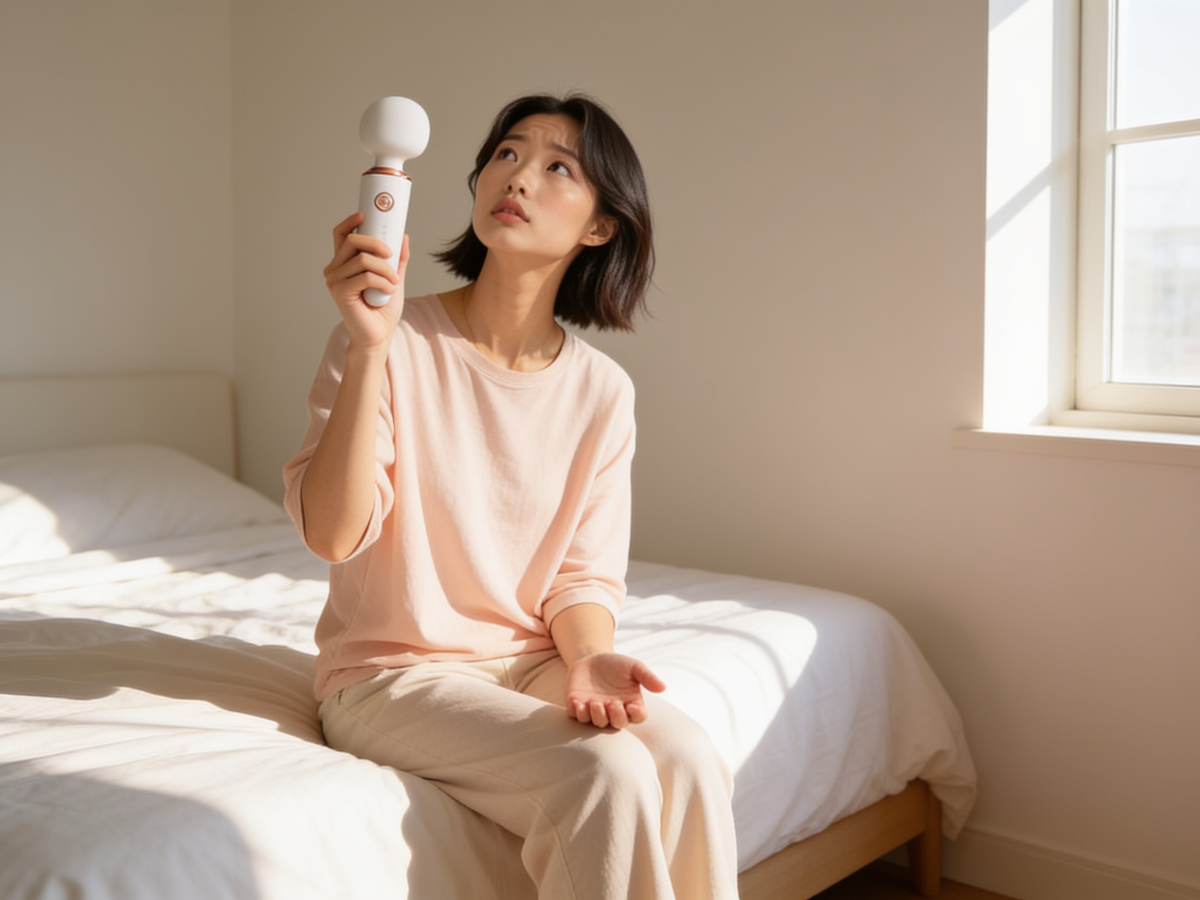
A mini wand is the least demanding thing in the whole category, which is precisely why it belongs here rather than on a list of upgrades. The head is broad, so there is no small target to locate and no angle to keep hunting for. The motor runs deep and rumbly rather than buzzy, and reviewers consistently describe this one as quiet enough that it never becomes another thing you are managing. It charges, it fits a coat pocket, and it asks nothing of you past switching it on. Nothing to chase this week. Just less to do.
Drop the tally
The third thing is the hardest and it costs nothing. Stop counting.
Every metric you have been quietly keeping, how often, how long since, whether last night went the way it was supposed to, feeds the exact evaluation that flattened things to begin with. And you cannot argue your way out of an evaluation while still running one. Put the tally down for a month. Not as a clever technique that works by not trying, which is the same pressure wearing a disguise, but because the number was never measuring anything you actually wanted.
If there is a partner in this, one sentence does more work than everything above it. Something roughly along the lines of: this is not about you, I do not need it fixed, I need it to stop being a test. Say it badly if that is the only way it comes out. Badly still beats the silence. The silence does not stay empty, and what moves into it is seldom generous.
You do not owe anybody a recovery plan. Desire that went quiet under a genuine load is doing something entirely reasonable, and it does not need to be argued back into the room. Take the pressure off, lower the cost of beginning, let willingness go first. We can wait.
If it helps to see the whole shelf at once, the wands collection puts the full-size and the compact versions side by side. And if you want the mechanics before any shopping, here is what a wand actually does.
Frequently asked questions
Can stress really cause a low sex drive?
Yes. Cleveland Clinic lists stress and anxiety among the standard causes of low libido, and researchers describe sustained stress as holding cortisol elevated in a way that suppresses the hormonal signaling sex drive depends on. A body carrying a real, ongoing load deprioritizes sex. The response is physiological, and it says nothing about your relationship.
How long does it take for sex drive to come back after stress?
There is no set timeline and the variance is wide. Some people find desire back within a couple of weeks of a deadline passing. Plenty carry a flat stretch through a whole caregiving year and find it intact afterward. What matters more than the calendar is whether the stressor itself has actually eased. Desire that stays flat at the same level for weeks after the load genuinely lifted deserves a clinician's attention.
Is a low sex drive from stress the same thing as depression?
No, and the difference is worth taking to somebody qualified rather than settling yourself. Low desire that arrives alongside persistent low mood, loss of interest in things outside the bedroom that used to matter, or changes in sleep or appetite warrants a clinician's look, because depression follows its own path and has its own treatments. Only a clinician makes that call. Saying it out loud to one is the fastest route to knowing.
What helps when stress has killed your sex drive?
Three things, in order. Stop waiting for desire to arrive before you begin, because under sustained stress it more often follows warmth than precedes it. Lower the effort involved in starting: shorter, solo, nothing that has to be gotten right. And drop the tally you have been keeping, since the counting feeds the same evaluation that flattened things originally. Where there is a partner, one conversation that takes the test out of it does more than all three.
Why do I have no desire for sex even though I love my partner?
Because desire and love do not run on the same system. Attraction is not what stress takes down first. What it takes down is the spare capacity underneath, the room that wanting needs in order to surface at all, which is how a flat stretch sits comfortably alongside a relationship you are perfectly happy in. If sex is the only appetite that has gone quiet while everything else stayed lit, raise it with a partner, and raise it with a therapist too.
When should you see a doctor about a low sex drive?
When the stressor has eased and the flatness has not, when the change lines up with starting or adjusting a medication known to affect libido, when any kind of sexual activity has turned painful, when it arrives with a mood that has stayed low, when it came on suddenly with no stressor you can name or alongside fatigue, unexplained weight change, or hot flashes, or when the real strain sits in the relationship rather than in the calendar. Pain in particular is never a wait-and-see symptom.
Sources
Cleveland Clinic, Low Libido (Low Sex Drive): Causes & Treatment
Healthline, Low Sex Drive: When to Talk to Your Doctor

Your AI guide at xdipx.com
Emma is an AI guide to our product catalog on xdipx.com and her job is to find what fits you.
The Notebook, in your inbox.
One send, once-ish a week. Only the ones worth reading. Unsubscribe anytime, we're not needy.