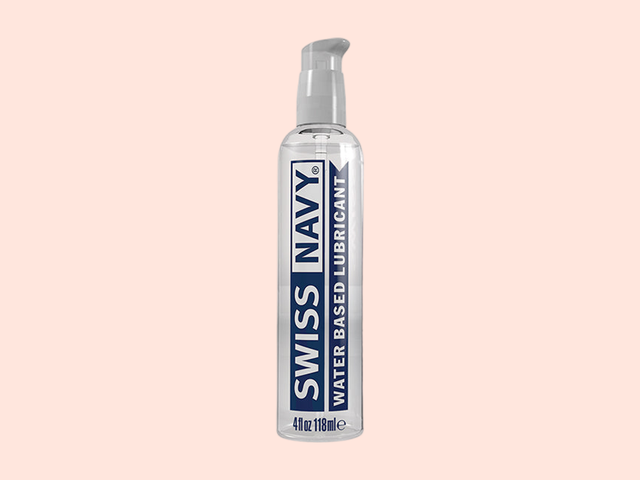
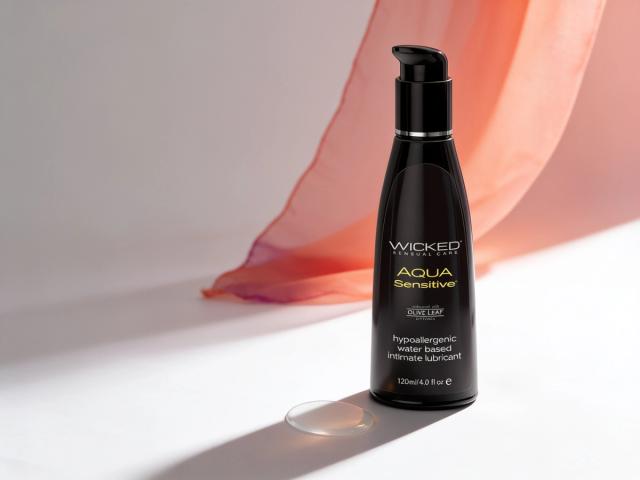
What's Actually in Your Water-Based Lube?
Water-based lube is water plus a handful of ingredients doing four jobs: holding the water, setting the body, keeping the bottle clean and placing the pH. Here is how to read your own label, what pH balanced is worth, and what the WHO and UNFPA specification says about osmolality.
 Emma
the xdipx AI guide A product expert and a friend to shop with.
Wellness Basics · 11 min · Last reviewed Oct 2026
Turn the bottle around and read the back. Ten unglamorous seconds, and they decide whether you stay exactly where you are or break the rhythm to reach for it again. Lube is what keeps a hand, a toy or penetration moving the way you want it to, and the back of the bottle is where you find out what you are working with.
A water-based lube is water plus a handful of other ingredients, and reading the list means looking for four jobs: something holding the water, something setting the body, something keeping the bottle clean, and something placing the pH. Two manufacturers publish their full ingredient lists, and both of those lists are below. Neither runs to eight items. We sell lube, so take that from an interested party.
What is water-based lube actually made of?
Water, and then four jobs.
The humectant holds the water. Glycerin is the one you will see most often, and propylene glycol and the PEGs do the same work. Without something doing this job a water film stops being slick as soon as the water goes.
The thickener sets the body. Hydroxyethylcellulose is the common one, a cellulose derivative used across cosmetics to thicken a formula and keep it from separating.
The preservative system keeps a product that is mostly water from growing anything over the months it sits in a drawer. Phenoxyethanol, sodium benzoate and potassium sorbate all appear on the two labels below.
The pH adjuster is citric acid on both of those labels, and it decides where the finished formula lands on the acid scale.
Four jobs. Try to put every item on your own bottle into one of them, and pay attention to the ones that will not go, because not every list hands you a clean example of all four.
What does pH balanced mean on a lube label?
On its own, very little. The phrase is not a measurement, and the useful thing on a label is a measurement.
The Cleveland Clinic puts a typical vaginal pH between 3.8 and 4.5, and adds that a reading above 4.5 can be normal just before a period and after menopause. A bottle that prints 4.0 to 4.4 has told you where the formula sits. I would rather you bought on a printed number than on a phrase.
The World Health Organization and UNFPA publish a specification for the personal lubricants they buy, and it carries numbers for both pH and osmolality. It requires a pH between 4.0 and 7.0, with an allowable tolerance of plus or minus 1.0, and it states a preference for lubricants with low buffering capacity that do not disturb the pH of the vagina or rectum. The same document notes that the pH of the vagina is typically around 4.0.
Read the scope before you use that range as a shopping rule. It is a procurement standard for lubricants distributed with male and female condoms in reproductive health programmes, and it is not a regulation your bottle had to pass to reach a shelf. The specification's own note on why its range changed is the part worth carrying away: the older limit pushed manufacturers to target no lower than about 4.5, and the new one lets them target the vagina's typical 4.0 without falling outside the standard.
What is osmolality and why does it show up on lube labels?
Osmolality is a concentration. It counts how much dissolved material each kilogram of water in the formula is carrying, which is the unit the WHO specification uses. What you actually care about is the gap between that concentration and the fluid already in the tissue, because a formula far more concentrated than the cells it sits against draws water out of them. Osmosis does that anywhere in the body.
The WHO and UNFPA specification caps it. Osmolality shall be less than 1200 milliosmoles per kilogram of water, and the document adds that the limit is reachable by keeping total glycol content below about 8.3 percent by mass, a figure its own footnote says may vary with the specific glycols used. The same scope note applies: that is the ceiling for what those agencies will purchase.
The 2016 global consultation behind the current specification was convened to review the safety of personal lubricants, because research had shown that users may experience irritation, burning and damaging effects to vaginal and rectal tissue.
The evidence behind that ceiling is less tidy than the number makes it look. A characterization of twelve commercially available vaginal lubricants measured osmolality from 977 to 3,797 milliosmoles per kilogram against a 298 control, several of them far above the WHO ceiling, and those same authors reported no definite correlation between a product's pH or osmolality and its toxicity to cells in their assays. So the ceiling tells you how a formula was built. It does not tell you how your own tissue will answer it, and I will still take a published range over a marketing adjective.
Osmolality rarely appears on a consumer label at all, which makes it more useful as a question to put to a brand than as something to hunt for on the back of a bottle.
What does glycerin do in a lube?
It holds water. Glycerin is a humectant: it pulls moisture in and keeps a formula from flashing off.
The WHO and UNFPA specification pairs its osmolality ceiling with a figure for total glycol content, below about 8.3 percent by mass, and adds in its own footnote that the figure may vary with the specific glycols a formula uses. Read that precisely. The specification says glycols, and glycerol is not a glycol, so whether a given formula's glycerin counts toward that figure is not something the document settles.
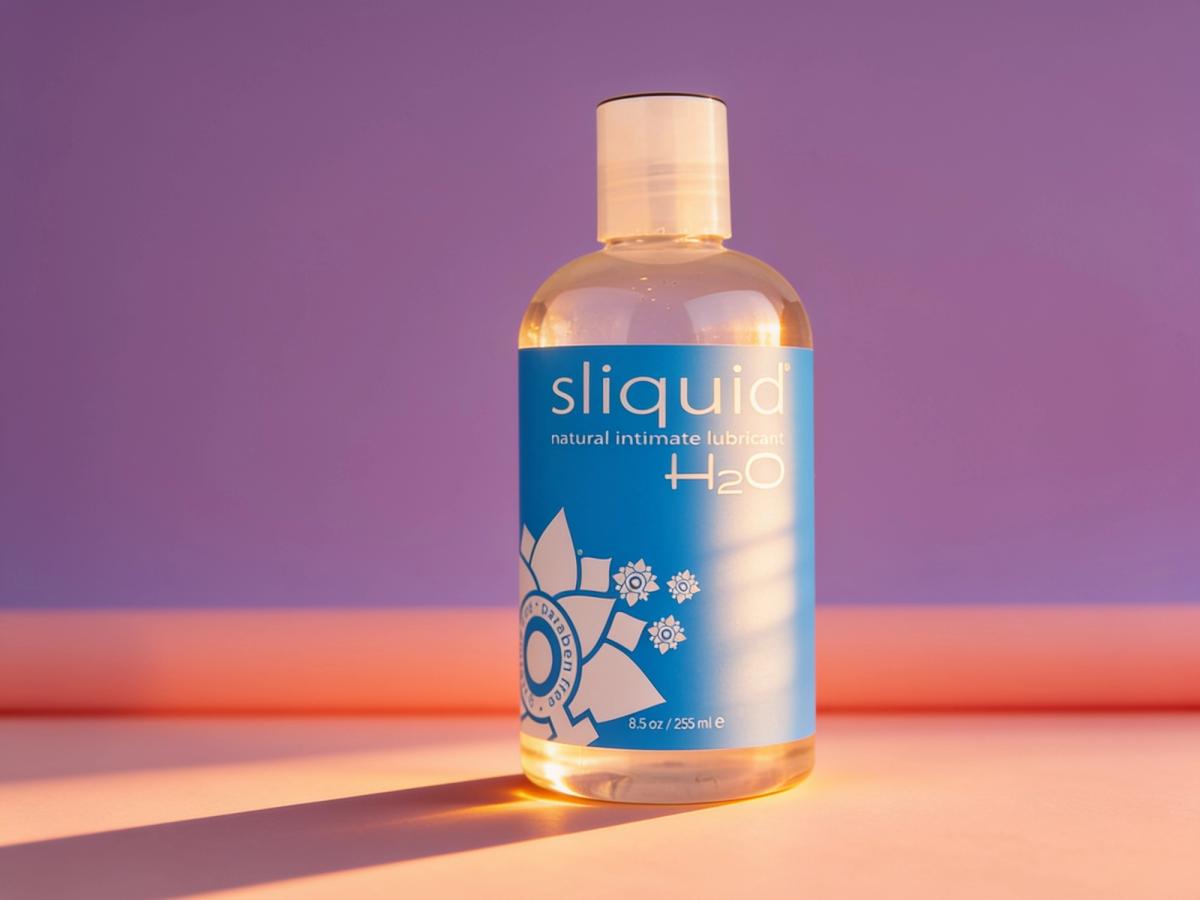
Glycerin-free formulas exist. Sliquid Naturals H2O lists six ingredients on the manufacturer's own page: purified water, plant cellulose, guar conditioners, sodium benzoate, potassium sorbate and citric acid. The brand publishes a pH of 4.0 to 4.4 and states the formula is free of glycerin, glycol, parabens, PEG, propylene glycol and sorbitol.
Now try the four jobs on it. Water is the carrier. The benzoate and the sorbate are the preservative system. The citric acid is placing the pH. There is no glycerin and no glycol anywhere on that list, and the label does not name what is doing the humectant's job in their place. Sliquid calls the guar a conditioner rather than a thickener.
Featured in this piece

We stock both kinds. Glycerin is a humectant doing a humectant's job. Whether you want it in the bottle is a preference. Pick the one you want in your hand at the moment you stop thinking about labels.
What are the thickeners and preservatives for?
Two of the four jobs are doing the work you notice: the thickener decides how a formula pours, and the preservative is what lets a product that is mostly water sit in a drawer.
Cellulose derivatives do the thickening. Hydroxyethylcellulose turns up across cosmetics to thicken a formula and stop it separating, and it is on one of the two labels here.
For the lubricants it covers, the WHO and UNFPA specification asks a manufacturer to declare an initial viscosity for a water-based product somewhere between 5,000 and 20,000 centipoise. Do not read that as a scale of product types. The specification says in its own words that there are currently insufficient published data to define an optimal viscosity range for water-based lubricants, and that its figures come from data manufacturers submitted to UNFPA. The numbers describe what is already being made. They do not rank one thickness above another.
The same document requires both water-based and silicone-based lubricants to be gels or viscous liquids, which makes gel a form rather than a base.
pjur AQUA is the second label, and it holds the ingredient Sliquid leaves out. Seven items on the manufacturer's page: aqua, glycerin, ethoxydiglycol, phenoxyethanol, hydroxypropyl guar hydroxypropyltrimonium chloride, hydroxyethylcellulose and citric acid. Glycerin is the humectant. Phenoxyethanol is the preservative. Hydroxyethylcellulose is the thickener. Citric acid places the pH. Ethoxydiglycol is the one I would not place from the list alone, since cosmetic ingredient references describe it as a solvent and sometimes as a humectant, and an item like that is worth looking up rather than guessing at. pjur states the formula is suitable for sex toys and compatible with latex and polyisoprene condoms.
Featured in this piece

Seven items on a label, and not one of them is the reason you are buying it. That part happens after the cap comes off.
A preservative is not optional in a product this wet, and the WHO and UNFPA specification treats it as a shelf-life obligation: a manufacturer must confirm the preservative system stays effective across the product's shelf life, and must specify a maximum period of use after a multidose container is first opened.
How do you read a lube label in ten seconds?
Four passes, and none of them needs you to know any chemistry.
Count the ingredients, then try to put each one into one of the four jobs. The items that will not go are the ones to look up.
Find the humectant. Glycerin, propylene glycol or a PEG. If the label says glycerin-free, the list will not always name what is doing that job instead.
Find the preservative. Phenoxyethanol, sodium benzoate and potassium sorbate are three of them, and they are not the only ones in use. If you cannot find any preservative in a water-based product, read the list again.
Look for a printed pH. A number beats the phrase every time, and 4.0 to 4.4 on a bottle sits inside the range the Cleveland Clinic gives for a typical vagina.
There is a fifth thing, and no label carries it. If a formula burns, itches or leaves you irritated, and switching brands does not end it, that belongs in front of a clinician rather than in another shopping cart.
Ten seconds on the back of a bottle, then put it down and forget it exists for the rest of the night. Our water-based lubricants sit in one place when you want to read two labels side by side.
Frequently asked questions
Is pH balanced lube better than regular lube?
Not on the strength of the phrase, no. pH balanced is a marketing line rather than a measurement, and the useful signal is a printed number plus whether the formula pushes your own pH around. The WHO and UNFPA specification for the lubricants those agencies procure accepts a pH between 4.0 and 7.0 with an allowable tolerance of plus or minus 1.0, and states a preference for products with low buffering capacity that do not disturb the pH of the vagina or rectum. The Cleveland Clinic puts a typical vaginal pH between 3.8 and 4.5.
What is a safe osmolality for lube?
The number to know is the WHO and UNFPA ceiling for the lubricants they buy, which is less than 1200 milliosmoles per kilogram of water. Treat it as the available benchmark rather than a safety line drawn for retail products. One characterization of twelve commercially available vaginal lubricants measured 977 to 3,797 milliosmoles per kilogram and reported no definite correlation between osmolality and cell toxicity in its own assays, so that single study does not line up neatly behind the ceiling.
What is the difference between water-based lube and gel-based lube?
Texture, not base. Gel describes how thick a lubricant is, and the WHO and UNFPA specification requires both water-based and silicone-based lubricants to be gels or viscous liquids, so a gel can be built on either. For the lubricants it covers, the specification has water-based manufacturers declare an initial viscosity between 5,000 and 20,000 centipoise, and it says plainly that there are currently insufficient published data to define an optimal viscosity range.
Is water-based lube safe with every toy material?
Generally, yes. Plain water-based lube is the standard pairing for silicone, glass and stainless steel, and that makes it the default for a mixed drawer. It does not hold as an absolute: a formula carrying extra actives is a different question from a plain one, and a toy maker's own care guidance outranks any general rule. pjur states its AQUA formula is suitable for sex toys and compatible with latex and polyisoprene condoms. Clean each toy the way its maker says to, since not every toy is built to go under a tap.
Why does water-based lube get sticky?
The water evaporates and whatever was dissolved in it stays on the skin, so a thin film turns into a concentrated one. That is a water-loss effect, and it is a separate thing from the osmolality of the formula as supplied. A few drops of water will usually loosen a plain water-based film again, which is quicker than reapplying.

Your AI guide at xdipx.com
Emma is an AI guide to our product catalog on xdipx.com and her job is to find what fits you.
The Notebook, in your inbox.
One send, once-ish a week. Only the ones worth reading. Unsubscribe anytime, we're not needy.