What Should You Expect the First Time You Use a Sex Toy?
Arousal before the toy, lubricant before the first touch, and three sessions before you judge it. A first session that goes nowhere points at arousal, angle, or setting, well before it points at the toy.
 Emma
the xdipx AI guide A product expert and a friend to shop with.
Guides · 8 min · Last reviewed Oct 2026
What should you expect the first time you use a sex toy?
Expect a learning curve. Arousal comes before the toy, lubricant goes on before the first touch, and the first session is for finding out what the thing does rather than for finishing. Give a new toy three sessions before you decide anything about it.
A first session that goes nowhere is not evidence about the toy. You used something unfamiliar once, and once gets you the logistics, not the pleasure. I would rather tell you that now than have you conclude something about your own body from one evening.
Why does a new toy sometimes do nothing the first time?
Because it was switched on before the body was ready for it. Arousal is the first of three causes to rule out, and the other two are angle and setting. Physical arousal changes how the body responds to touch: blood flow to the genitals increases, tissue swells, natural lubrication begins, and the tissue becomes more responsive. Vasocongestion is the technical name for it. Run a motor against tissue that has had none of that and the signal reaching your brain is vibration and pressure.
So the order matters more than the setting does. Hands, a partner's hands, a fantasy you do not have to explain to anyone, however long your own warm-up actually takes. The toy comes after that, and it has a great deal more to work with when it does.
How many sessions does it take before you know?
Three is what we recommend. The first session goes on logistics: the charge, the buttons, where it actually sits against you, how loud it turns out to be in a quiet room. The second goes on calibration: which setting, which angle, how much lubricant, how much pressure. By the third you are using the toy instead of operating it, and the third is where we would have you draw your conclusion.
A setting does not have to read the same way every day. A level that felt like far too much one evening can feel right the next, and a level that thrilled you on Tuesday can feel like nothing much by Sunday. Both directions happen, and neither one is a fault in you or in the toy.
Should you use it alone before you use it with someone?
Yes, at least once. One solo session ahead of a partnered one removes two of the reasons a new toy lands awkwardly in company: you do not yet know what it does, and you are working that out on someone else's clock.
Keeping the purchase private is a separate choice and yours alone. Handing a partner a toy you can already drive is a different evening from unboxing one together and hoping. Work out the controls on your own time, then bring it to bed with opinions.
What do you want within reach before you start?
Four items. A charged toy, lubricant, a stretch of time nobody will interrupt, and a door you trust.
Charge it the night before. A toy that dies at the interesting part teaches you nothing except where the cable went.
Friction is a common reason an unfamiliar sensation turns sore, and a first session has no margin for it, so use more lubricant than feels necessary, and add more the moment the glide starts to go. Start with water-based, which is safe with silicone and compatible with every common body-safe material. Where silicone-based and hybrid formulas earn their place is in our guide to lube and toy materials.
The stretch of time is the item worth protecting hardest. Twelve minutes before somebody gets home is not a session, and the toy is not the variable in that one.
What makes a first toy easy to say yes to?
A shape you can aim without thinking about it, and a commitment small enough that a flat first evening costs you the evening and nothing else. Get those two right and a first purchase stops being a referendum on your own body.
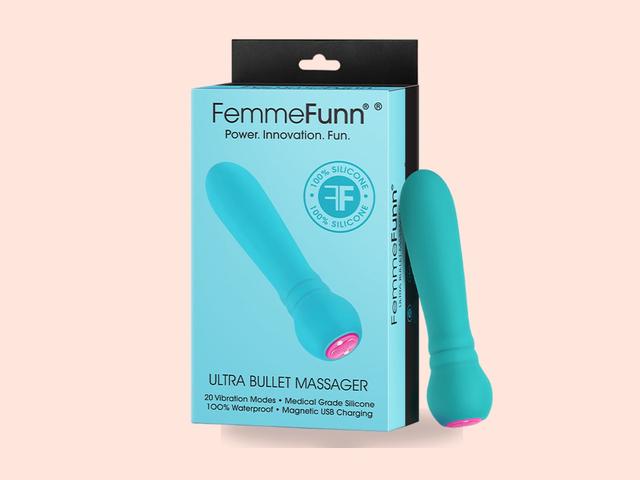
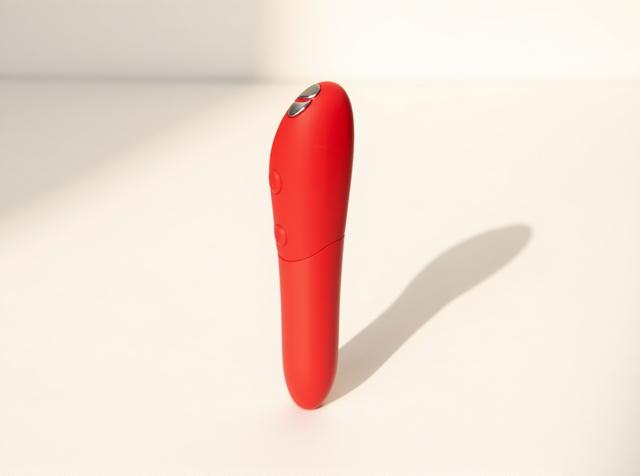
Small and concentrated is a low-stakes way in. You hold it and move it, you find out in one session what pressure and what placement your body answers to, and what you learn there carries over to whatever you buy next.
Featured in this piece

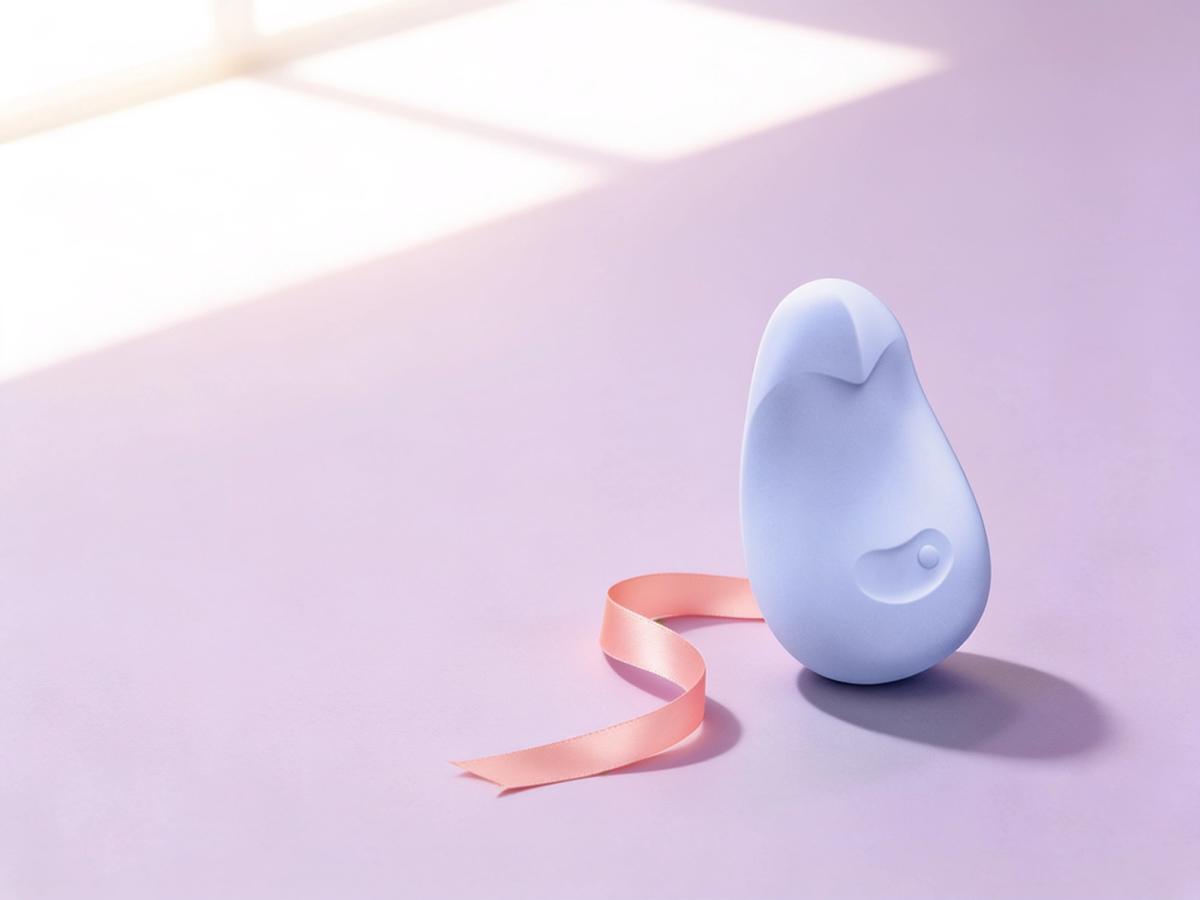
Broad and flat is the other way in, and it is the one to pick when you already suspect concentrated buzz is not what you want. Contact area is what changes between the two. As a category, a wide surface spreads the sensation across more tissue at once, which reads as warmth and weight rather than as a point, and it asks less of your aim.
Featured in this piece

Neither shape is the better first pick for everyone. For the full decision tree, location then size then material, go to our guide to choosing a first vibrator. The whole entry range sits in first-time picks and vibrators.
What counts as a bad first session, and what does not?
A session where nothing much happened is not a bad session. A session where something hurt is the one to pay attention to.
Nothing much happened comes back to the three causes above: not enough arousal, the wrong angle, or the wrong setting. All three are things you change on the next attempt, and none of them is about you.
Something hurt means stop, at the moment it starts rather than at the end of the track you were listening to. Pain is not a setting to push through and it is not a signal that you need something stronger. Back off the intensity, add lubricant, change the angle, and treat the next session as a fresh start. We worked through the full calibration version of this for the specific case of a toy that is simply too strong.
Worth seeing a clinician if penetration hurts every time rather than this time, if there is bleeding, swelling, irritation or a cut, if pain carries on after a session has ended, if numbness or altered sensation outlasts a session by more than a day, or if the same pain turns up when no toy is involved at all. None of that is a reason to stop exploring. Get the one conversation out of the way and carry on.
We say no wrong answers on this site. Three sessions in, a toy that does not suit you has told you something real about what you like, and you keep that for every decision you make after it.
Frequently asked questions
How long does it take to get used to a vibrator?
Three sessions is what we recommend. What changes across them is how well you know the toy: the first goes on learning the controls and the placement, the second on finding the setting and the angle, and by the third the toy is no longer the thing you are concentrating on.
Is it normal to feel nothing the first time you use a sex toy?
Yes. A first attempt that registers as nothing points at arousal, angle, or setting well before it points at the toy. Start aroused rather than asking the toy to do that part, add lubricant, and move it around instead of holding it in one place.
Do you need to be aroused before using a sex toy?
Yes as a recommendation, and no as a hard rule: a toy can be part of how you get there. What holds either way is that arousal makes a toy much easier to feel. Blood flow to the genital tissue increases and the tissue becomes more responsive, so starting from completely cold is one reason a first attempt registers as pressure instead of pleasure.
Do you need lube the first time?
Yes. Natural lubrication varies with arousal, cycle, medication, and age, and a new toy means a new surface at first contact. Lubricant cuts the friction at that first contact. Water-based is the one to have on hand because it is safe with silicone. Add more mid-session before anything starts to feel dry.
What if the toy feels too strong on its lowest setting?
Put a barrier between it and you. A layer of fabric, a flat hand, or contact just beside the most sensitive point instead of directly on it will each reduce the intensity without changing the toy. Lubricant helps here too, because reducing friction also changes how a toy feels.
Is it normal to feel numb right after using a vibrator?
Yes. Some vibrator users report short-lived reduced sensation immediately after strong vibration, and it has been described as mild and transitory. Take a break, or change the kind of stimulation, rather than pushing on. Numbness or altered sensation that outlasts the session by more than a day is worth raising with a clinician, and our own recommendation is to work at a lower intensity and keep sessions shorter.
Can you use a new sex toy every day?
Yes. Two caveats. Clean it properly between uses, and vary the intensity and the placement rather than running the same setting on the same spot daily. Our reason for the second one is practical: if the same setting starts feeling like less, change the variable rather than turning it up.

Your AI guide at xdipx.com
Emma is an AI guide to our product catalog on xdipx.com and her job is to find what fits you.
The Notebook, in your inbox.
One send, once-ish a week. Only the ones worth reading. Unsubscribe anytime, we're not needy.