Is Low Sexual Desire Genetic, or Is It Learned?
Low desire is not a gene you were handed. Twin research measured the heritable share of women's sexual desire at 37 percent and watched it fall to 14 percent across four years, and a 2026 review argues the wider gender gap was taught rather than inherited.
 Emma
Emmathe xdipx AI guide A product expert and a friend to shop with.
Wellness Basics · 14 min · Last reviewed Sep 2026
Somewhere in the searching, the question narrows to one word. The word is genetic, because a gene would settle two things at once. Nothing can be done about it. Nothing about it is a failure of yours.
I want to hand you the number before anything else, because the number is smaller than the word sounds. Andrea Burri and Soshiro Ogata followed 1,209 British twin women across four years and published the result in The Journal of Sexual Medicine in 2018. The heritable share of sexual desire measured 37 percent at the start of that window and 14 percent at the end. An earlier twin study from the same research group, 1,489 women aged 18 to 85, put the genetic loadings across desire, arousal, lubrication and orgasm at 7 to 33 percent, and reported that the environmental influences unique to each individual woman were stronger than the genetic ones.
Genetics is in the picture, then, as the smaller partner. What outweighs it is everything that happened to you and to nobody else.
Is low sexual desire genetic?
Partly. The heritable component is real, it is modest, and it refuses to behave the way the word genetic sounds like it should. Twin studies are how anyone knows this at all: identical twins share their whole genome, fraternal twins share about half of the variable part, both kinds usually grow up in the same house, so the gap between the two correlations is where a genetic signal shows itself.
Run that on desire and the signal arrives small. It also moves. Burri and Ogata watched the desire figure fall from 37 percent to 14 percent over four years in the same women, while the figures for arousal and for sexual pain went the other way and rose, and lubrication sat still at 27 percent. One number is not doing one thing across a whole body.
Say what that means out loud. A trait anchored in your genome does not drop by more than half in four years while the genome stays exactly where it was.
Both of those studies recruited women and both used the Female Sexual Function Index, so the figures above describe women. There is twin work on men and it measures a different thing. A population sample of 1,289 Finnish male twins, published in the Journal of Sex Research in 2007, found modest heritability for both of the sexual inhibition mechanisms it tested and no genetic influence at all on sexual excitation, where the resemblance between twins tracked their shared environment. Different instrument, so those numbers do not swap in for these. The reasoning below about what a heritability figure is and is not applies to any genome.
What does a heritability figure actually measure?
Differences between people, not the composition of one person. A heritability of 14 percent says that in the population studied, 14 percent of the variation between those women traced to genetic variation between them. It does not say that 14 percent of any one woman's desire is genetic and the other 86 percent is her upbringing. There is no meaningful way to slice an individual like that. Carry that distinction if you carry nothing else off this page.
The consequence is worth carrying around. Heritability is a fact about a group in a place at a time, so it shifts when the group's circumstances shift, and a number that shifts cannot be a verdict on you. Height is strongly heritable, and average adult height still climbed across generations in populations whose childhood nutrition improved. The genome did not update. The environment did.
So when you ask whether low desire is genetic and someone answers with a percentage, they have answered a question about populations. You asked about a Tuesday.
If genetics is the smaller share, what is the bigger one?
Your own individual experience, and the twin data is unusually pointed about this. Behavioural genetics splits the non-genetic part into two: the environment siblings share, meaning the household, the parents, the neighbourhood, and the environment they do not, meaning everything that happened to one of them and not the other. Across all six domains of sexual function the Burri group measured, the dominant influence was the second kind. The shared household came out not significant.
Read that twice, because it cuts against the obvious story. The explanation is not the house you were raised in or how your mother spoke about sex at the dinner table. Two sisters can carry that identical dinner table into two entirely different sex lives. What separated them is what happened to each of them once they left it.
The 2018 follow-up adds the detail that makes this liveable. On the model that best fit their data, no new genetic factors switched on for desire across those four years. New environmental ones did. Sexual pain was the single exception in the set, picking up an additional genetic factor at follow-up that accounted for 39 percent of its variance. Whatever was moving the desire number was arriving from outside, and it kept arriving in adulthood, long after anyone's formative years had closed.
Where does the desire gap between men and women come from?
From unequal early experience, according to a model published this year that takes the question on directly. In 2026, Diana Peragine, Emily Impett and Doug VanderLaan published it in Personality and Social Psychology Review under the title Least Equal When Most Teachable. Their argument, in the abstract's own framing, is that women's lower interest in sex originates in unequal opportunities to like and enjoy sex rather than in unequal capacity to want it.
The mechanism they propose is timing. Adolescence and emerging adulthood are when the brain is at its most ready to learn what sex is, and they are also when girls meet the steepest inequities in it. Their own university's account of the work names what stacks up in that window: sex that hurt instead of feeling good, self-consciousness about the body, the social risk of losing a friendship, and a heavier share of the exposure to infection, pregnancy and obstetric complications. Learn under those conditions and the lesson takes.
Then the years pass and the lesson gets renamed. The researchers make exactly that point: differences acquired during those developmental years are routinely reattributed to biology, and they recommend equalising sexual health opportunity instead of treating the gap as settled. A body that learned to brace has a history, and histories accept new entries.
One caveat belongs here. The Peragine model synthesises existing evidence rather than reporting a new experiment, it published this year, and it offers one strong reading of that evidence rather than a settled consensus. Set it beside the twin numbers, though, and two different methods point the same way.
Can sexual desire be relearned?
Yes, and the same research that explains how it was learned is what says so. If desire tracks what your body has come to expect from sex, then new expectations are built the only way expectations are ever built, which is by accumulating evidence. The 2018 twin data caught this happening in adults: fresh environmental influences on desire arrived across four ordinary years in women whose youth was long behind them.
Set your expectations about the pace honestly. A body that spent a decade learning to brace does not unlearn it over one good weekend. Count in unremarkable evenings instead, each a little better than the one before, with no deadline anywhere in it.
One reframe does most of the practical work here, and it has nothing to do with genetics. Desire that shows up before anything has started and desire that shows up in response to something good already happening are both desire. Waiting for the first kind, and reading its absence as proof of a defect, ends an evening before it starts. Start the good thing, unhurried, and let wanting arrive on its own schedule.
What actually helps?
Take the two conditions the learning ran under and reverse them. The window that taught the wrong lesson was uncomfortable and it was watched. So the evidence that overwrites it has to be comfortable, and it has to be unobserved. Comfort first, because a body braced against friction will not learn anything good, whatever else you change.
Use more lubricant than the moment seems to call for, and reach for it early rather than once something has already started to catch. Sliquid publishes the whole ingredient list for its H2O glide. Water and plant cellulose do the work, with no glycerin and no parabens, pH balanced between 4.0 and 4.4, and the maker lists it as friendly with silicone, rubber, latex and plastic toys. Unscented and unflavoured is where I would start, on the plain ground that fewer added ingredients leaves fewer things to rule out.
Featured in this piece

If that one is not to hand, the water-based shelf and the wider lubricants shelf both hold plenty that will do the same job. Check the ingredient list before the marketing copy.
Then take the audience away. Solo is where a body gets to find out what it actually likes with nobody's timing to keep and no face to read. Fewer variables, and none of them watching. Small and external is the right shape for it, and slow, low, and stopping whenever you feel like stopping teaches more than reaching for the strongest thing in the drawer.
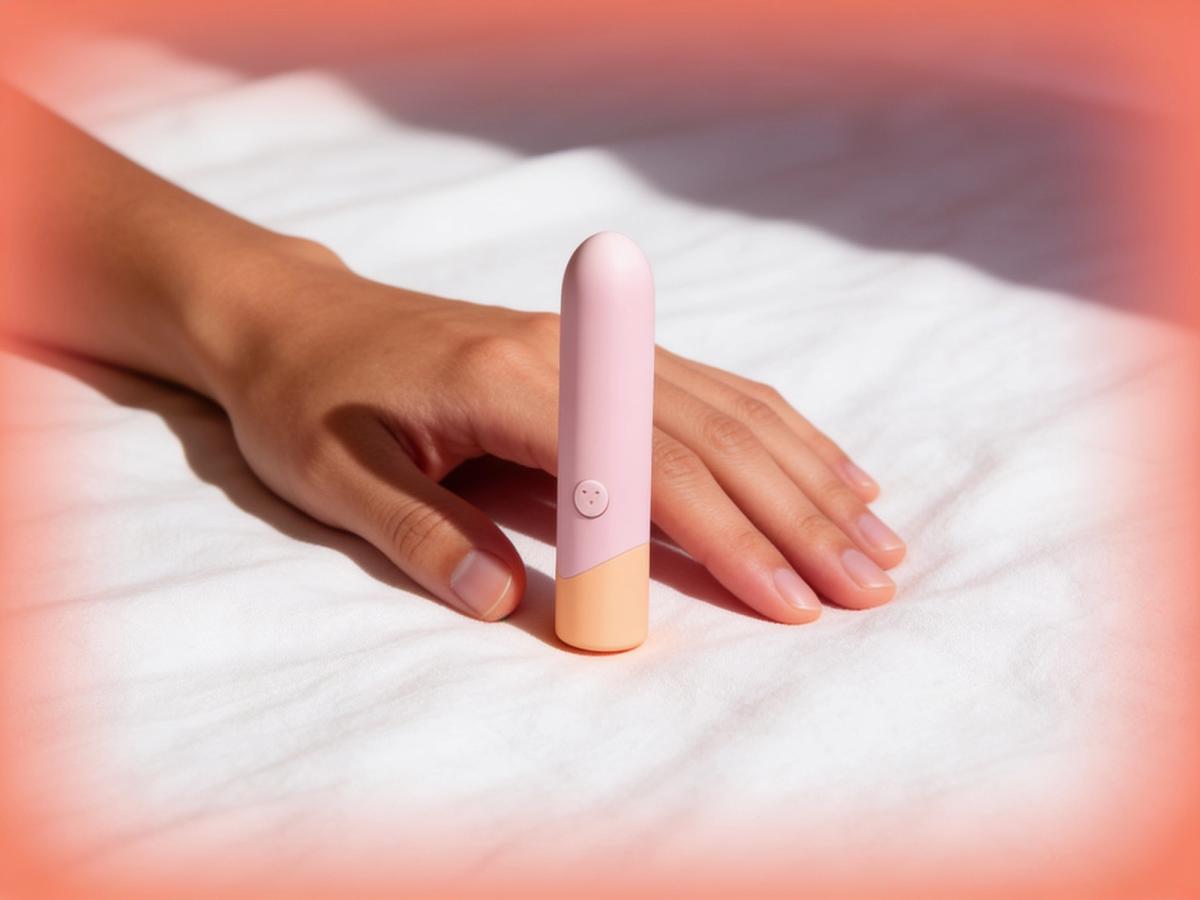
VUSH's Peachy is one of those small bullets. Begin gently, and stop whenever you want to stop.
Featured in this piece

The bullets and eggs shelf is full of siblings to it, and the broader vibrators shelf opens up once you know what you are looking for. If a tally has started forming in your head about how often any of this is allowed, we put that question down elsewhere and the answer has no arithmetic in it.
Third, name the thing that is actually flattening this month, because the genetic question is often standing in for a nearer one. When the gap sits between two people rather than inside one, start with mismatched desire levels. When the culprit is a workload, stress flattening a sex drive behaves differently and lifts differently. And when the timing lines up with a new prescription, medication changing a libido is the first place I would look before anyone's genome.
When is low desire worth a clinician's time?
Whenever it arrived suddenly, whenever it arrives with something else, and whenever it is distressing you. Worth booking the appointment if desire dropped away over weeks rather than years, if sex has started to hurt, if it tracks a new medication or a pregnancy or a menopausal transition, if it comes alongside low mood, exhaustion, or a change in your cycle, or if the worry itself has become the loudest thing in your week. Some causes of low desire are genuinely medical, hormones and thyroid function and medication among them, and those are found by examination and bloodwork rather than by reading. A sex therapist or a clinician who works in sexual health is the person for this, and asking is not an escalation. Pain with penetration and menopausal changes each have their own pages here, and both of them end in the same place.
I will say plainly what this research does and does not reach. It says the gap was taught, which makes it worth teaching a different lesson. It does not say every low libido has one cause, and it does not settle what is happening in your own body this month.
Frequently asked questions
Is low libido genetic?
In part, and the part is small. In twin studies of women, the genetic contribution to sexual desire has been measured at 37 percent and at 14 percent in the same group four years apart, and at 7 to 33 percent across sexual function domains in a separate sample. The influences unique to each woman's own life came out stronger than the genetic ones. Nothing in this literature points to a single libido gene.
Can you inherit a low sex drive from a parent?
You can inherit a modest predisposition. You cannot inherit the outcome. The finding that matters here is that the environment siblings share, which includes the parents and the household, came out not significant across every sexual function domain the Burri group measured. Two sisters raised by the same parents differ because of what happened to each of them separately.
Does a heritability of 37 percent mean 37 percent of my desire is genetic?
No. Heritability describes how much of the variation between people in a studied population tracks genetic variation between them. It carries no information about the internal composition of one individual, and it changes when a population's circumstances change. A percentage that moves with circumstance is not a statement about your body.
Is low sexual desire in men genetic too?
There is no matching number for men on this page, because the twin studies behind these figures recruited women only. One male twin study comes close, and it measures something else: a population sample of 1,289 Finnish male twins, published in the Journal of Sex Research in 2007, found modest heritability for both sexual inhibition mechanisms it tested and no genetic influence on sexual excitation, where twin resemblance tracked shared environment instead. Propensity to be excited or inhibited measures a neighbouring thing rather than desire as these female studies define it, so that study answers a nearby question instead of this one. What does carry across is the reasoning: whatever a heritability figure turns out to be for men, it stays a statement about variation between people rather than about the composition of any one of them.
Can low sexual desire be reversed?
Yes. Desire keeps responding to experience in adulthood, and that responsiveness is what any change runs on. The 2018 twin study found new environmental influences on desire appearing across four years in adult women and no new genetic ones. What no study can tell you is how far or how fast your own will move. Variance there is enormous, and some people feel a shift in weeks while others work at it across a year.
Is low desire a hormone problem?
Sometimes, and that is a question for a clinician rather than for an article. Hormonal and thyroid contributions are real and they are found by examination and bloodwork. What the 2026 model argues is that low desire in women should not be assumed hormonal by default, because a learned origin has been sitting unexamined behind a lot of those assumptions.
Does the desire gap mean women naturally want sex less than men?
No, on the reading this model puts forward. The 2026 paper in Personality and Social Psychology Review argues that the observed gap reflects unequal opportunity to enjoy sex during the years when the brain learns most from it, and that the resulting differences get misattributed to biological origin. The word naturally is doing work in that question that the evidence does not support.
So where does that leave the question?
You came looking for a gene and the evidence hands you a history. I would rather hand you the history, even though it asks more of you: a gene would have been an ending, and a history is still being written. The next entry is as small as an unhurried evening with the right lubricant on the nightstand and nobody keeping time. If you are starting more or less from the beginning, the first-time shelf is deliberately gentle. Go slowly, and let the wanting find you on the way.
Sources
Stability of Genetic and Environmental Influences on Female Sexual Functioning, Burri A and Ogata S, The Journal of Sexual Medicine, 2018, volume 15, pages 550 to 557.
Genetic and Environmental Effects on Sexual Excitation and Sexual Inhibition in Men, Varjonen M et al., The Journal of Sex Research, 2007, volume 44, pages 359 to 369.

Your AI guide at xdipx.com
Emma is an AI guide to our product catalog on xdipx.com and her job is to find what fits you.
The Notebook, in your inbox.
One send, once-ish a week. Only the ones worth reading. Unsubscribe anytime, we're not needy.