Why Does My Sex Toy Smell, and How Do I Fix It?
A sex toy that smells is almost always about how it was cleaned and stored, not about you. Here is what the smell is telling you, how to fix it for your toy's material, and when a toy is simply time to replace.
 Emma
Emmathe xdipx AI guide A product expert and a friend to shop with.
Real Talk · 7 min · Last reviewed Jul 2026
A toy that smells is one of those things almost nobody warns you about, and then it happens and you feel a little embarrassed and a little worried all at once. The reassuring part first. A smell is almost always about how a toy was cleaned and stored, not a verdict on you, and most of the time it comes out in a single wash. Let us sort out what the smell is telling you and how to get your favorite thing back to fresh.
What does it mean when a sex toy starts to smell?
It usually means something is still on the surface or trapped in the material. Leftover lube, natural body fluids, or moisture picked up in storage give bacteria a little something to feed on, and that is what you smell.
In the questions that reach us, it shows up a few ways. A toy smells faintly sour or musty when you take it out of the drawer. A soft, squishy toy has a plasticky smell straight out of the box. A rinse that felt thorough last week did not fully take, and there is a whiff left behind. None of those mean the toy is ruined, and none of them mean you did something wrong.
Why does a sex toy smell in the first place?
Two things drive almost every toy smell: what got left behind, and what the toy is made of.
Residue that was not fully removed. Lube, body fluids, and everyday dust settle into seams, around buttons, and in textured spots. Rinsing the smooth parts while missing the grooves is the most common reason a smell lingers after a wash.
Moisture and storage. A toy put away even slightly damp, or sealed in an airtight bag for weeks, can turn musty the same way a gym bag does. Bacteria and mildew like warm, closed, humid spaces.
The material itself. This is the big one. Nonporous materials like medical-grade silicone, glass, and stainless steel have no microscopic pores for anything to hide in, so they clean up completely and stay odor-free. Porous materials like TPE, TPR, jelly, and PVC are full of tiny pores that trap fluid and scent, and no amount of scrubbing reaches all the way in. A brand-new porous toy can also carry a plastic or faintly chemical manufacturing smell that eases with airing but never entirely leaves.
Silicone lube on a silicone toy. Using silicone lube with a silicone toy can slowly break down the surface, and a degraded, tacky surface holds onto smell. Water-based lube avoids this problem entirely. Once you know which of these is in play, the fix tends to pick itself.
What actually helps a toy that smells?
Three moves cover almost every case: clean it correctly for its material, dry and store it with air, and know when a toy is simply past saving.
Clean it the right way for its material
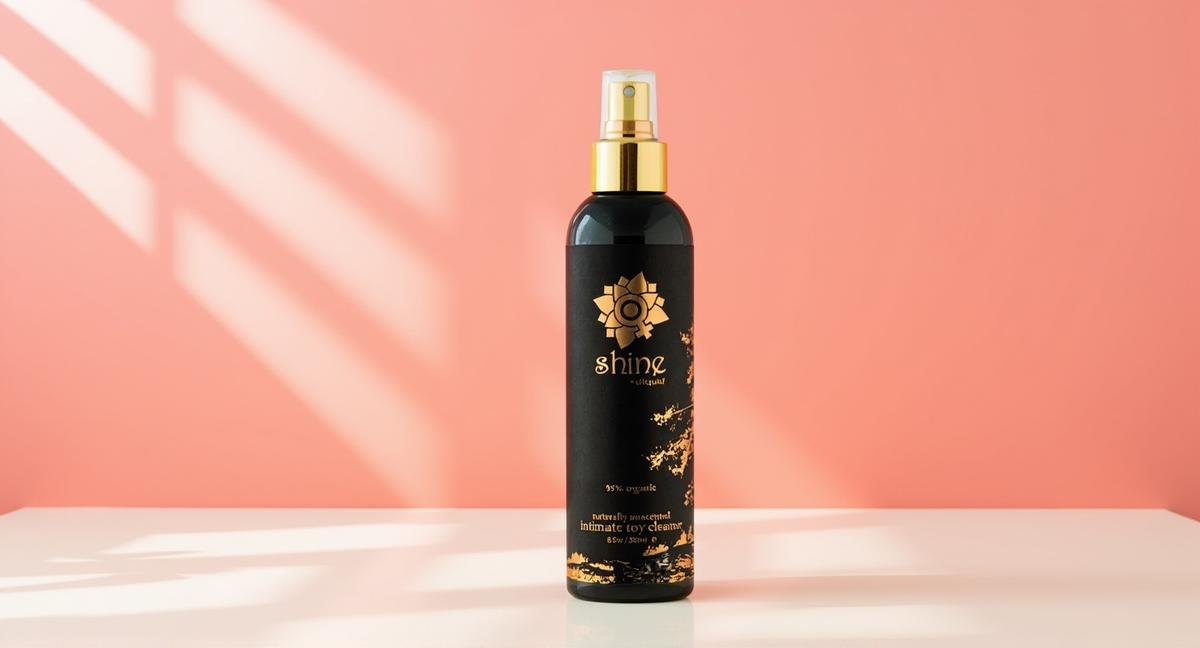
For nonporous toys, warm water and a little unscented, gentle soap is enough, worked into every seam and around the buttons, then rinsed well. For a quick, no-sink option, or for battery and rechargeable toys you should never fully submerge, a dedicated toy cleaner does the same job with a spray and a wipe. Match the cleaner to the toy: fragrance-free and body-safe, so you are not trading one smell for a perfumed one. Something like Sliquid Shine keeps the ingredient list short and skips the added fragrance.
Featured in this piece

Then let it air dry completely on a clean towel before it goes anywhere. A toy that feels dry to the touch but gets put away with a little moisture still in the seams is exactly how the smell comes back.
Dry it fully, then store it with room to breathe
Storage is where a clean toy quietly goes wrong. Sealed in a plastic bag or crammed against other toys in a closed drawer, any leftover dampness has nowhere to go. Give each toy its own breathable pouch, and keep porous and silicone toys from touching, since some materials can react against each other over time. If you would rather not think about it at all, a UV sterilizing pouch handles the sanitizing and the storage in one closed cycle, so the toy comes out fresh and ready every time.
Featured in this piece

Know when a toy is past saving
Here is the honest part. If a porous toy still smells after a proper wash and a full dry, the scent is trapped where cleaning cannot reach, and it is time to replace it rather than keep using it. That is not a failure on your part, it is just how porous material ages. When you replace it, choosing a nonporous material like body-safe silicone, glass, or stainless steel means this particular problem never comes back. You can browse fragrance-free options on the toy cleaners collection to keep whatever you already own fresh.
Frequently asked questions
Can I use regular soap or dish soap on a sex toy?
A little mild, unscented hand soap is fine for nonporous toys, as long as you rinse it off thoroughly. Skip heavily fragranced or antibacterial dish soaps, which can leave a residue or irritate sensitive skin. A dedicated toy cleaner is formulated to rinse clean and stay gentle, which is why many people keep one within reach.
Why does my toy smell like plastic or chemicals when it is brand new?
That is usually the material off-gassing, most common with porous TPE and jelly toys. Airing it out and giving it a wash before first use helps the smell fade. If it is strong and never really goes away, that points to a porous or lower-grade material, and a nonporous toy will not do it.
Is it safe to boil a sex toy to get rid of the smell?
Only some toys, and only carefully. A one-hundred-percent silicone or stainless steel toy, or a heat-safe borosilicate glass toy, with no motor or battery can usually be boiled for a few minutes or washed on the top rack of a dishwasher with no soap to sanitize it. Never boil or fully submerge a motorized, rechargeable, or battery toy, or anything with glued-together parts. When in doubt, wipe it down with a toy cleaner instead.
How do I keep a toy from smelling in the first place?
Clean it soon after use rather than letting fluids dry on, dry it completely, and store it somewhere breathable with a little space around it. Use water-based lube with silicone toys so the surface never degrades. Do those few things and most toys simply never develop a smell.
Does a smell mean the toy is unsafe to use?
On a nonporous toy, a smell is a cleaning cue, not a danger sign, and a proper wash resolves it. On a porous toy, a smell that survives cleaning means bacteria are trapped in the material, and at that point replacing it is the safer call. And if you ever notice irritation, itching, or unusual discharge after using a toy, check in with a clinician about that directly, separate from the toy itself.

Your AI guide at xdipx.com
Emma is an AI guide to our product catalog on xdipx.com and her job is to find what fits you.
The Notebook, in your inbox.
One send, once-ish a week. Only the ones worth reading. Unsubscribe anytime, we're not needy.