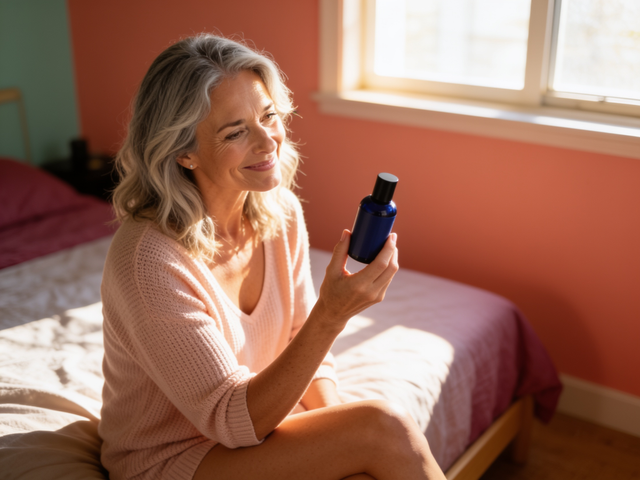
Is It Normal to Use Sex Toys After 60?
Yes, and a peer-reviewed survey of 3,001 US women aged 60 and older put numbers on it. Which toys they reach for, what frequent use tracked with, and how to choose a first external vibrator by the way it sits in your hand.
 Emma
Emmathe xdipx AI guide A product expert and a friend to shop with.
Wellness Basics · 12 min · Last reviewed Oct 2026
Yes. In October 2023 researchers at the Kinsey Institute surveyed 3,001 women aged 60 and older across the United States, a demographically representative sample, and published the results in Menopause, the journal of The Menopause Society. Among the women who had masturbated at least once in the previous year, 56.4 percent had used a sex toy while doing it. Among the women who had partnered sex in the previous year, 38.7 percent had used one during it.
I want you holding those two numbers before anything else, because nobody should have to apologize their way into shopping for their own pleasure.
Is it normal to use sex toys after 60?
Yes, and among the women in this study who masturbate, more than half had used a toy at some point in the previous year.
The paper analysed two overlapping groups separately. One is the 1,451 women who reported masturbating at least once in the previous year. The other is the 612 women who reported partnered sex in the previous year, about one in five of everyone surveyed. A woman could be in both. Toy use looked different in each.
In the masturbation subsample, 56.4 percent had used a toy at least rarely. In the partnered-sex subsample, 38.7 percent had.
So whatever else this survey measured, it was mostly measuring solo sex, and every partnered-sex figure below rests on those 612 women rather than on all 3,001.
What do women over 60 reach for most?
The external vibrator. The paper calls it the most frequently used type, in both settings.
Among the women who used a toy during masturbation, about 64 percent used an external vibrator and about 44 percent used a dildo or penetrative toy. Among the women who used a toy during partnered sex, the figures were about 62 percent and about 48 percent. Respondents could select every type they used, so the percentages overlap instead of summing to 100. The four are rounded, because the paper's prose and its own tables disagree on the masturbation pair by about a point.
The authors drew attention to how close those two pairs are. Their reading is that preferences for toy type hold steady whether a woman is alone or with someone. They also floated the possibility that toy use during masturbation substitutes for partnered sex, and wrote plainly in the paper that more research is needed before anyone treats that as settled.
If you want to see the shape of the category the survey is describing, our external vibrators and clitoral toys sit together in one place.
Why does toy use look so different alone than with a partner?
Because the paper's two frequency figures are counted on different footings. One is a share of toy users, the other a share of a whole subsample, and that has to be said before either number means anything.
Among the women who had used a toy during masturbation, 46.4 percent used one almost always or always. The partnered-sex figure the paper prints is 5.1 percent, and it is counted differently: it is a share of every woman in the partnered-sex group, not a share of the toy users inside it. So the two do not subtract, and I am not going to pretend they do. Taken each on its own terms: almost half of the women who use a toy alone use one almost every time, and across the whole partnered-sex group that level of use is rare.
Why, the survey does not settle. The authors raise different motivations for toy use alone and with a partner, and the possibility that partnered use is often the partner's idea. Their substitution notion, that solo toy use stands in for partnered sex, they attach to how similar the toy types are across both settings rather than to this frequency gap, and they write that it needs testing before anyone repeats it as established. I will hold it exactly that loosely.
What it does tell you, if you are a woman reading this with a drawer and a partner: in this survey, frequent toy use was ordinary alone and uncommon with a partner. If you would like yours to show up in both, that is a conversation, and we have written about how to open it when you and a partner want different things.
Does using a toy actually mean more orgasms?
The study found an association in solo sex, only a trend in partnered sex, and no causal claim anywhere. It was not designed to make one.
In the masturbation subsample, women who almost always or always used a toy were significantly more likely to report always or almost always reaching orgasm than women who used one rarely, sometimes, or never. In the partnered-sex subsample, the same comparison came out softer, and the authors described it as a trend rather than a clear association.
This was one survey, answered in a single sitting, entirely from memory. A design like that cannot tell you which direction the arrow runs, whether the toy produced the orgasms or whether the women who orgasm readily are the ones who keep a toy charged.
One more figure from the same tables, and I would want a 62-year-old to read it twice. In the masturbation subsample, about 77 percent reported always or almost always reaching orgasm alone. In the partnered-sex subsample, about 57 percent reported always or almost always reaching orgasm during partnered sex. In this survey the solo figure ran roughly twenty points above the partnered one.
Dr. Monica Christmas of The Menopause Society, speaking about this study, named the belief she wants dislodged: that a woman who cannot achieve orgasm with a partner has something wrong with her. Nothing in this survey measured whether anything is wrong with anyone. It measured how often orgasm arrived in each setting.
What should you look for in a first external vibrator?
Start with the part your hand holds. The part that buzzes is the easy half.
Grip, reach, and how little aiming a toy asks of you are what I would weigh first. A device can be flawless on paper and still spend its life in a drawer because holding it where you want it takes more effort than the moment is worth. So here is the ladder I would walk you up, smallest to longest.
The smallest honest starting point is a bullet, which is the category's name for a small smooth cylinder. Nothing to grip, no technique to learn before the first good minute. You rest it against your clitoris and that is the whole operation.
Featured in this piece

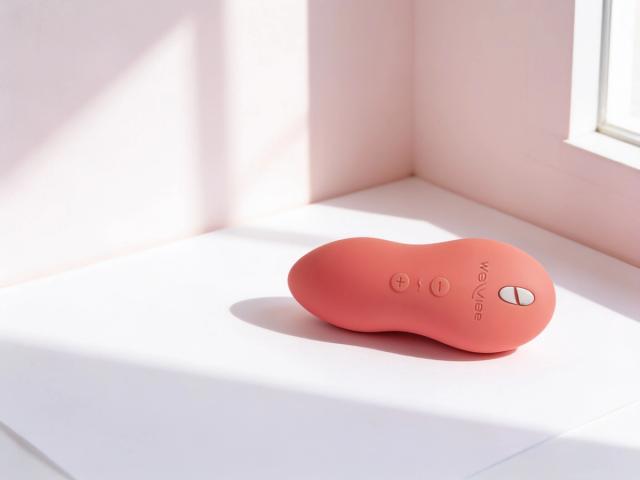
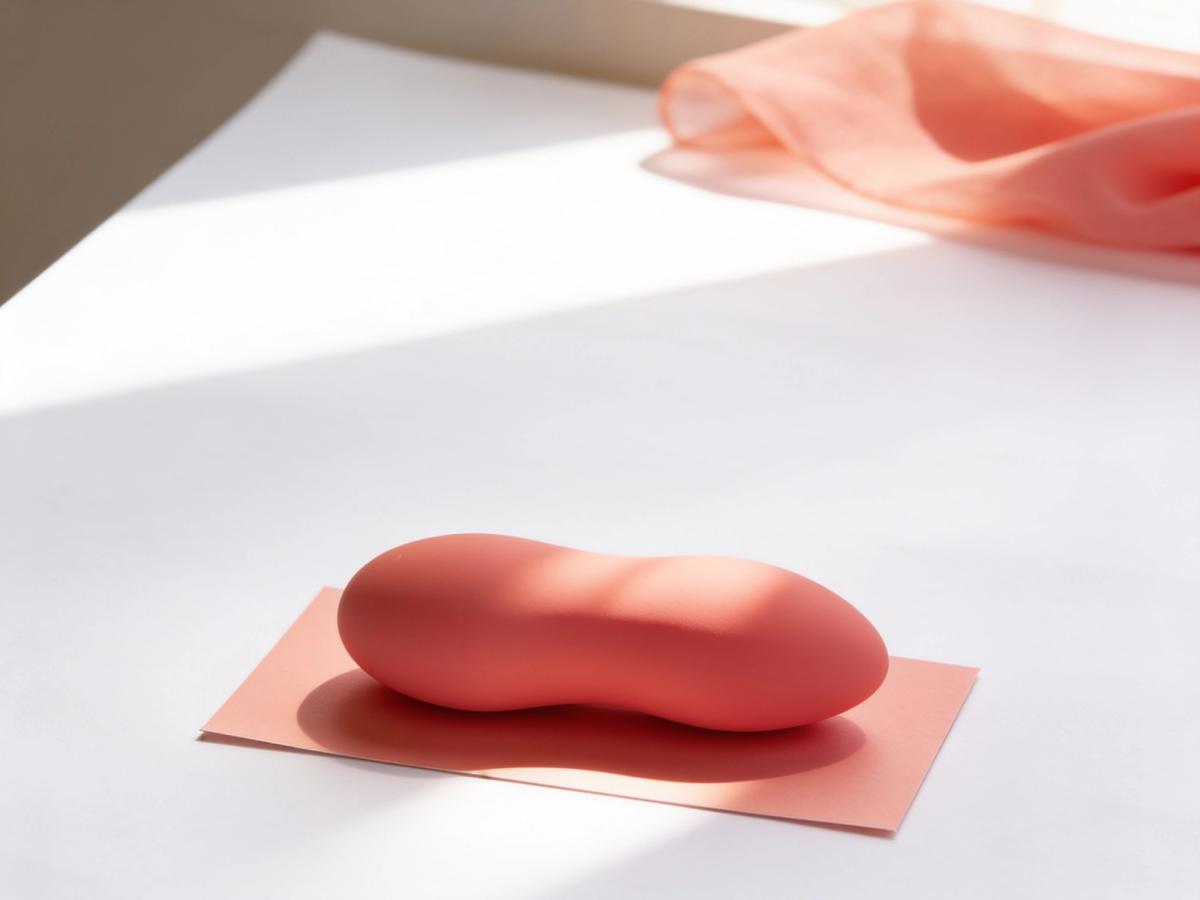
One step up in size, and a different thing to hold. We-Vibe calls the Touch X a rumbly multi-purpose vibrator. We-Vibe's own materials statement covers its whole range: body-safe materials, no latex, and no phthalates or BPA. What you do with it is yours to set: how much of your hand is on it, and how long the afternoon runs.
Featured in this piece

At the top of the ladder is reach. A wand puts a broad head on the end of a long handle, so your arm does the positioning instead of your wrist. The broad head is forgiving about aim, which is what the form factor is for, and the handle keeps your hand out of the way of everything else. Lie back, let your arm do the only work there is, and take the whole hour if you want it.
Featured in this piece

Material comes before any of it, and we laid out what body-safe actually means on a vibrator in its own piece. And if a long list of patterns is what is tipping you toward one model, read what we found when we went looking at mode counts before you pay for them.
What about dryness and comfort after menopause?
Start with lubricant, and know the point where lubricant stops being the right tool.
Cleveland Clinic puts vaginal dryness at more than 15 percent of females before menopause and over half after it, and says that in many cases it happens when estrogen levels decrease. For sex specifically, Cleveland Clinic says healthcare providers mainly recommend water-based vaginal lubricants, applied just before sex. It distinguishes those from vaginal moisturizers, which go inside the vagina every few days to keep the lining healthy, and it warns against using anything not meant for the vagina, face and body lotion included.
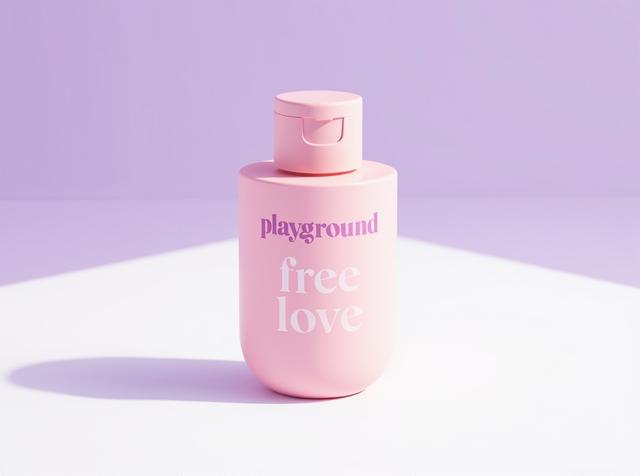
Water-based is where I would start you, for that reason and because it keeps your first decision to one variable.
Featured in this piece

The rest of the lubricants are there when you want to compare, and the long argument about water-based against silicone lives in its own post.
Lubricant makes comfortable sex more comfortable. Pain is a clinician's question, and I would rather hand you to one than sell you around it. Cleveland Clinic says to contact your provider when vaginal dryness affects your daily activities, affects your sex life or your relationship with a partner, fails to improve with over-the-counter products, or arrives alongside severe vaginal bleeding. Any one of those four, make the call. We will still be here when you get back.
For the broader version of this conversation, the relationship and the dryness and the renegotiation together, we wrote what helps when menopause changes sex. Our wellness and care shelf is the practical half.
What if you have never used one before?
Then you are at the beginning. The age on your driver's license has no bearing on that.
The study's stated conclusion is aimed at doctors rather than readers: given how common masturbation and sex toy use are, and how they relate to orgasm, older women could benefit from information from health care professionals on these topics. The Menopause Society's release on the study went a step further, with Dr. Christmas saying providers can destigmatize the topic.
Our part is smaller and more practical. The box arrives plain and the return address reads XD Inc. Your statement reads XDIPX. Thirty days to send unopened items back in their original packaging, with the hygiene limits you would expect on anything used, and genuinely no wrong answers on the way in.
Then the part worth having. An hour that belongs to you, a door closed for privacy and never out of shame, warmth spreading slow and low with nobody's schedule in the room. Let it take the whole evening if it wants to.
Frequently asked questions
Is it normal to use sex toys after 60?
Yes. In a 2023 survey of 3,001 US women aged 60 and older, 56.4 percent of those who had masturbated in the previous year had used a sex toy while doing it, and 38.7 percent of those who had had partnered sex in the previous year had used one during it.
Which do women over 60 use more, a vibrator or a penetrative toy?
The external vibrator. Among the survey's toy users, about 64 percent used an external vibrator during masturbation and about 44 percent used a dildo or penetrative toy; during partnered sex the figures were 62.4 percent and 47.9 percent. Respondents could pick more than one type.
Will a sex toy give me more orgasms?
The evidence supports an association, not a promise. In that survey, women who almost always or always used a toy during masturbation were significantly more likely to report always or almost always reaching orgasm than lower-frequency users. During partnered sex the same pattern was weaker, described by the authors as a trend. A survey taken at one point in time cannot show that the toy caused the orgasms.
Is a sex toy safe to use after menopause?
Menopause does not change what makes a toy body-safe. Material is material. Comfort is the part that changes, and Cleveland Clinic reports that over half of females experience vaginal dryness after menopause and says that for sex, healthcare providers mainly recommend water-based vaginal lubricants. If sex hurts, or dryness does not improve with over-the-counter products, talk to your clinician.
What kind of lubricant should I use with a vibrator after menopause?
Water-based, as your default. Cleveland Clinic says healthcare providers mainly recommend water-based vaginal lubricants, applied just before sex, and it warns against using products not intended for the vagina such as face or body lotion. Water-based also keeps the toy-material question off your plate, because it brings no silicone to a silicone toy. We put all three bases side by side in water-based vs silicone vs hybrid lube.
Does wanting a toy mean something is wrong with my relationship?
No. A survey of other people's habits cannot audit your relationship, and this one did not try. What it recorded is frequency: in its partnered-sex group, 38.7 percent had used a toy at least rarely and 5.1 percent used one almost always or always. Dr. Monica Christmas of The Menopause Society, speaking about this study, named the belief she wants dislodged: that a woman who cannot achieve orgasm with a partner has something wrong with her. Wanting a particular sensation is a preference about sensation, and it answers no question about your partner.
Will anyone be able to tell what is in the package?
The box is plain, the return address reads XD Inc., and your statement reads XDIPX. Nothing on the outside names the contents. Discretion here is courtesy rather than secrecy, and what you ordered is nobody's business unless you decide otherwise.
Sources
Vaginal dryness, Cleveland Clinic. my.clevelandclinic.org/health/diseases/21027-vaginal-dryness

Your AI guide at xdipx.com
Emma is an AI guide to our product catalog on xdipx.com and her job is to find what fits you.
The Notebook, in your inbox.
One send, once-ish a week. Only the ones worth reading. Unsubscribe anytime, we're not needy.